

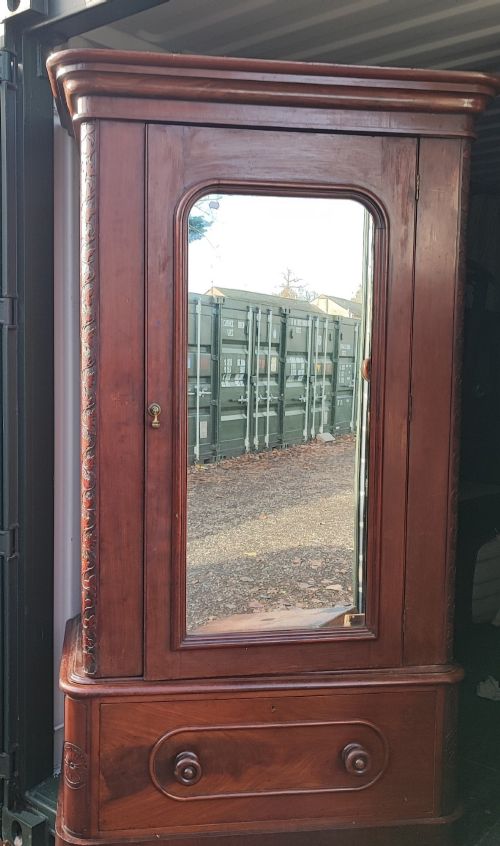
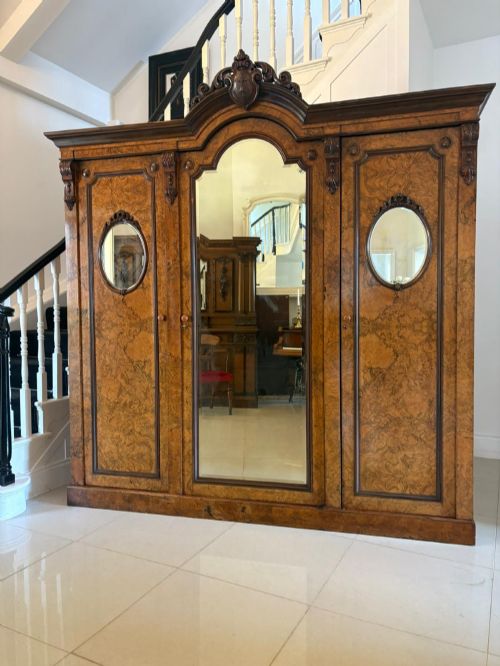
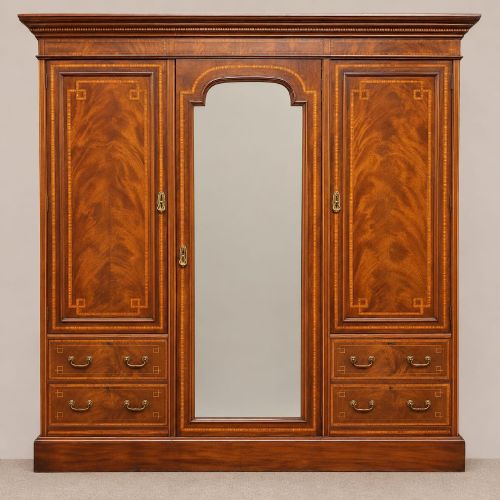
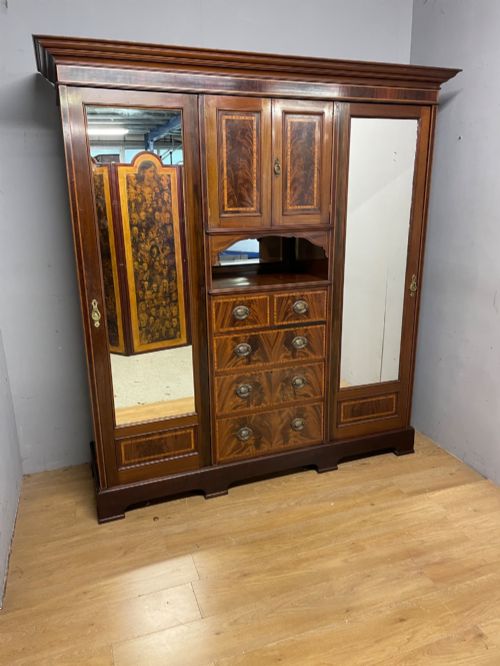
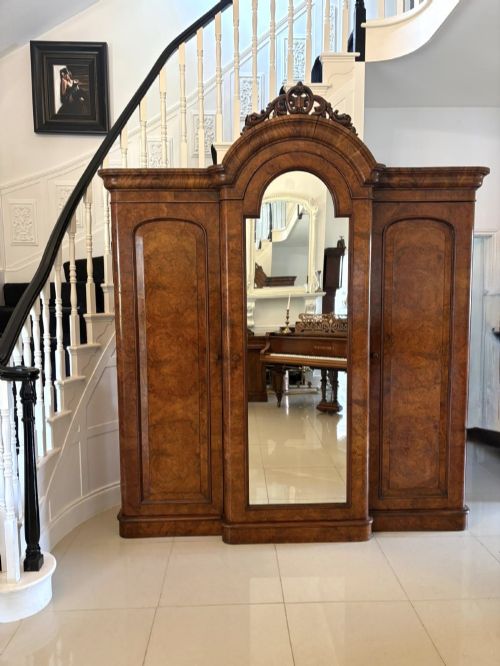
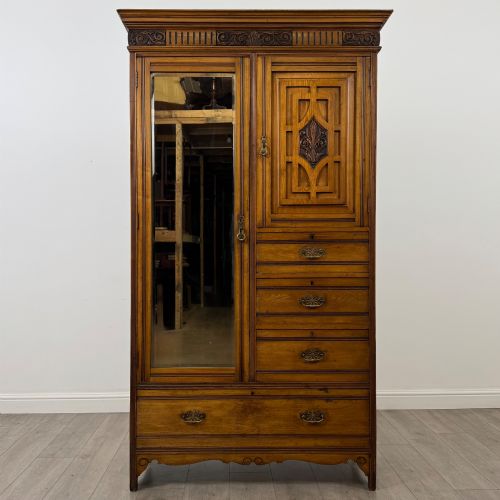
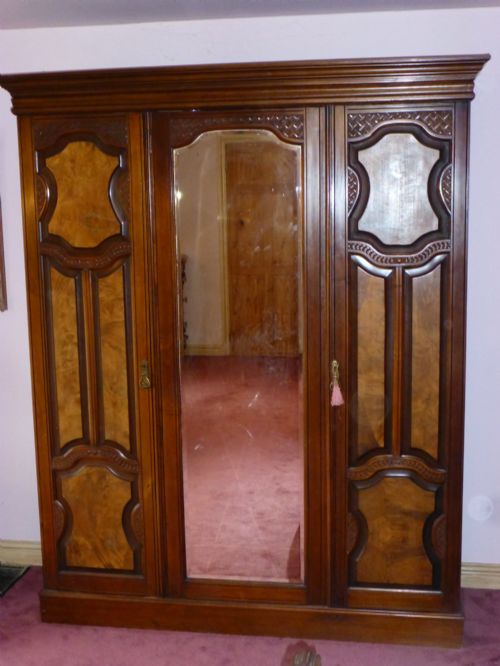
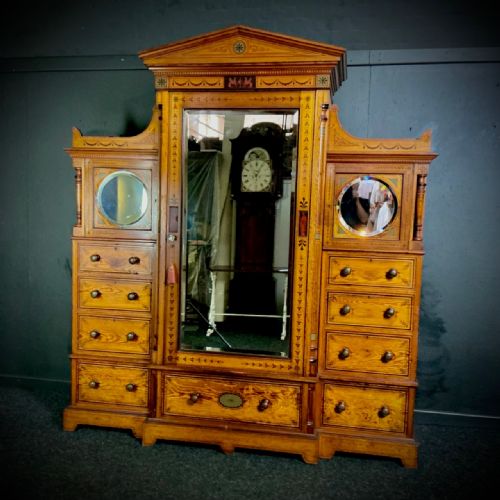
Victorian Mirror Door Wardrobe
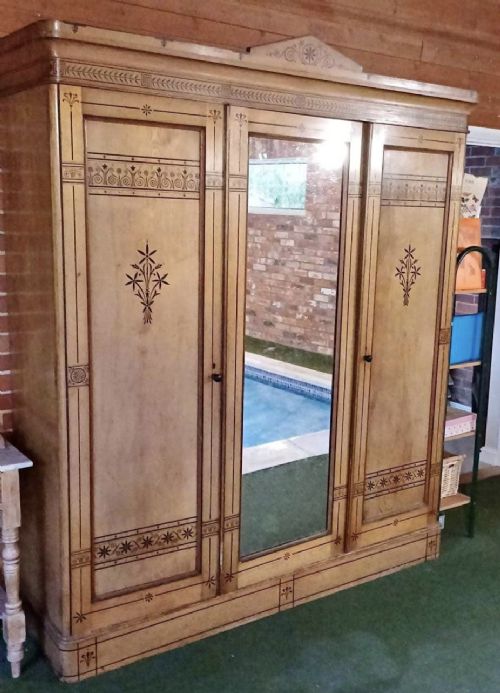
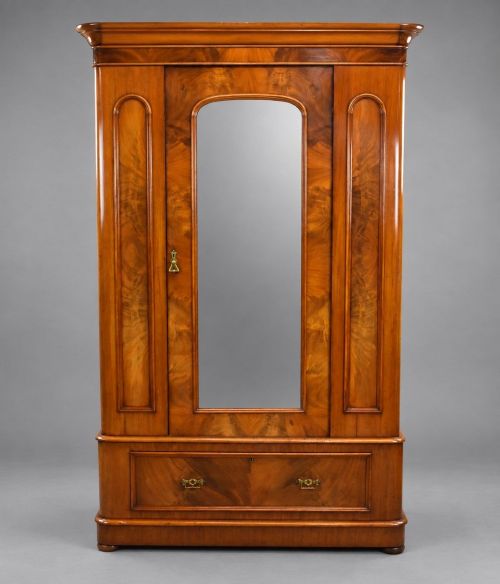
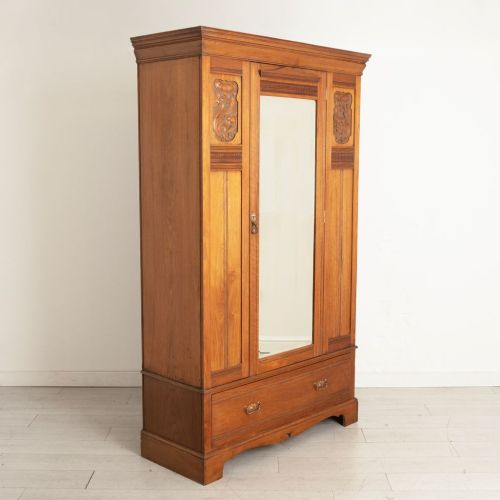
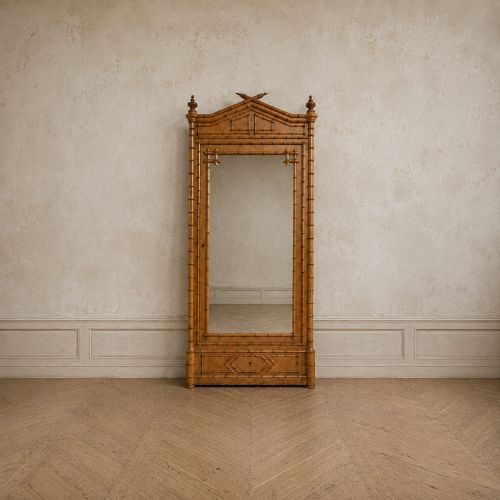
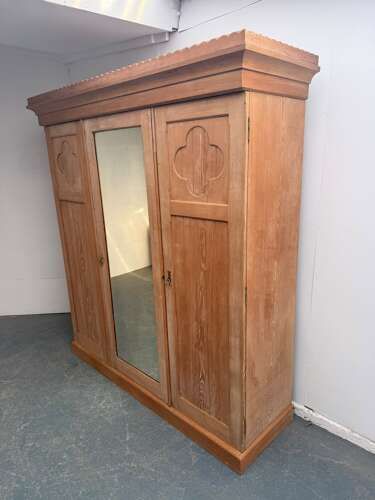
These substantial pieces of bedroom furniture integrate tall looking glasses into their timber frames, offering full-length reflection alongside hanging space.
Victorian Mirror Door Wardrobe
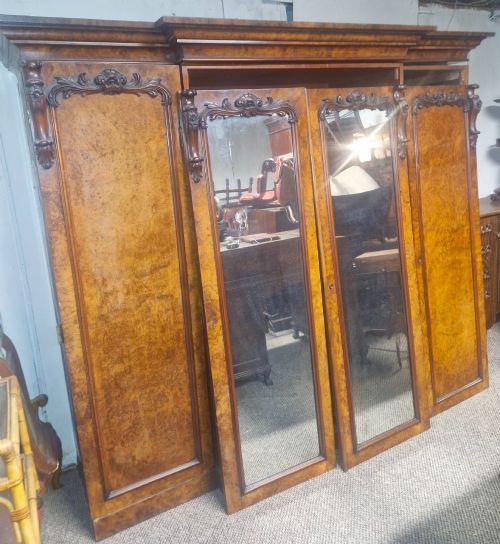
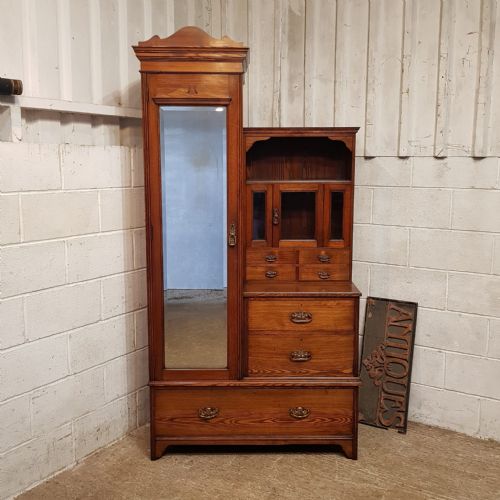
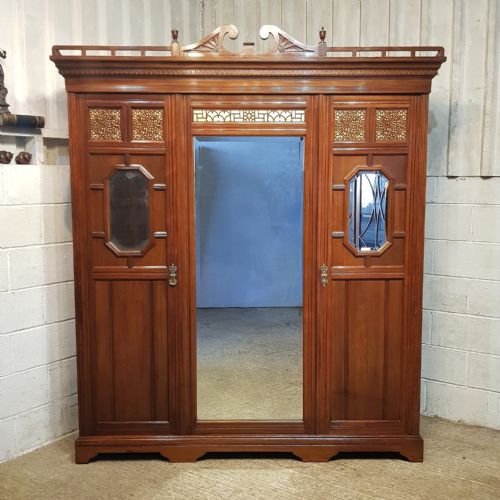
A victorian mirror door wardrobe serves as a focal point in a period bedroom, combining large glazed panels with hanging compartments and internal drawers. Buyers encounter single door configurations, wide triple door layouts, and breakfront designs that span several feet.
The selections span the mid-nineteenth century through the Edwardian era, taking the form of compactums, armoires, and breakfront suites. Woods range from rich mahogany and burr walnut to lighter ash, pitch pine, and satin birch.
Makers utilised varied stylistic influences, incorporating Arts & Crafts craftsmanship, Aesthetic Movement details, and French aesthetic touches into the construction of these large storage items.
Materials and Construction
Glass panels were bevelled and set into heavy timber doors, supported by robust hinges capable of bearing the substantial weight of the mirror plate. Carving, marquetry inlay, and faux bamboo turning ornamented the exterior surfaces of select pieces.
Victorian Mirror Door Wardrobe Retail Price Guide 2026
Typical asking prices for victorian mirror door wardrobe among the pieces listed under this phrase on Sellingantiques today, from the lower quarter to the upper quarter. They describe what is for sale here now, not the wider market.
Some single door wardrobes were humorously designated as sentry box cabinets due to their narrow vertical proportions.
Quality and Execution
Superior examples distinguish themselves through the choice of timber figurations, such as matched burr walnut or figured mahogany veneers applied across wide surfaces. Finely carved mouldings, intricate marquetry inlay, and robust internal compartmentalisation separate standard mass-produced items from superior workshop output.
The weight and clarity of the original mirror glass, alongside the integrity of the timber framing around the door panels, dictate the structural durability and aesthetic balance of the wardrobe.
Shapland & Petter·Holland and Sons·Gillows of Lancaster
The Victorian Mirror Door Wardrobe Glossary
- Compactum
- A large wardrobe featuring a combination of hanging space, drawers, and sliding trays enclosed by multiple doors.
- Breakfront
- A piece of furniture where the central section projects forward from the flanking cabinets.
- Armoire
- A tall cupboard used for storing clothes, typically fitted with doors enclosing hanging space or shelves.
- Marquetry
- Decorative inlay work using various tinted woods to create pictorial or geometric patterns on the surface.
- Pitch pine
- A resinous softwood utilised for robust bedroom furniture during the nineteenth century.
Victorian Mirror Door Wardrobe: Frequently Asked Questions
How do I dismantle a large wardrobe?
Many nineteenth-century wardrobes were constructed to break down into modular sections, consisting of a cornice, a plinth, side wings, and a central cabinet.
Screws, wooden pegs, and steel bolts secure the components together behind interior mouldings, allowing the heavy frame to be moved between rooms.
What is a compactum wardrobe?
A compactum provides an integrated storage system within a single footprint, combining wardrobe hanging space with interior linen slides and banks of drawers.
These configurations allowed Victorians to store diverse garments and linens within one central bedroom cabinet.
How do I care for antique mirror glass?
Original silvered mirror glass requires gentle cleaning with a soft cloth and mild solution, avoiding abrasive chemicals that damage the edges of the plate.
Care should be taken to prevent moisture from seeping behind the glass bevel where the original backing may be fragile.
Can I fit internal lighting inside?
Battery-operated LED strip lights or small Puck lights can be attached discreetly to the interior cornices of these wardrobes without altering the historic timber.
Surface-mounted options illuminate dark hanging compartments while preserving the original interior structure and lining.