

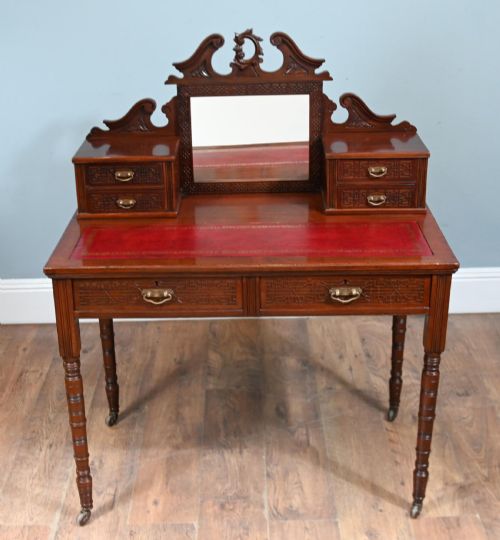

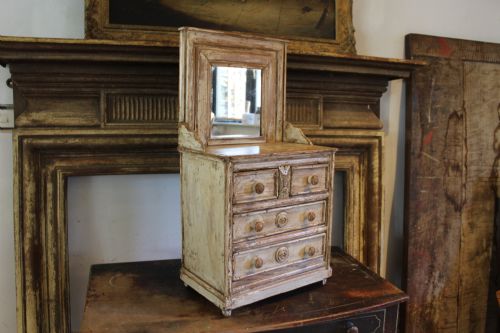

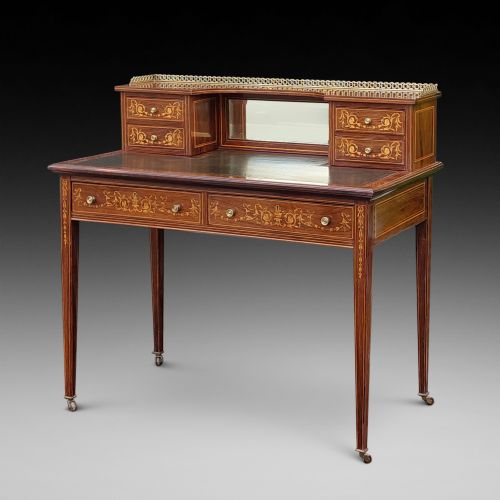


Victorian Mirror Bureau
These victorian mirror bureau pieces combine a writing surface with glass and compartments, offering compact elegance for daily correspondence and personal grooming.
Victorian Mirror Bureau
A victorian mirror bureau brings together a compact writing slope or desk compartment and an adjustable mirror, offering a dual purpose for writing and dressing.
The examples recorded here span the Victorian, late Victorian, and Edwardian periods, stretching from the mid-nineteenth century towards the turn of the twentieth.
Forms on this page range from walnut and rosewood bonheurs du jour to inlaid mahogany writing desks and bureau mirrors housed in walnut.
How they were made
Cabinet makers built these pieces using timbers such as mahogany, walnut, rosewood, satinwood, and oak, often highlighting figured grains on writing flaps and drawer fronts.
Surface decoration frequently incorporates delicate inlay work, while brass hardware and mirrored glass provide functional and decorative details.
Victorian Mirror Bureau Retail Price Guide 2026
Typical asking prices for victorian mirror bureau among the pieces listed under this phrase on Sellingantiques today, from the lower quarter to the upper quarter. They describe what is for sale here now, not the wider market.
The listings show pieces constructed from mahogany, rosewood, walnut, oak, satinwood, and satin birch, spanning the Victorian and Edwardian periods.
What varies in quality
The distinction between standard items and superior examples lies in the crispness of the cabinet work, the depth of figuring in the timber, and the refinement of any inlay.
Maker attribution also influences standing, with recorded workshops such as Maple and Co, Edwards and Roberts, Jas Shoolbred, and Harris Lebus representing notable cabinet making standards.
Edwards and Roberts·Maple and Co·Harris Lebus·Jas Shoolbred
The Victorian Mirror Bureau Glossary
- Bonheur du jour
- A light ladies writing desk featuring a small set of drawers, shelves, or a cabinet on the upper surface.
- Bureau fitment
- An internal arrangement of small drawers and pigeonholes designed for stationery within a writing desk.
- Inlay
- A technique where pieces of contrasting timber or decorative material are inserted into recessed portions of the primary wood surface.
- Satinwood
- A durable timber known for its yellowish colour and lustrous, reflective grain, frequently utilised in late nineteenth century marquetry.
Victorian Mirror Bureau: Frequently Asked Questions
What is a victorian mirror bureau?
A victorian mirror bureau is a compact piece of antique furniture that integrates a writing desk or drop front bureau with an upright mirror. These items were typically placed in bedrooms or boudoirs for morning correspondence and grooming.
They combine storage compartments and writing surfaces with reflective glass, reflecting the domestic needs of the nineteenth century.
Where were these pieces used?
These items were primarily used in private chambers, ladies boudoirs, and drawing rooms during the Victorian and Edwardian eras. Their compact proportions suited personal writing tasks and private correspondence.
The inclusion of a mirror made them adaptable for dressing as well as letter writing.
How do I care for rosewood and walnut furniture?
Maintaining these wooden surfaces requires keeping them away from direct sunlight and steady temperature fluctuations to prevent timber movement. Gentle dusting with a dry cloth preserves the polished finish.
Wax polishing can be applied sparingly to nourish the grain of rosewood, walnut, and mahogany.
How do I distinguish Victorian from Edwardian pieces?
Victorian pieces often display heavier proportions, rich rosewood or walnut veneers, and elaborate inlay in the aesthetic or revival tastes. Edwardian examples tend to exhibit lighter timber choices and simpler outlines.
Construction details and recorded maker labels also help determine the specific period of manufacture.