



Victorian Military Pistol
A victorian military pistol is a robust nineteenth-century sidearm built for service, valued for its mechanical history and solid construction.
Victorian Military Pistol
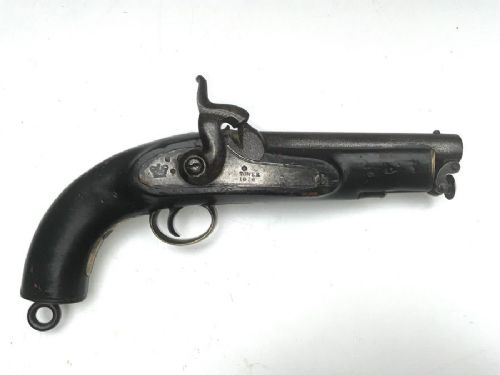
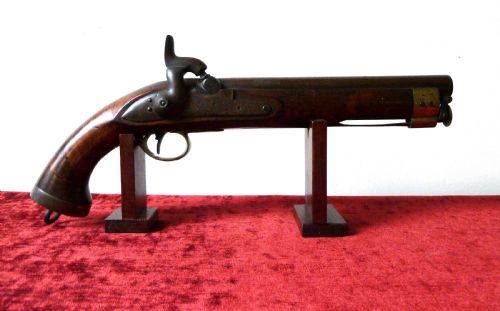
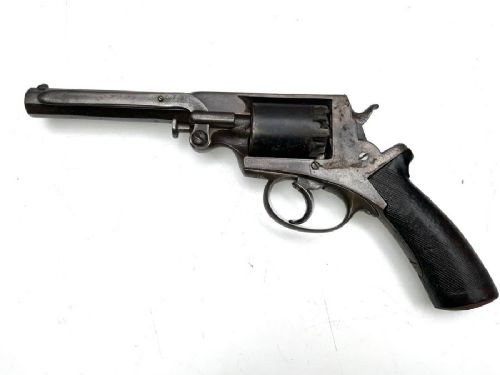
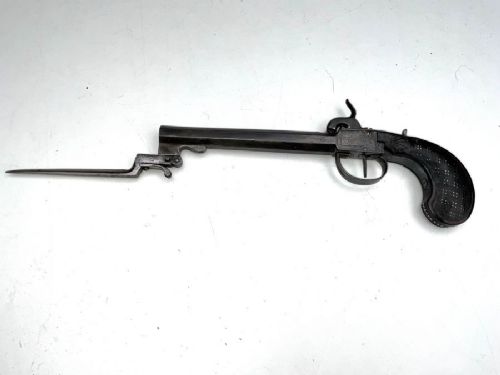
A victorian military pistol comprises nineteenth-century firearms issued to officers, cavalry, and troops across the British forces and related bodies like the East India Company. These pieces range from percussion belt pistols and smoothbore cavalry arms to boxed Beaumont-Adams revolvers and pinfire double-barrel designs.
The versions most commonly met on this page date from the mid-nineteenth century, particularly the 1850s and 1860s, reflecting the technological transition from smoothbore percussion systems to early cartridge revolvers. Many carry government or institutional stamps, such as Tower markings, which denote official military supply.
Form follows function closely in these service weapons, resulting in sturdy stocks and reliable ignition systems designed for active deployment. Collectors encounter both private purchase officer pieces and standard issue sidearms, each showing the wear of active nineteenth-century service.
How they were made
Construction relies upon durable metals such as steel, iron, and brass, paired with dense stocks carved from walnut and other hardwoods. Metal components receive functional finishing, while lockplates and barrels frequently display proof marks and workshop stamps.
Makers combine forged metal mechanisms with tightly fitted wooden grips, occasionally integrating folding bayonets or housing them in fitted wooden boxes. The integration of percussion caps and rifled or smoothbore barrels demonstrates the mid-nineteenth-century standards of military ordnance production.
Victorian Military Pistol Retail Price Guide 2026
Typical asking prices for victorian military pistol among the pieces listed under this phrase on Sellingantiques today, from the lower quarter to the upper quarter. They describe what is for sale here now, not the wider market.
Materials recorded across these military sidearms consistently combine ferrous metals and brass with walnut and hardwood stocks.
What varies in quality
Quality separates through the crispness of action, the legibility of ordnance stamps, and the preservation of original metal and wooden surfaces. Pieces retaining clear Tower markings or specific institutional stamps command greater historical interest.
The presence of original accessories, such as matching fitted boxes or integrated foldaway bayonets, elevates an example above standard service issue. Finer execution appears in the precision of the lock mechanism and the quality of private officer-grade engraving compared to mass-produced contract arms.
The Victorian Military Pistol Glossary
- Percussion
- An ignition system utilising a hammer striking a percussion cap to detonate gunpowder within the barrel. This method replaced flintlock arms during the nineteenth century.
- Smoothbore
- A barrel lacking internal rifling grooves, firing round lead balls at close range. This bore type is typical of earlier military pistols before the general adoption of rifled barrels.
- Pinfire
- An early cartridge design where a small pin protrudes radially from the base of the cartridge to be struck by the hammer. It represents a key step in self-contained ammunition development.
- Beaumont-Adams
- A double-action percussion revolver patented in the mid-nineteenth century, allowing both manual cocking and firing by the trigger pull. Officers favoured these for rapid repeated shots.
- Tower
- A term referring to the Tower of London ordnance facility where government military arms were inspected, stamped, and stored. Such markings verify official state supply.
Victorian Military Pistol: Frequently Asked Questions
What is a victorian military pistol?
A victorian military pistol is a nineteenth-century firearm issued to British forces, cavalry units, or officers for service use. These arms include single-shot percussion systems and early revolvers.
They reflect the ordnance technology of the mid-nineteenth century, featuring robust iron, steel, and hardwood construction designed for field deployment.
How do percussion pistols work?
Percussion pistols operate by placing a small fulminate-filled cap onto a nipple beneath the falling hammer. When the trigger is pulled, the hammer strikes the cap, creating a spark that ignites the main powder charge.
This weather-resistant system superseded the earlier flintlock mechanism and remained standard for military sidearms until cartridge systems took over.
What is the difference between an officer and cavalry pistol?
Cavalry pistols were standard government-issue sidearms built for rugged mounted service, often featuring captive ramrods and sturdy brass or iron furniture. Officer pistols were frequently private purchase pieces of higher finish.
Officers often bought their own sidearms to personal preference, resulting in finer detailing, private maker marks, or inclusion in fitted presentation boxes.
How should these pistols be displayed?
These pistols suit secure cabinet display or placement on dedicated wooden mounts that support the weight of the steel and hardwood frame. Keeping them in a stable environment away from excess moisture protects the metal and wood.
Many collectors house boxed revolvers within their original fitted wooden cases alongside associated accessories to preserve their historical context.
What do Tower stamps mean?
Tower stamps indicate that a firearm passed through the official ordnance inspection at the Tower of London. These markings confirm government contract production for military service.
Finding clear crown and cipher stamps helps verify the official status and period of the weapon.