





Victorian Military Officer Art
Victorian military officer art depicts the commanding presence and formal attire of nineteenth-century leaders through oil paintings, watercolours and portrait miniatures.
Victorian Military Officer Art
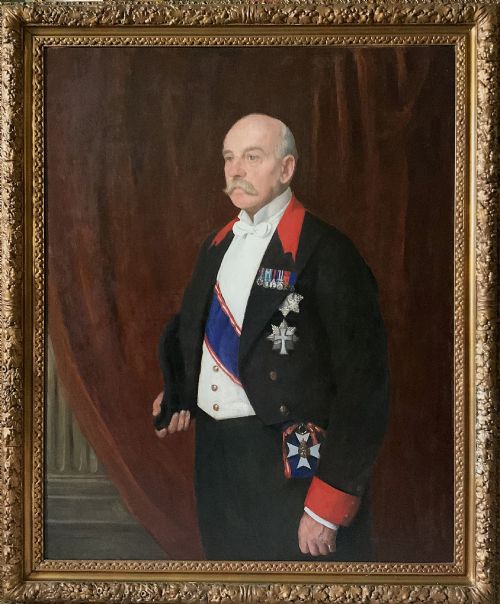
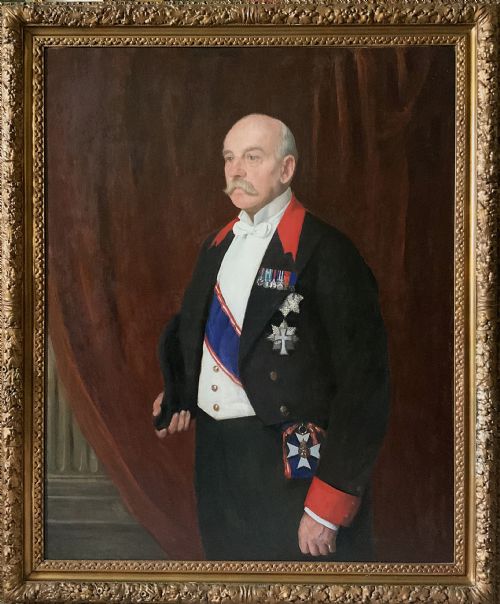
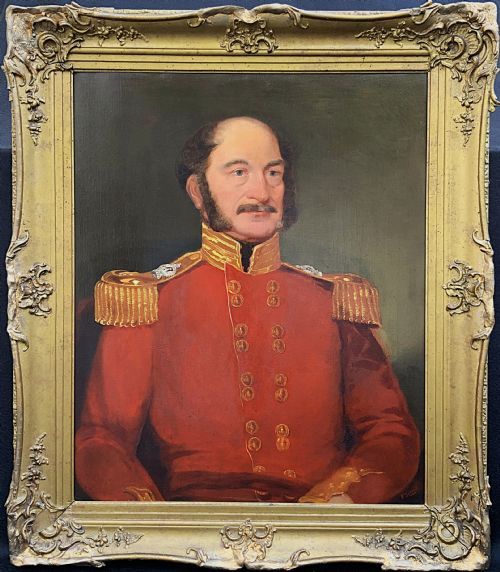
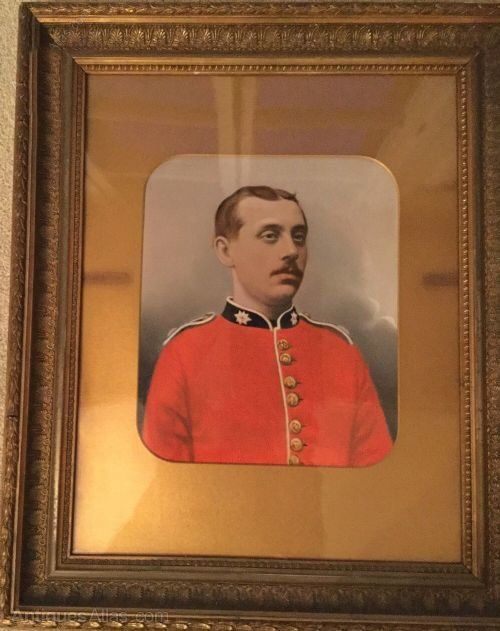
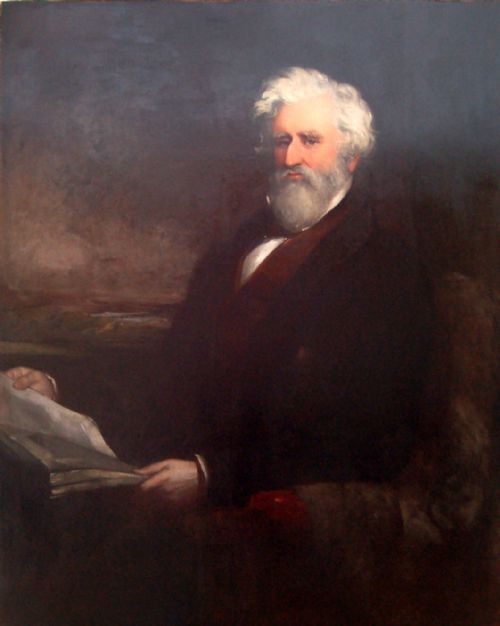
Victorian military officer art encompasses framed portraits of majors, colonels, generals and naval officers rendered in oil on canvas, paper and panel. These works record the likenesses of figures from regiments such as the Coldstream Guards, the Dragoons and the 5th Royal Lancashire Militia.
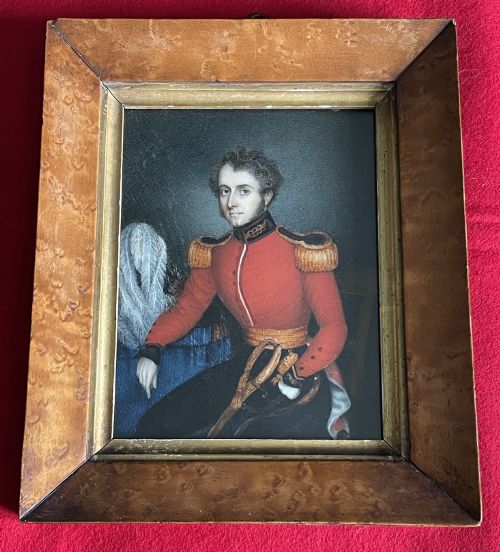
The material form ranges from monumental canvas paintings down to delicate miniature watercolours and framed artwork. Subjects often appear in ceremonial red tunics, naval jackets or full uniform, reflecting service across British regiments and overseas commands.
Most examples originate from the nineteenth century, spanning periods from the Regency era through to Edwardian dates. They frequently capture identifiable historical individuals, including major-generals and colonial commanders, preserved within original wood, glass and giltwood framing.
Materials and construction
Artists painted primarily with oil paint or watercolour applied to stretched canvas, prepared paper or wood panels. The physical support typically consists of woven canvas fixed to wooden stretchers or heavy watercolour paper housed beneath protective glass.
Surviving works are frequently retained in period frames constructed from wood and finished with giltwood mouldings. These frames provide structural support and define the visual boundary for portraits executed in the nineteenth century.
Listings feature works spanning the nineteenth century, including pieces dated to 1800, 1850, 1880, 1900 and 1910.
Assessing quality in portraiture
Quality rests upon the precision of the brushwork and the artist's ability to render the specific details of military uniforms, insignia and facial expression. Finer works capture individual likeness with psychological depth rather than relying on standard formulaic representation.
The prominence of the sitter and the documentation of the subject influence the standing of a piece. Portraits identifying specific historical officers, regiments and campaigns carry greater documentary weight than anonymous depictions.
George Frederic Watts·George Frederick Clarke·John Irvine·William Edward Millner·George Duncan Beechey·William Salter·Sir Richard Westmacott
The Victorian Military Officer Art Glossary
- Oil on Canvas
- Pigment mixed with drying oil applied to a woven fabric support stretched over a wooden frame. This medium allowed artists to build rich layers of colour and texture.
- Portrait Miniature
- A small-scale painting executed with fine detail, often created on paper, ivory or vellum. These intimate works were designed for personal display or portable keeping.
- Giltwood
- Wood carved and coated with a thin layer of gold leaf or gold paint. It provides a reflective, decorative border to traditional picture frames.
- Ceremonial Tunic
- The formal military jacket worn on ceremonial occasions, frequently rendered in vivid red wool with distinctive facings and braiding. It serves as a primary visual marker of rank and regiment in nineteenth-century portraiture.
Victorian Military Officer Art: Frequently Asked Questions
How do I identify the rank of an officer?
Rank is typically indicated through specific uniform details, such as collar insignia, sleeve braiding, epaulettes and headwear depicted in the portrait. Contemporary documentation or inscriptions on the reverse of the canvas often confirm the officer's exact standing.
Regimental histories and uniform guides from the nineteenth century help cross-reference these visual markers to determine whether the sitter served as a lieutenant colonel, major-general or naval commander.
Where should I hang these oil paintings?
These works suit traditional study spaces, libraries or living rooms with stable environmental conditions. Avoid direct sunlight and areas prone to excessive humidity to protect the oil paint and canvas.
Ensure the artwork is hung securely away from heat sources to prevent the wood stretcher and canvas from warping or the giltwood frame from drying out.
How do I date a military portrait?
Dating relies on a combination of the sitter's biography, uniform styles, painting technique and framing materials. Many pieces bear inscribed dates or records of the officer's lifespan.
Changes in military dress regulations across the nineteenth century provide a reliable chronological framework for narrowing down the year the portrait was painted.
What is the difference between an oil and a watercolour?
Oil paintings utilise pigment suspended in drying oil on canvas or panel, offering deep colour saturation and heavy impasto texture. Watercolours use water-soluble pigments applied to paper, producing a lighter, more translucent finish.
Watercolour portraits of military officers were often produced on a smaller scale, sometimes as framed miniatures, whereas oil paintings served as more monumental records.