





Victorian Metal Umbrella Stand
A victorian metal umbrella stand brings weight and polish to an entrance hall, holding wet canes and brollies in cast iron or gleaming brass.
Victorian Metal Umbrella Stand
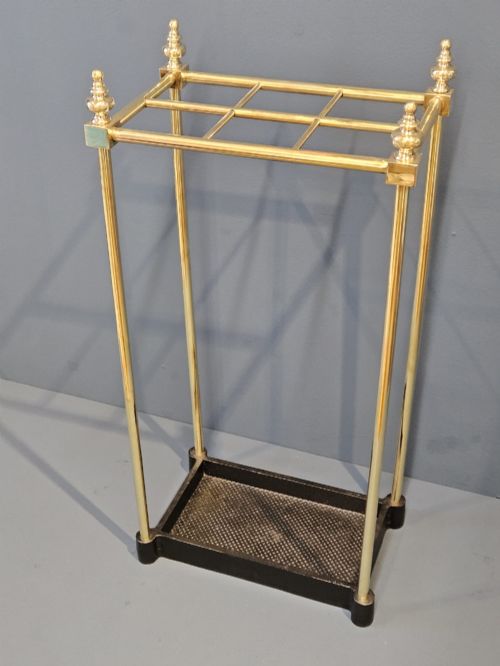
A victorian metal umbrella stand is a practical hallway furnishing designed to keep wet walking sticks and brollies contained after a walk. These utilitarian pieces appear in robust forms from the nineteenth century, including the Victorian, Edwardian, and arts and crafts periods.
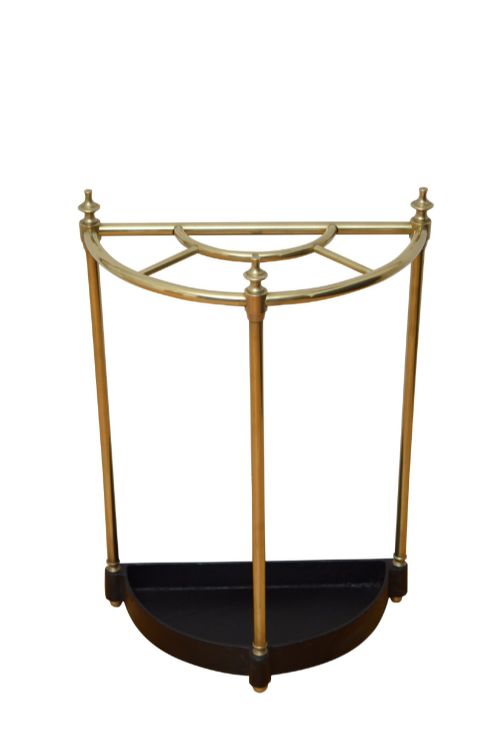
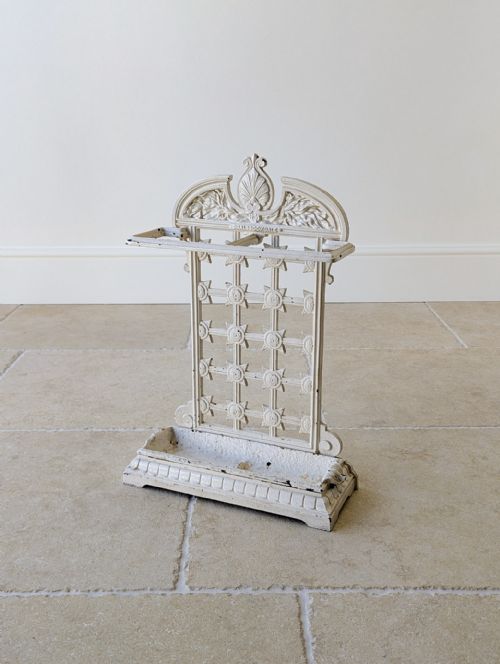
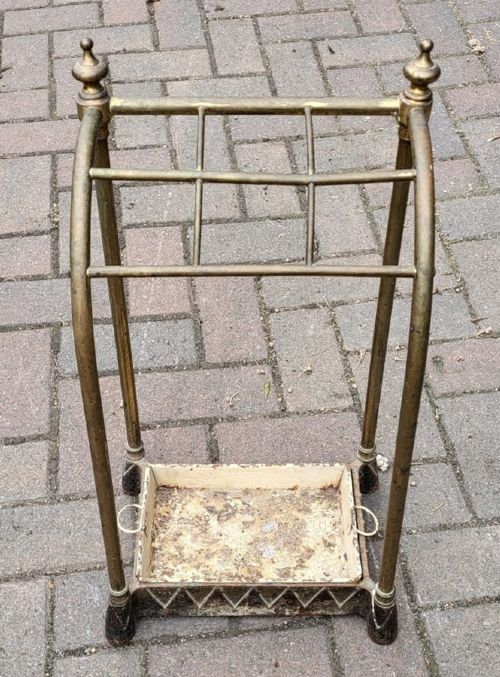
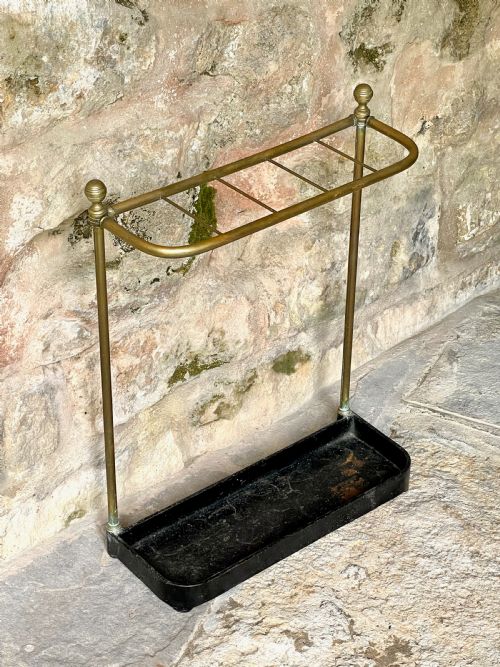
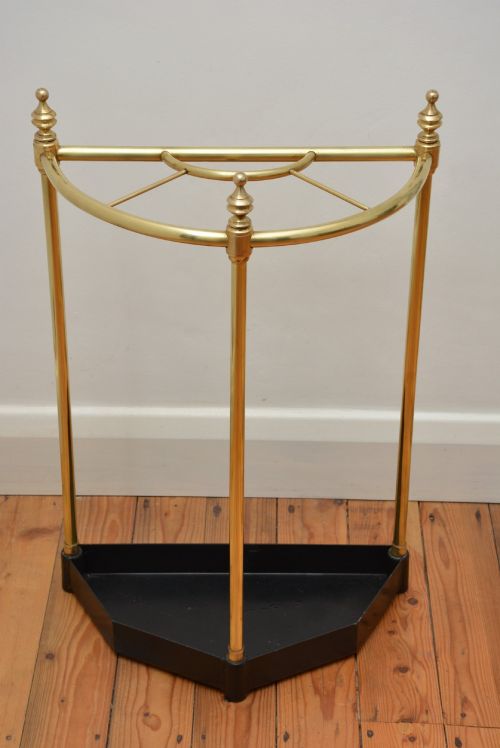
The most common versions met on this page are cast iron and brass stands, often shaped in a demi-lune profile to fit flat against a hallway wall. Sturdy frames in iron, copper, and zinc manage the daily dampness of heavy weather without rotting.
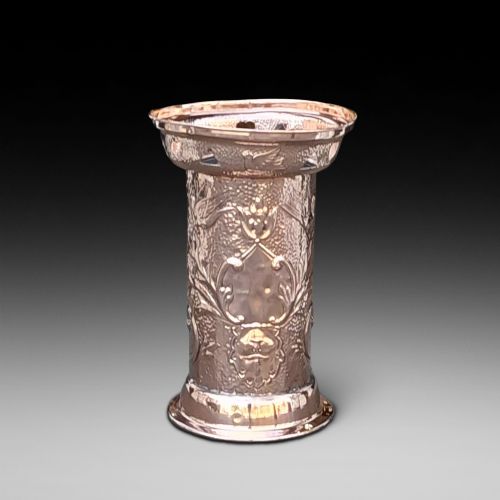
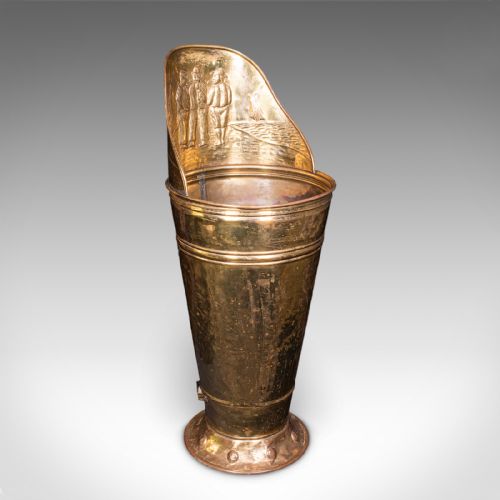
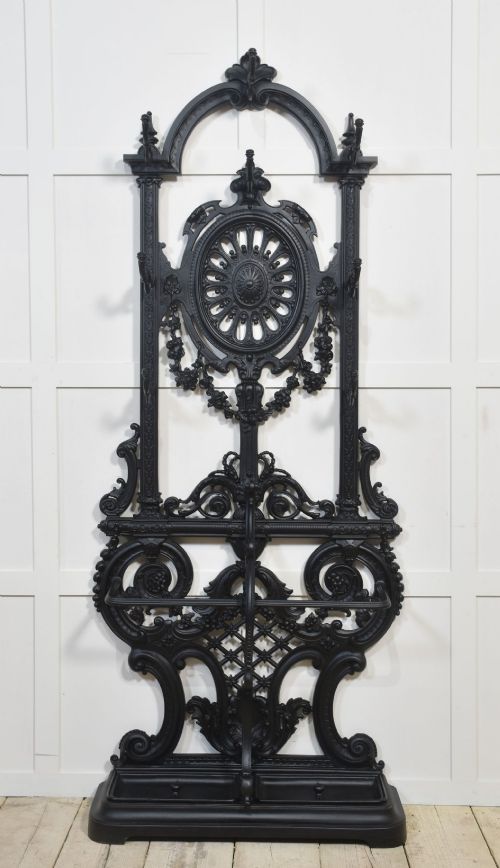
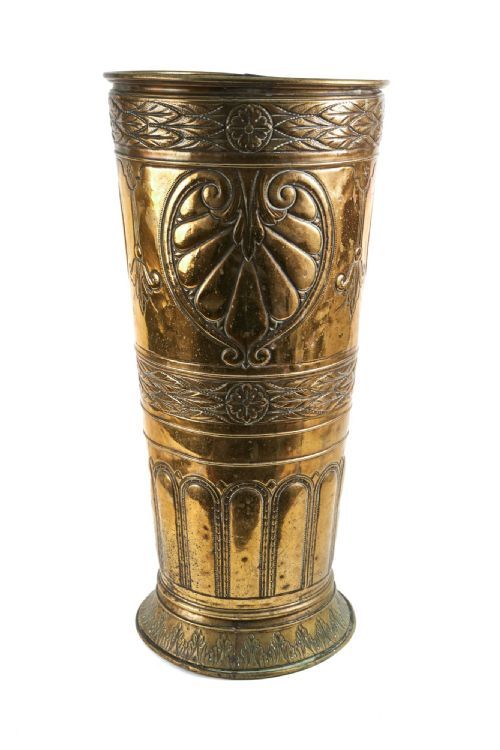
Beyond simple floor rings, the selection includes hall stands combining umbrella loops with coat hooks, alongside unusual water barrels and pierced brass cylinders. Originating largely from English workshops and country houses, these objects bridge heavy utility and domestic decor.
Materials and Method
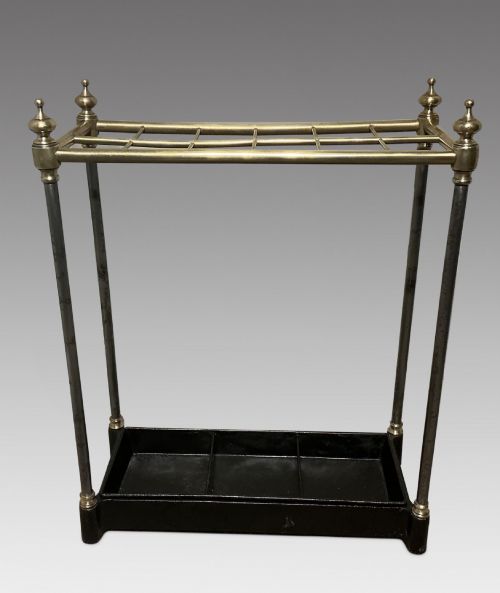
Foundries shaped heavy metals using sand casting, pouring molten iron into moulds to create intricate openwork patterns and solid drip trays. Cast iron components provided the necessary ballast to prevent tipping when loaded with heavy timber-shafted umbrellas.
Sheet brass and copper were beaten, spun, or riveted into cylindrical barrels and demi-lune shapes, often highlighting warm metallic finishes. Iron frames were frequently painted black or left with iron-bound bindings to resist rust in damp entryways.
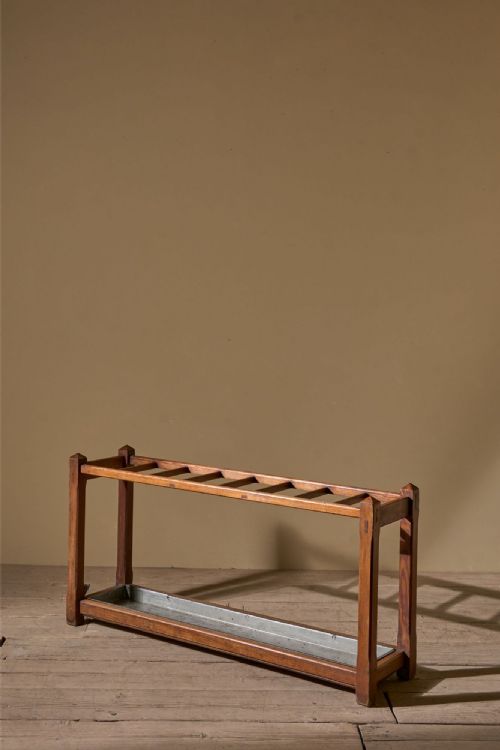
Pine and walnut occasionally feature in mixed-media designs or backings, while steel components add structural tension to brass frames. Metalwork often displays pierced decoration or applied faux bamboo turning to mimic organic forms in rigid material.
Victorian Metal Umbrella Stand Retail Price Guide 2026
Typical asking prices for victorian metal umbrella stand among the pieces listed under this phrase on Sellingantiques today, from the lower quarter to the upper quarter. They describe what is for sale here now, not the wider market.
Some Victorian brass stands feature pierced motifs designed to let wet brollies dry faster while showing off the hallway wallpaper behind them.
Judging Quality
The distinction between ordinary utility items and finer examples lies in the crispness of the casting and the weight of the metal. Heavier gauge brass and deeply detailed ironwork show a higher level of foundry skill than thin, light alternatives.
Design ambition separates basic circular rings from sculptural works influenced by the arts and crafts movement or specific ironworks. The presence of a matching original drip tray at the base elevates a piece, as these tin or cast iron pans frequently went missing over decades of use.
Coalbrookdale·Falkirk Ironworks·Falkirk Foundry
The Victorian Metal Umbrella Stand Glossary
- Demi-lune
- Half-moon shape designed to sit flush against a hallway wall. This configuration saves valuable floor space in narrow Victorian entryways.
- Coalbrookdale
- Renowned ironworks producing intricate cast iron furniture and architectural metalwork. Pieces from this foundry show exceptional detail in plant and Gothic motifs.
- Falkirk Foundry
- Scottish manufacturer of heavy iron goods, including utility stands for halls. Their work matches the robust industrial standards of the nineteenth century.
- Arts and Crafts
- Design movement emphasising hand-worked metals like copper and brass with visible construction details. These stands reject factory uniformity in favour of hammered textures.
- Drip tray
- The removable pan at the base of a stand that catches rainwater from wet umbrellas. Original trays complete the integrity of the piece.
Victorian Metal Umbrella Stand: Frequently Asked Questions
Where did these stands sit in a house?
These umbrella stands traditionally stood in the entrance hall, vestibule, or boot room of a country house or townhouse. They offered guests and residents a designated spot to deposit wet brollies upon entering.
Placing them near the front door protected interior timber floors and carpets from dripping rainwater.
How do I stop rust on a cast iron stand?
Keep the metal dry by emptying and wiping the base drip tray regularly after heavy rain. Ensure the room has adequate air circulation to prevent moisture accumulation around the base.
Applying a light coat of wax can protect painted or bare cast iron surfaces from atmospheric humidity.
Are original drip trays common?
Original drip trays are relatively scarce because these thin metal pans rusted through or were discarded over generations of use. Many surviving stands function without them or rely on later replacement trays.
Finding a stand with its matching original tray is a distinct bonus for collectors.
Can these hold heavy walking sticks?
Cast iron and heavy brass stands are exceptionally sturdy and easily support weighty wooden walking sticks and heavy umbrellas. Their substantial metal mass prevents tipping when multiple items are loaded into the loops.
Lighter copper barrels also provide enough internal volume for several long items without losing balance.