



Victorian Marquetry Urns
Victorian marquetry urns are ornate decorative vessels featuring intricate inlaid wood designs from the nineteenth century that bring warmth and historical charm to a room.
Victorian Marquetry Urns
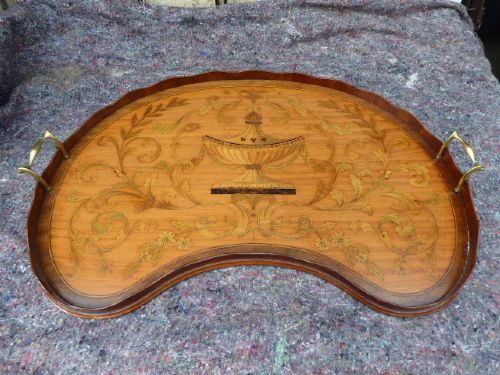
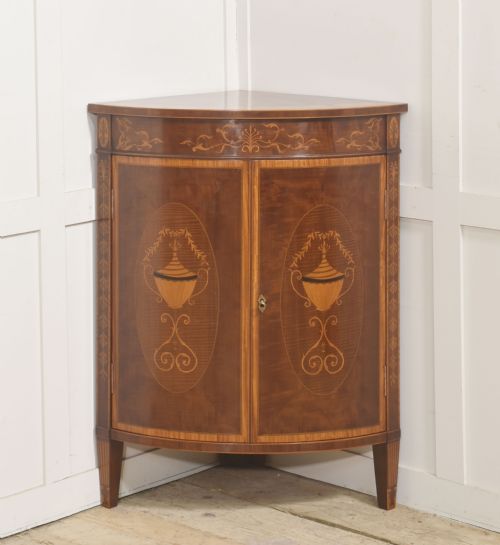
Victorian marquetry urns are decorative objects representing the nineteenth-century passion for classical revival design and detailed woodwork. When exploring victorian marquetry urns, a buyer encounters pieces originating from the 1880s, 1890s, and around 1900, reflecting late Victorian tastes. These items embody the aesthetic priorities of their period, combining utility with elaborate surface decoration.
How they were made
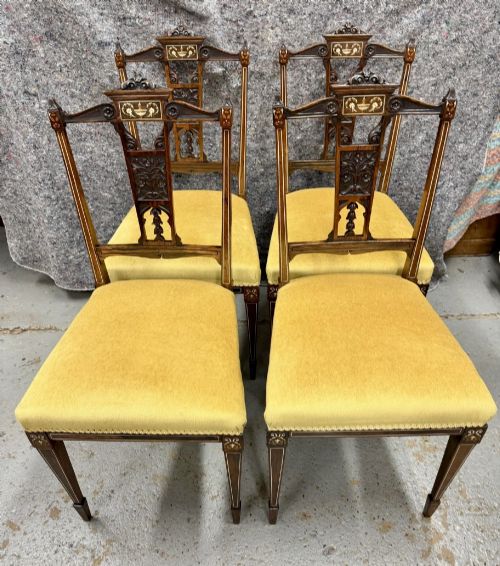
The construction of these pieces relies on traditional cabinet-making timbers such as rosewood, mahogany, satinwood, and walnut as primary foundations. Artisans shaped these woods into structural forms that could support complex decorative schemes across various domestic furnishings.
Surface decoration is achieved through marquetry and inlay work utilising boxwood, satinwood, and fruitwood to create contrasting pictorial or geometric motifs. Brass components are also incorporated where functional hardware or structural mounts are required.
Victorian Marquetry Urns Retail Price Guide 2026
Typical asking prices for victorian marquetry urns among the pieces listed under this phrase on Sellingantiques today, from the lower quarter to the upper quarter. They describe what is for sale here now, not the wider market.
Recorded styles encompass Victorian, Sheraton Revival, and Neoclassical Revival aesthetics from the late nineteenth century.
What varies in quality
The standard of execution in the inlay work distinguishes different tiers of craftsmanship within these pieces. Precision in cutting and fitting the contrasting wood veneers determines the crispness of the floral or geometric patterns across the surface.
The choice of primary timber and secondary framing materials also marks a clear distinction in grade. Heavier use of dense hardwoods like rosewood or finely figured satinwood alongside signed maker attribution elevates the standing of an individual piece.
Edwards and Roberts·Keeble London
The Victorian Marquetry Urns Glossary
- Marquetry
- A technique of forming decorative patterns by fitting together veneer pieces onto a structural surface. This method allows for elaborate pictures and symmetrical designs using various coloured woods.
- Satinwood
- A durable timber with a characteristic golden-yellow sheen and fine grain. It is frequently utilised for high-status cabinet work and detailed inlay panels.
- Sheraton Revival
- A late nineteenth-century design movement inspired by the furniture styles of Thomas Sheraton. Pieces in this style typically feature neoclassical motifs, subtle curves, and delicate inlay.
- Neoclassical Revival
- An artistic movement drawing on classical Greek and Roman motifs. This style influences the architectural symmetry and decorative urn patterns seen on Victorian furnishings.
- Jardinière
- A decorative pot or stand designed to hold plants or flowers. In Victorian interiors, these items often feature elaborate woodwork and marquetry decoration to complement surrounding furniture.
Victorian Marquetry Urns: Frequently Asked Questions
What materials make up these pieces?
These pieces are constructed primarily from traditional timbers such as rosewood, mahogany, satinwood, and walnut.
Surface decoration is executed using boxwood, satinwood, and fruitwood inlay alongside occasional brass mounts.
How do I date these items?
Dating relies on stylistic markers and recorded construction periods spanning from 1880 through to the turn of the twentieth century.
Late Victorian and Sheraton Revival design traits help place these objects within the final decades of the 1800s.
Where were these items placed?
These furnishings were utilised throughout nineteenth-century domestic interiors for storage, display, and serving purposes.
Items ranged from corner cabinets and music storage units to decorative side tables and serving trays.
What defines Sheraton Revival style?
Sheraton Revival refers to the late nineteenth-century reinterpretation of eighteenth-century neoclassical furniture designs.
Characteristics include refined proportions, symmetrical layouts, and delicate contrasting wood inlays.