





Victorian Marquetry Seating
Victorian marquetry seating brings intricate wood inlay directly into the functional heart of the home.
Victorian Marquetry Seating
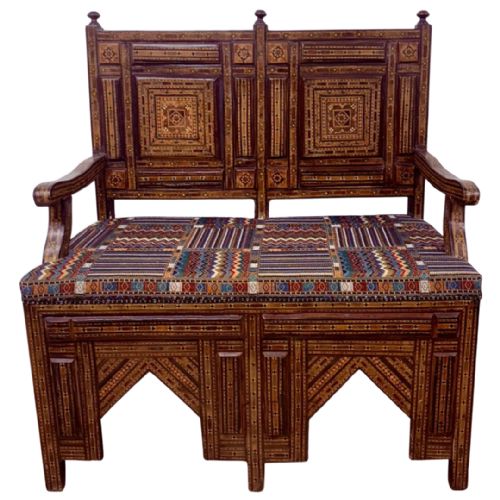
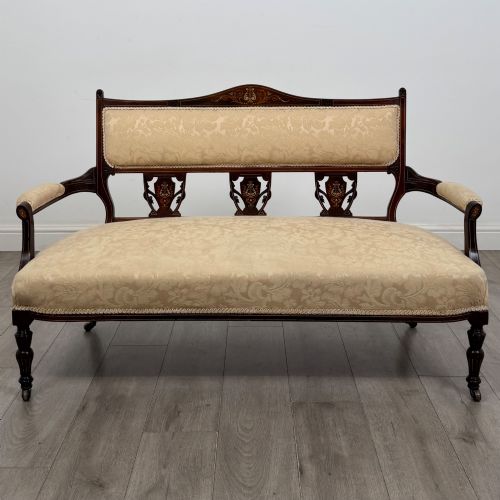
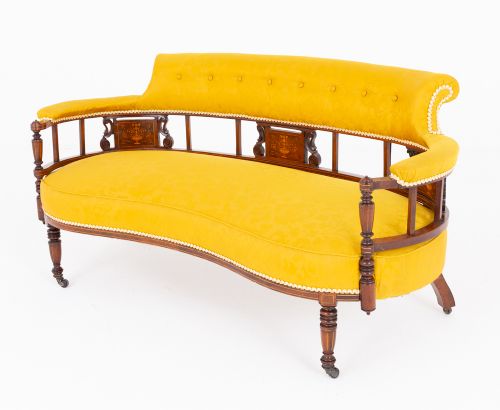
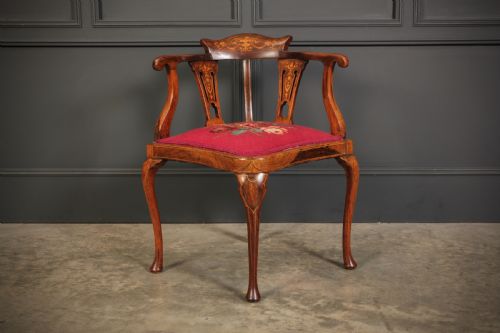
Victorian marquetry seating combines structural woodwork with complex decorative surface patterns formed from contrasting timber veneers. You will encounter settees, sofas, and armchairs alongside piano stools, hall chairs, and corner chairs across these listings.
The periods represented span the nineteenth century into the early twentieth century, incorporating regional aesthetics such as Syrian, Swiss, and Egyptian Revival alongside standard Victorian and Edwardian forms.
Rosewood and mahogany form the foundational timber choices for these framed pieces, frequently paired with satinwood or walnut elements. Upholstery materials range from damask to leather and standard fabric, while some forms omit padding entirely in favour of carved or inlaid wooden panels.
Materials and construction methods
Craftsmen built these chairs and settees using dense hardwoods like mahogany and rosewood to support intricate surface ornamentation. Panels of contrasting timber, brass, and bone were meticulously cut and fitted into recessed sections of the primary wood grain.
Specialised mechanisms occasionally accompanied these timber frames, as seen in rise and fall piano stools and swivelling ship chairs. Structural joints relied on traditional cabinetmaking joinery to maintain stability beneath decorative veneer work.
Victorian Marquetry Seating Retail Price Guide 2026
Typical asking prices for victorian marquetry seating among the pieces listed under this phrase on Sellingantiques today, from the lower quarter to the upper quarter. They describe what is for sale here now, not the wider market.
Object types range from settees and corner chairs to revolving ship chairs and musical stools.
Assessing quality in inlaid furniture
Quality rests upon the precision of the veneer work and the preservation of the intricate patterns embedded in the timber. Pieces that retain tightly fitted botanical or geometric inlays without shrinkage gaps demonstrate superior cabinetmaking skill.
The integrity of the underlying hardwood frame determines durability, distinguishing robust library and salon seating from purely decorative forms. Upholstery execution and the retention of original mechanical components further separate standard items from finer examples.
The Victorian Marquetry Seating Glossary
- Marquetry
- Decorative veneer applied to a wood structure to form intricate pictures or geometric patterns. This technique utilises varied wood tones and materials like bone to create contrast.
- Rosewood
- A dense, dark timber valued for its rich grain and purplish-brown colouring. It served as a primary material for high-status Victorian salon seating.
- Satinwood
- A durable, lustrous timber with a yellowish sheen used extensively for contrasting inlay work. It highlights specific decorative motifs on mahogany and rosewood frames.
- Carolean Revival
- A nineteenth-century revival style referencing late seventeenth-century English design characteristics. Such chairs often feature elaborate crest rails and turned supports.
- Rise and fall
- A mechanical action allowing seat height adjustment via a central threaded screw column. This mechanism appears frequently on Victorian piano stools.
Victorian Marquetry Seating: Frequently Asked Questions
How do I clean inlaid wood surfaces?
Dust regularly with a dry, soft cloth to prevent particulate buildup within the veneer crevices.
Apply specialised furniture wax sparingly to nourish the timber without dampening vulnerable inlay joints.
Can these chairs be used daily?
Solid mahogany and rosewood frames offer robust support for regular domestic seating.
Delicate marquetry panels require careful placement away from direct heat sources and heavy friction.
What defines Egyptian Revival furniture?
This style incorporates distinct motifs and architectural forms inspired by ancient Egyptian artefacts.
Makers adapted these classical symbols into nineteenth-century seating frameworks.
Are piano stools mechanically adjustable?
Certain examples utilise rise and fall mechanisms to alter the seat height for the player.
These functional components integrate directly into the central wooden pedestal.