





Victorian Marquetry Chest
A victorian marquetry chest brings together intricate wood inlay and solid period craftsmanship to anchor a room with pattern and utility.
Victorian Marquetry Chest
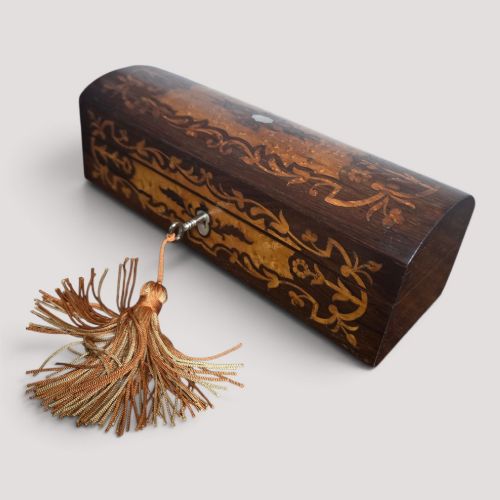
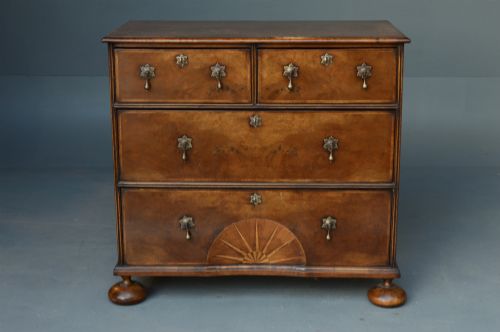
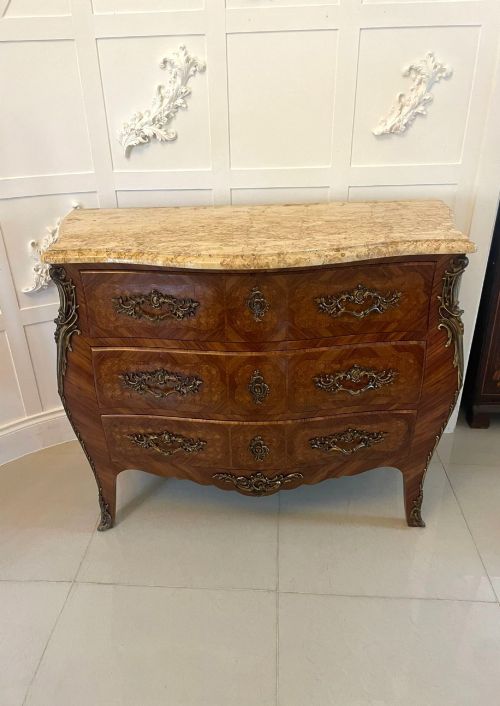
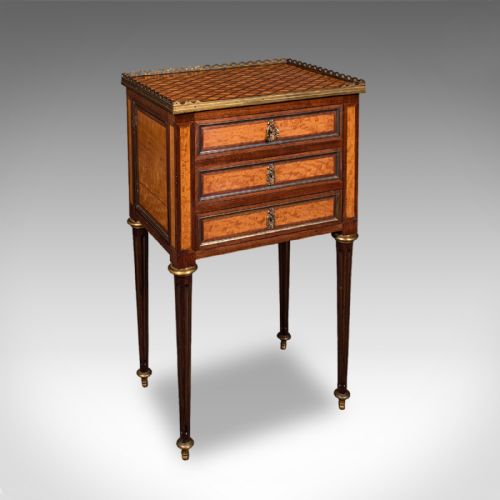
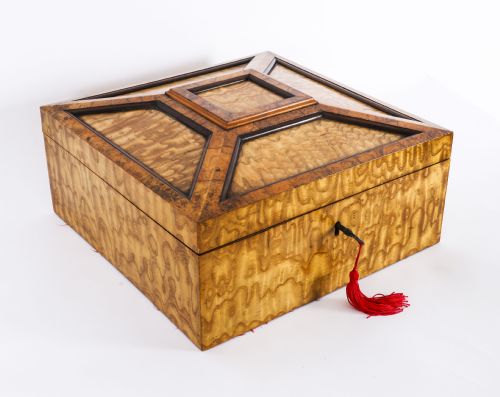
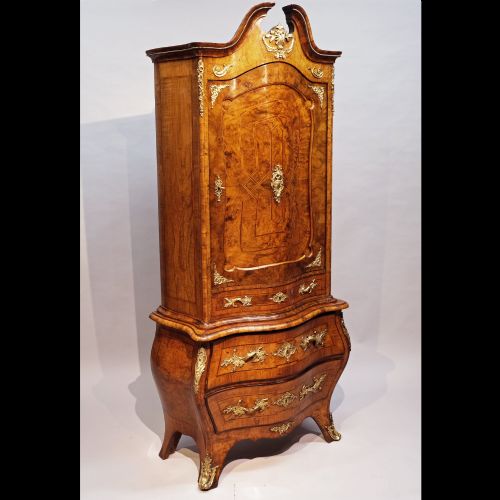
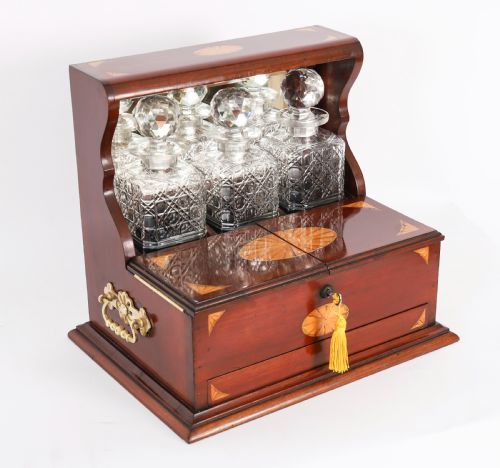
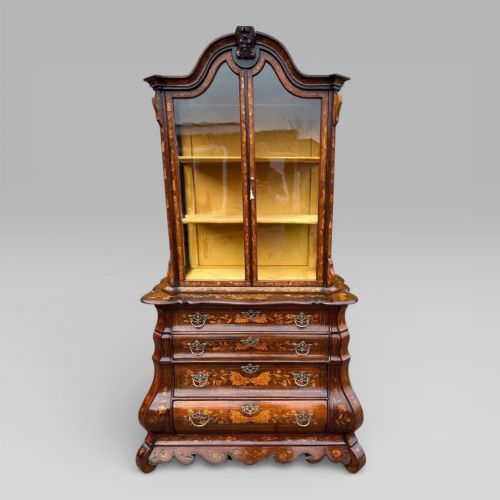
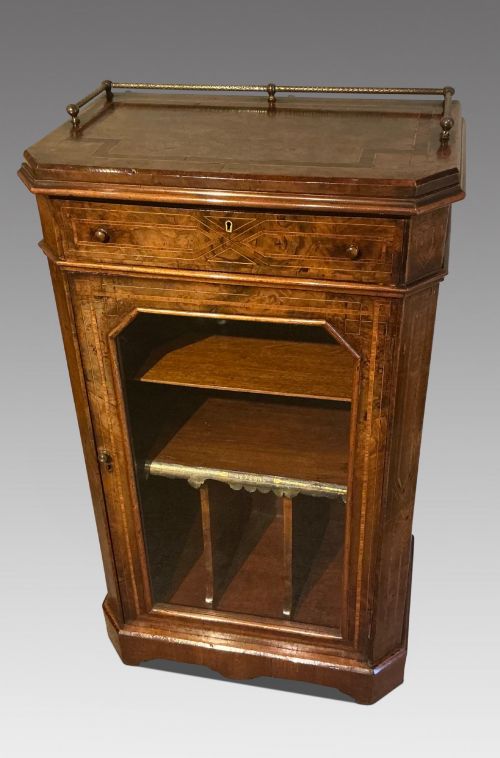
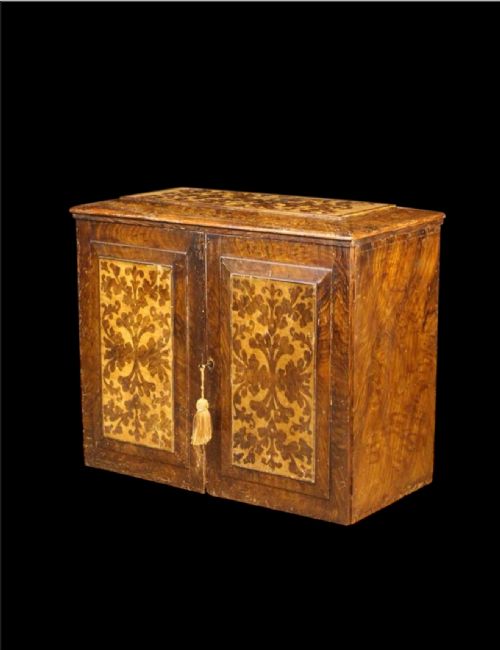
A victorian marquetry chest encompasses various case furniture forms decorated with elaborate wood veneer patterns, ranging from small table boxes to larger drawer units. The pieces appearing most frequently on this page include walnut and mahogany chests, side cabinets, and inlaid tea caddies.
Makers and workshops of the period applied pictorial and geometric wood patterns to surfaces using contrasting timbers like satinwood and rosewood. These items served functional domestic roles in sitting rooms and bedrooms while displaying decorative skill.
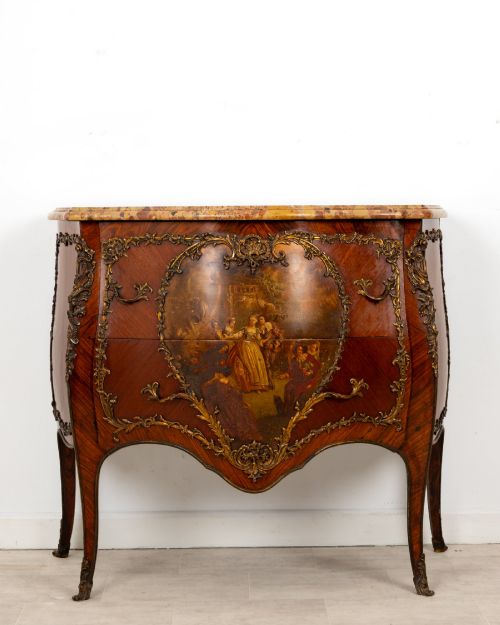
Originating primarily within nineteenth-century British and continental workshops, these items reflect diverse stylistic revivals from Louis XV motifs to Aesthetic Movement restraint. Each example relies on the contrast of figured woods against darker ground timbers.
How they were made
Cabinet makers constructed the primary carcases using stable timbers like mahogany, walnut, or oak, applying fine veneers over the structural frame. Marquetry elements were hand-cut from thin sheets of diverse woods and fitted together into paper patterns before being glued to the surface.
Detailed embellishments incorporated brass hardware, glass panels, and specialised inlay techniques such as Tunbridge ware or parquetry. Hand-carved mounts and applied mouldings completed the exterior framework of these storage pieces.
Victorian Marquetry Chest Retail Price Guide 2026
Typical asking prices for victorian marquetry chest among the pieces listed under this phrase on Sellingantiques today, from the lower quarter to the upper quarter. They describe what is for sale here now, not the wider market.
Listings feature walnut, mahogany, and rosewood alongside specialised techniques like Tunbridge Ware and parquetry.
What varies in quality
The standard of a victorian marquetry chest depends heavily on the precision of the veneer work and the variety of natural timbers employed. Tighter joints in the floral or geometric patterns and minimal use of painted highlights indicate superior workshop execution.
Secondary timbers inside drawer construction and the weight of the underlying carcase wood reveal the original grade of manufacture. Examples produced by documented firms generally exhibit more refined interior fittings and heavier gauge brass handles.
Henry Hollamby·Edwards & Roberts·Holland & Sons·Keeble London·Gillows
The Victorian Marquetry Chest Glossary
- Marquetry
- A decorative technique where thin slices of wood, shell, or ivory are assembled into pictorial or geometric patterns and glued to a wooden carcase. This method differs from inlay by covering the entire surface rather than being set into recessed channels.
- Parquetry
- Geometric wood inlay forming repeating patterns such as cubes, squares, or herringbone designs. It appears frequently on tabletops and box lids.
- Tunbridge Ware
- A specialised type of woodwork featuring microscopic tesserae of naturally coloured woods assembled to create mosaic pictures. These detailed motifs often decorate small boxes and tea caddies.
- Wellington Chest
- A tall, narrow chest of drawers secured by a single locking side pilaster that fastens over the drawer edges. This specific form typically holds documents or collector specimens.
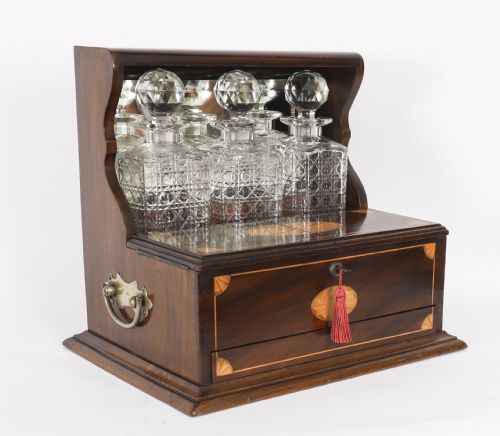
- Tantalus
- A locking wooden frame holding decanters visible to the eye but inaccessible without a key. They are often inlaid with brass and fine woods.
Victorian Marquetry Chest: Frequently Asked Questions
What is a victorian marquetry chest?
A victorian marquetry chest is a piece of nineteenth-century storage furniture decorated with complex wood veneer patterns. These items range from compact tabletop caddies to full-size drawer units.
Craftsmen used contrasting timbers to create floral or geometric designs across the surfaces. They combine practical storage with decorative veneer work characteristic of the period.
How do I clean a wood inlaid chest?
Cleaning requires a soft, dry cloth to remove dust without disturbing the delicate veneer joints. Avoid modern chemical polishes that can seep into the grain.
Traditional beeswax applied sparingly helps preserve the finish of the wood. Keep the piece away from direct sunlight and heat sources to prevent the marquetry from lifting.
Where were these pieces used originally?
These decorated chests and cabinets occupied prominent spaces in nineteenth-century drawing rooms, boudoirs, and libraries. They served to store personal valuables, tea supplies, or correspondence.
Larger drawer units functioned in bedrooms for clothing storage while displaying the owner's taste. Their decorative surfaces meant they were meant to be seen rather than hidden away.
How can I tell the period?
Dating relies on examining the construction methods, secondary interior woods, and prevailing stylistic influences. Nineteenth-century examples often feature hand-cut dovetails and distinct veneer thicknesses.
Cabinetmaker stamps or paper labels inside drawers provide direct evidence of origin. Stylistic markers such as Aesthetic Movement lines or Louis XVI revival motifs also point to specific decades.