





Victorian Maritime Decor
Victorian maritime decor brings the visual power of nineteenth-century shipping into a room through carved models, brass instruments, and coastal paintings.
Victorian Maritime Decor
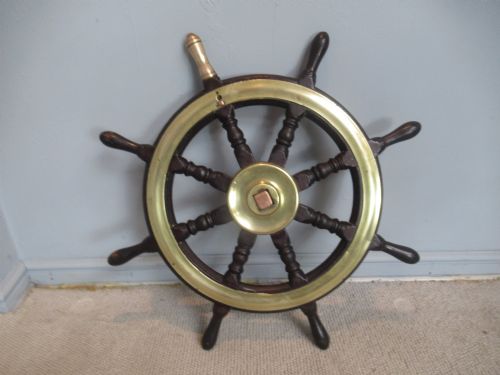
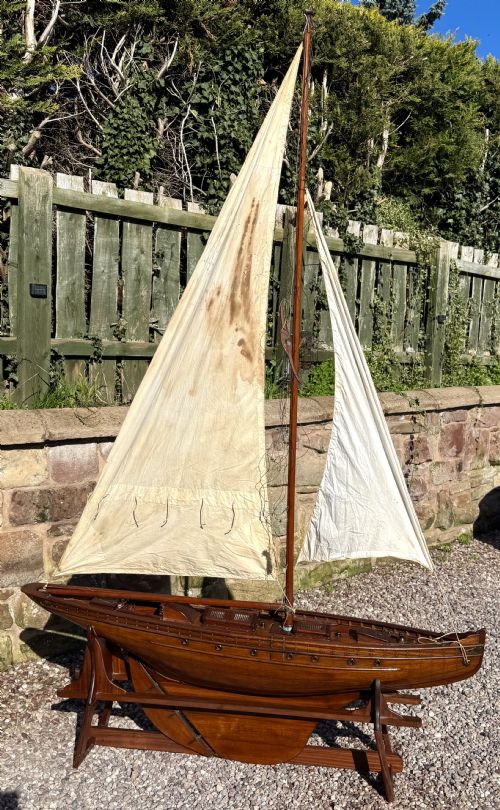
Victorian maritime decor comprises functional objects from ships, folk art creations, and fine art paintings originating primarily in the nineteenth century. Buyers seeking pieces under this heading encounter items ranging from large wooden ship's wheels and brass port holes to detailed dioramas and scratch-built pond yachts.
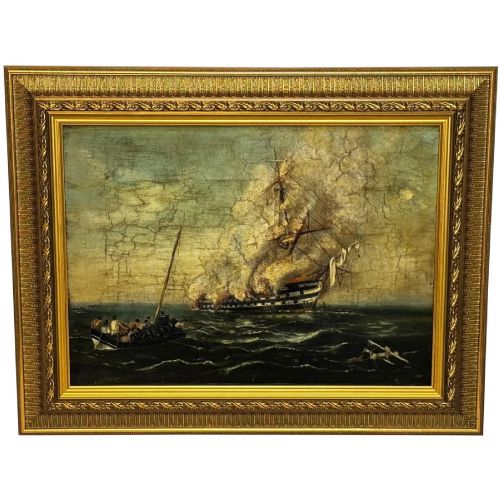
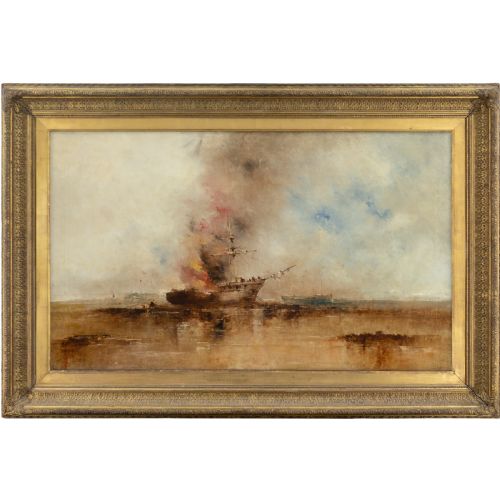
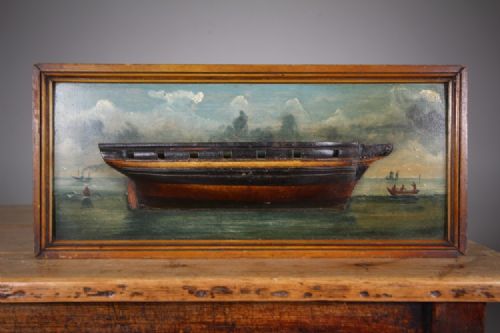
The selection leans heavily toward utilitarian objects salvaged from vessels alongside handcrafted folk art models. Paintings depicting coastal scenes, shipwrecks, and naval reviews also form a substantial part of the material available to collectors.
Materials and construction methods
Makers utilised durable woods such as teak, oak, and sycamore alongside metals like brass and nickel plating to build instruments and helm components intended to withstand marine environments. Ship models and dioramas incorporate canvas, paper, paint, and carved wood to recreate rigging, hulls, and coastal waves.
Folk art pieces demonstrate scratch-built construction techniques, utilising whatever materials were to hand, from pine and plaster to painted fabric. Paintings rely on oil on canvas or watercolour on paper to capture coastal light and maritime action.
Victorian Maritime Decor Retail Price Guide 2026
Typical asking prices for victorian maritime decor among the pieces listed under this phrase on Sellingantiques today, from the lower quarter to the upper quarter. They describe what is for sale here now, not the wider market.
Factors influencing quality
Quality rests upon the precision of the maker's hand, whether in the crisp joinery of a carvel hull on a pond yacht or the fine brushwork of a coastal oil painting. Proportion, structural integrity, and the preservation of original surfaces separate standard decorative items from superior examples.
Makers with documented shipyard connections or known artistic provenance command greater attention than anonymous works. The retention of unpolished brass, original paint finishes, and complete rigging elevate the standing of a piece within this category.
William McAlpine·W Grey And Co·Dewrance Of London·Richard Brydges Beechey·James Kinnear·Thomas Bush Hardy·Arthur Joseph Meadows
The Victorian Maritime Decor Glossary
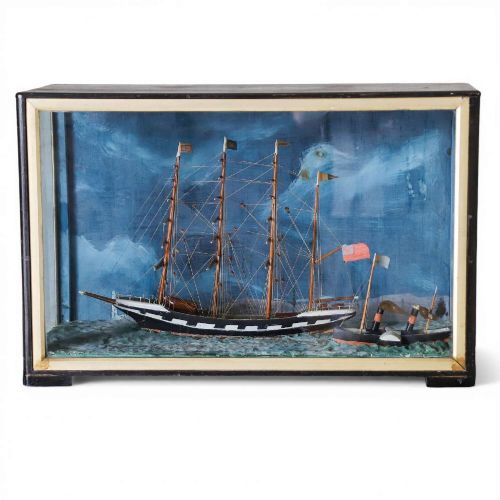
- Diorama
- A three-dimensional scene enclosed in a box, often depicting a sailing ship or marine disaster using painted backgrounds and carved models.
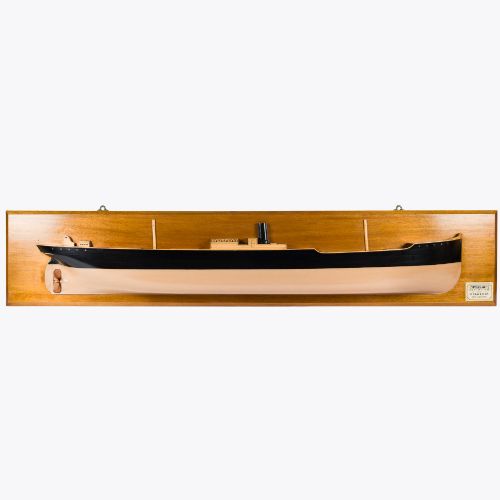
- Half hull model
- A three-dimensional representation of one side of a ship's hull, mounted on a backboard for design evaluation or display.
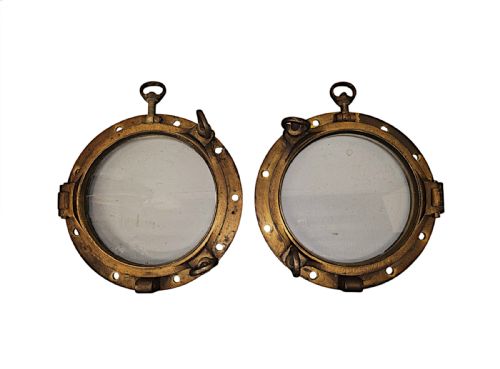
- Port hole
- A circular window set into the hull of a ship, fitted with a heavy brass frame and glass to admit light and air.
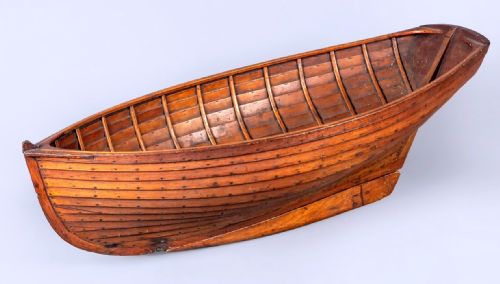
- Pond yacht
- A model sailing boat designed to be sailed on open water, constructed with wooden hulls and fabric sails during the nineteenth century.
Victorian Maritime Decor: Frequently Asked Questions
What counts as victorian maritime decor?
This category includes nineteenth-century items connected to ships and the sea, ranging from navigational instruments and architectural salvage to fine art paintings and folk art models.
Buyers find everything from large teak ship's wheels to detailed dioramas housed in glass cases.
How do I display a ship's wheel?
Large timber wheels in teak or oak mount directly onto interior walls as sculptural focal points. Their substantial weight requires secure fixing into structural studs or masonry.
Smaller examples fit well on tabletops or mantels using custom metal stands that display the turned spokes and brass hubs.
Are pond yachts functional?
Many nineteenth-century pond yachts were built with functional rudders and weighted keels designed for actual sailing on park ponds. Scratch-built examples often retain their original canvas sails and wooden rigging.
Collectors today generally exhibit them on stands rather than launching them on water.
How do I date a maritime diorama?
Dating relies on the style of the vessels depicted, the materials used in the background painting, and the construction of the enclosing wooden case. Nineteenth-century examples frequently feature hand-painted canvas seas and detailed rigging made from thread and wire.
Written inscriptions on the reverse or inside the case occasionally provide specific vessel names and dates.