



Victorian Marble Shelf Clock
A victorian marble shelf clock brings solid weight and precise nineteenth-century mechanics to a mantelpiece, combining dense stone with polished brass and bronze details.
Victorian Marble Shelf Clock
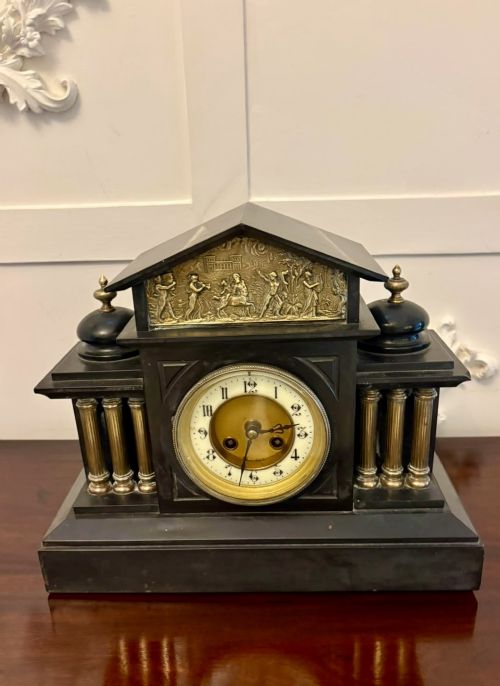
A victorian marble shelf clock is a substantial timepiece designed to sit steadily on a mantelpiece or shelf, originating predominantly from the nineteenth century across periods spanning the eighteen-sixties to the eighteen-nineties. These heavy objects combine functional eight-day movements with architectural stone housings influenced by classical, architectural, and Egyptian revival styles.
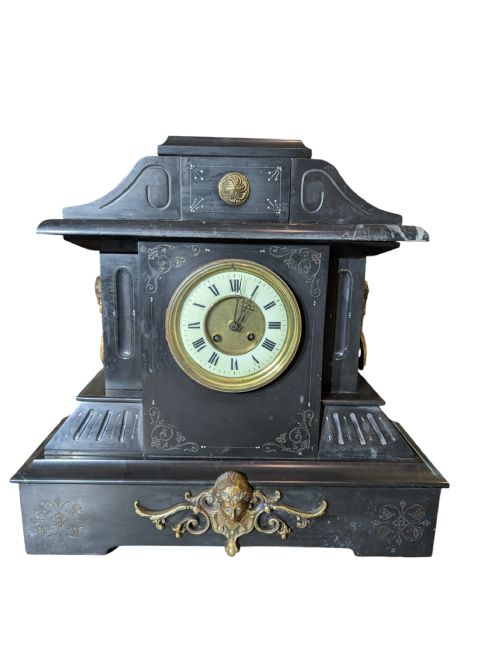
Buyers encountering this selection will most frequently find French and English mantel clocks fashioned from black slate, red rouge marble, and yellow sienna marble. Many examples incorporate contrasting incised inlays, gilt bronze mounts, or flanking sculptural elements like bronze stallions and classical figures.
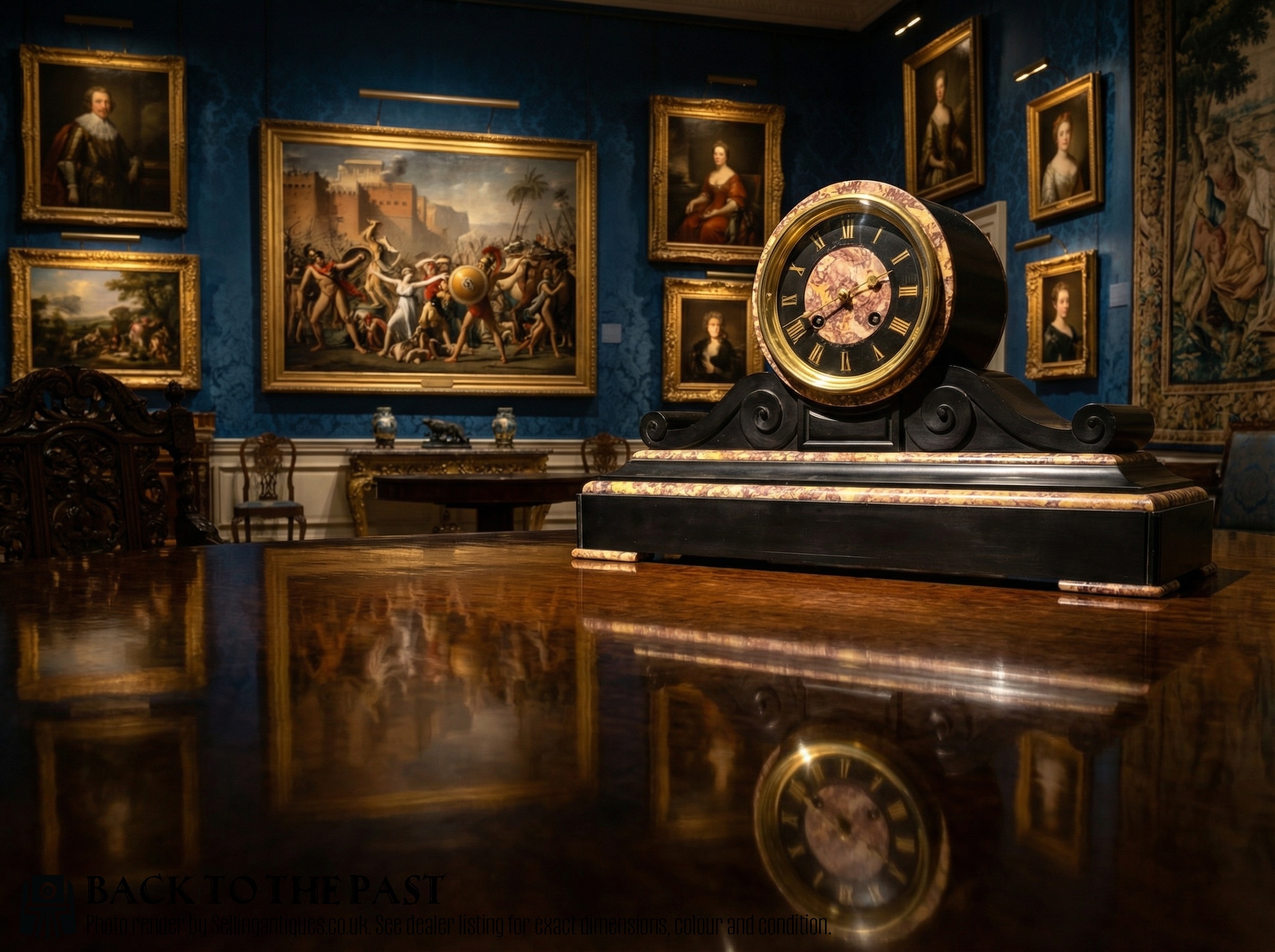
The assortment ranges from simple drumhead clocks to large architectural compositions featuring visible mercury pendulums or perpetual calendars. Each piece relies on the natural density of stone to provide a stable, enduring platform for mechanical striking movements.
Distinctions in Quality
The distinction between standard production pieces and superior examples rests in the ambition of the stone cutting and the refinement of the cast bronze mounts. Finer clocks utilise solid rouge or sienna marble rather than basic black slate, featuring crisper architectural mouldings and deeply cast, hand-finished bronze ornaments rather than simple stamped brass.
Some nineteenth-century makers hid bronze statues of William Shakespeare or bronze stallions right on top of the marble blocks.
Philippes Paris·Baby and Jannings·D. Munsey of Cambridge·Achille Brocot
The Victorian Marble Shelf Clock Glossary
- Black Slate
- A dense, dark metamorphic rock utilised extensively for Victorian clock bodies because it could be easily cut, polished, and incised. It frequently mimicked more expensive black marble.
- Sienna Marble
- A striking yellow and brown ornamental marble quarried in Italy and favoured by nineteenth-century clockmakers for rich, colourful cases. Its natural veining ensures that every stone case remains visually distinct.
- Egyptian Revival
- A nineteenth-century decorative style drawing inspiration from ancient Egyptian motifs such as sphinxes, obelisks, and hieroglyphic borders. It appeared frequently on slate and bronze clock cases following archaeological discoveries.
- Drumhead Clock
- A mantel timepiece featuring a circular clock case mounted on a stepped stone plinth or base. This distinct form resembles a drum laid upon its side.
- Eight Day Movement
- A mechanical clock movement engineered to run for eight days on a single winding of the spring barrels. This development reduced the frequency required for manual maintenance.
Victorian Marble Shelf Clock: Frequently Asked Questions
How do I wind an eight day movement?
Insert the winding key into the small apertures on the enamelled dial and turn it gently clockwise until you feel firm resistance. Take care not to overwind the mainspring.
Most eight day movements require winding once a week to maintain accurate timekeeping and striking functions.
Why is slate commonly used in these clocks?
Slate offered nineteenth-century manufacturers a stable, heavy, and easily worked stone that could take a high black polish resembling expensive marble. Its immense weight also provided a rigid, unyielding foundation for complex brass gear trains.
Masons could readily carve architectural pediments, columns, and bevels into the solid blocks.
How should I clean a marble clock case?
Dust the stone regularly with a soft, dry cloth to prevent grime accumulation in the incised details and bronze mounts. Avoid harsh chemical cleaners or excess water, which can damage exposed slate or seep into stone fissures.
Apply a microcrystalline wax sparingly to bronze mounts if protection against oxidation is necessary.
What does architectural style mean for these clocks?
Architectural mantel clocks were designed to mimic classical buildings, incorporating pediments, marble columns, cornices, and stepped plinths. This aesthetic reflected the Victorian taste for solemn, monumental furnishings in domestic interiors.
Such pieces often integrated contrasting coloured marbles to highlight structural elements like pilasters and bases.