


Victorian Marble Mantel
These pieces combine heavy stone cases with precise mechanical movements, bringing substantial nineteenth-century weight and presence to a room.
Victorian Marble Mantel
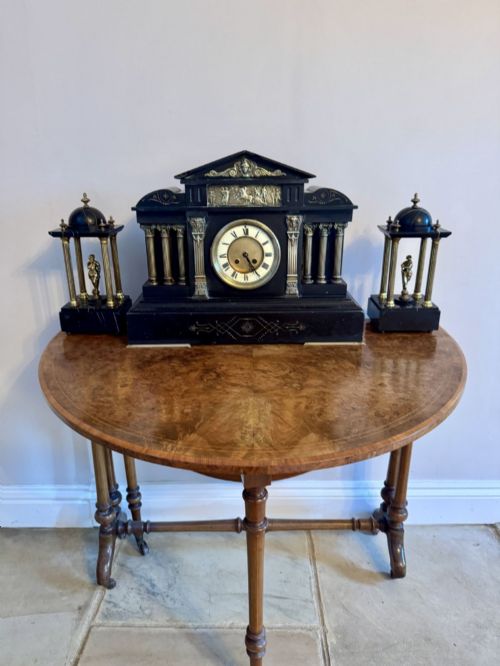
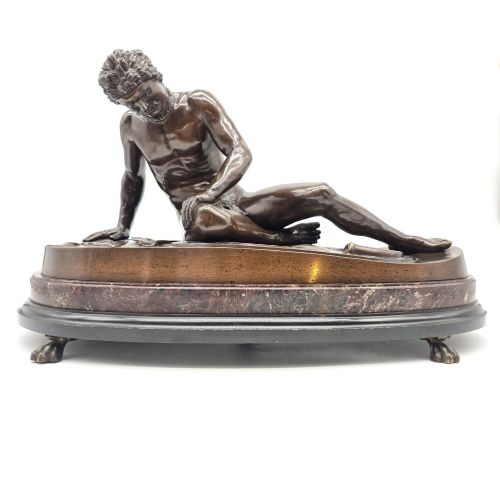
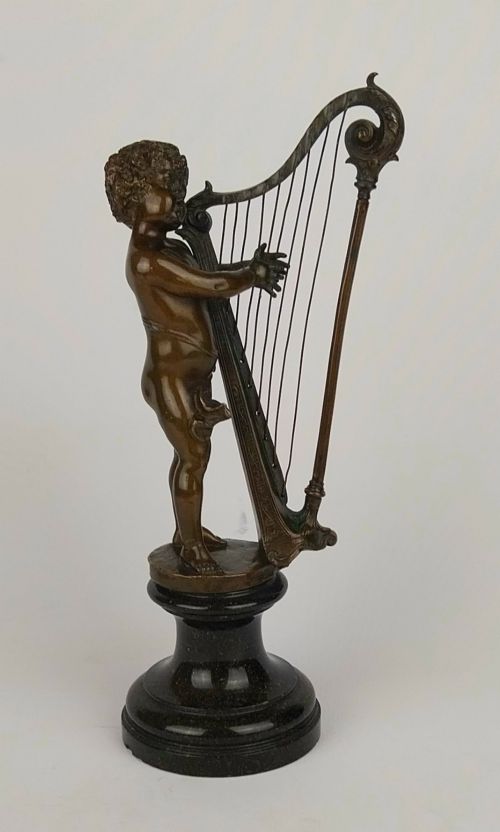
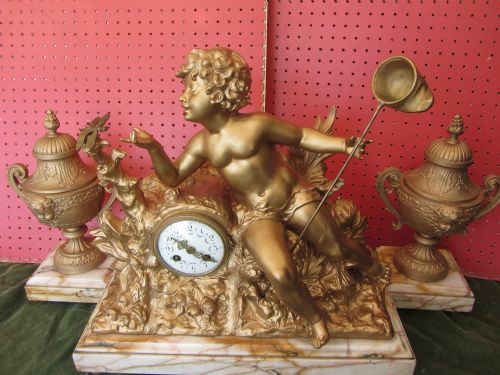
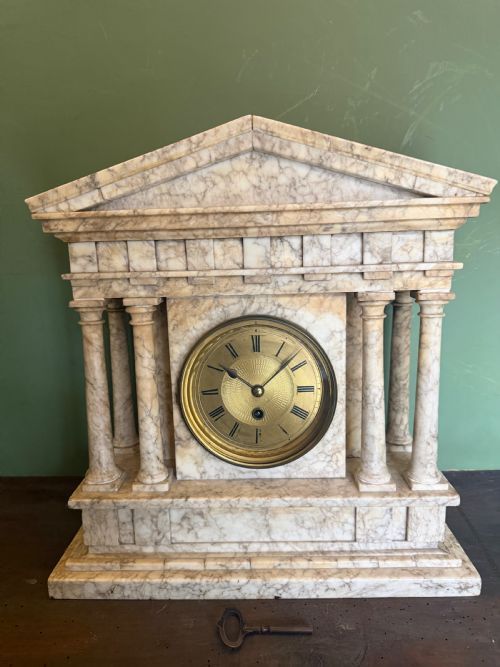
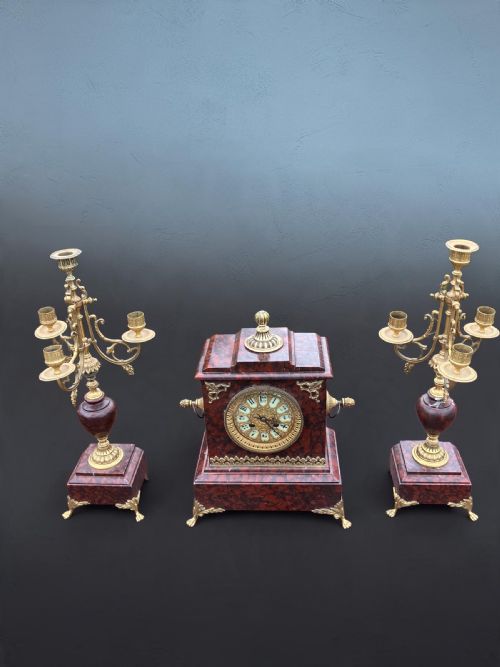
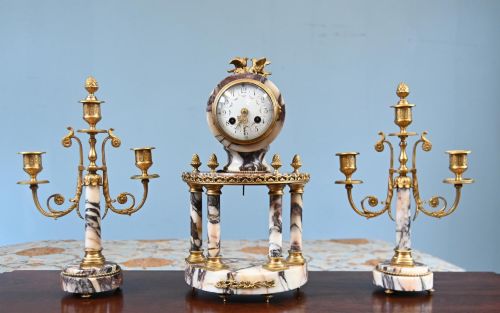
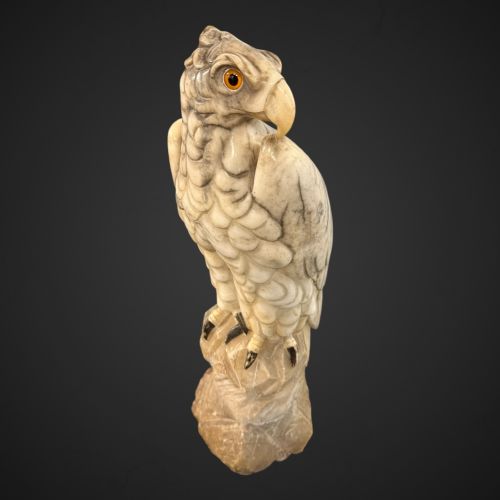
A victorian marble mantel assembly typically centres on a heavy stone clock case, frequently accompanied by matching garnitures, side urns, or candelabras. The search phrase covers robust architectural designs alongside ornamental sculptures mounted upon stone bases.
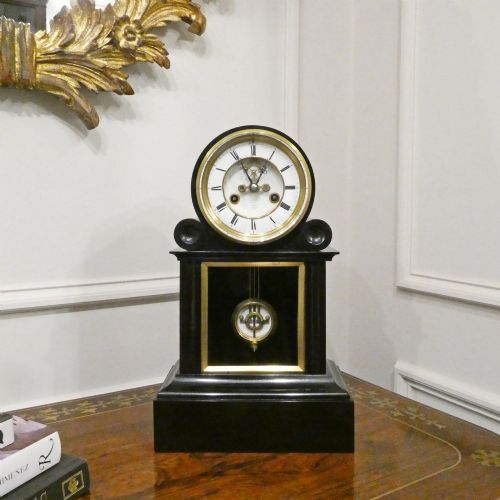
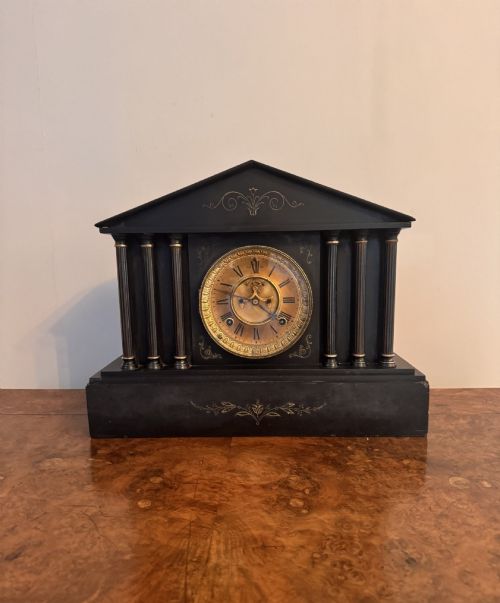
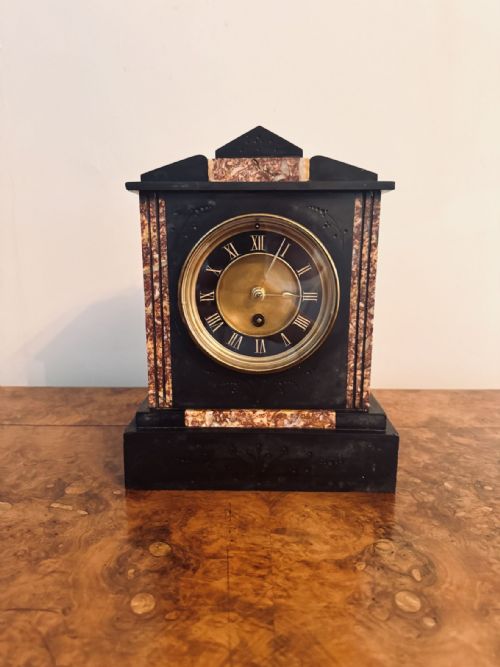
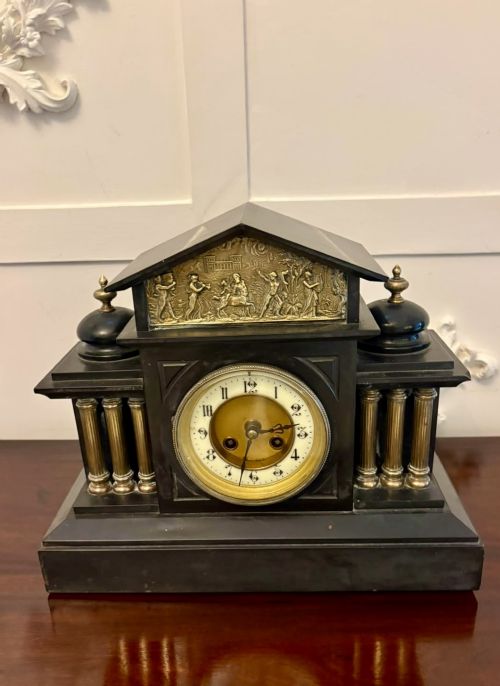
Most examples hail from the nineteenth century, spanning decades from eighteen-fifty to nineteen-hundred, with French makers strongly represented alongside English practitioners. The forms range from simple drumhead clocks in black slate and marble to ornate neoclassical revival sets.
Buyers encounter substantial mantel clocks with eight-day movements, often featuring visible brass mechanisms, enamel dials, and decorative mounts in bronze, gilt brass, or ormolu. Paired garniture pieces frequently complete the formal symmetry expected of the period.
Factors determining quality
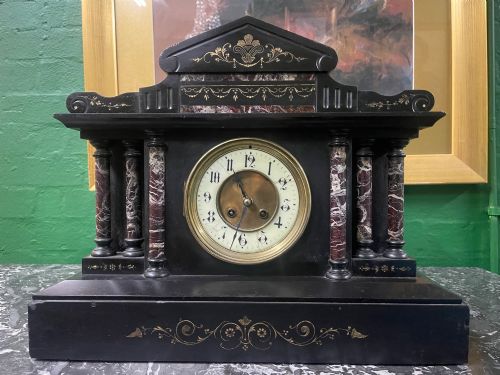
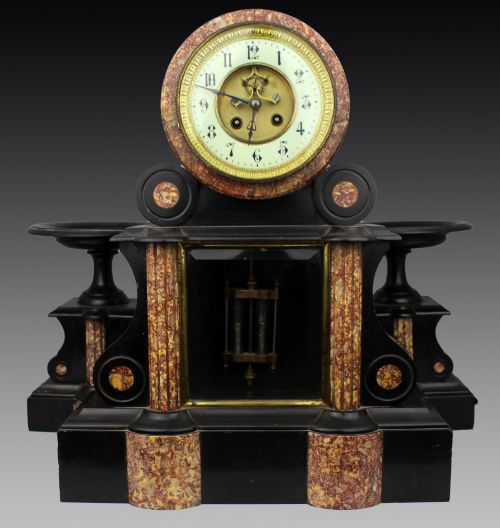
The sophistication of the stone cutting and the integration of auxiliary garnitures dictate the tier of a piece. Finer examples utilise rich sienna or rouge marble inlaid with contrasting stones, rather than plain black slate alone.
Casting detail in the bronze mounts and the reputation of the movement maker, such as Japy Frères or Samuel Marti, separate standard workshop output from exceptional signed creations.
Victorian Marble Mantel Retail Price Guide 2026
Typical asking prices for victorian marble mantel among the pieces listed under this phrase on Sellingantiques today, from the lower quarter to the upper quarter. They describe what is for sale here now, not the wider market.
Some nineteenth-century makers concealed calendar mechanisms and rotating globes inside heavy stone mantel housings to amuse observant guests.
Japy Frères·Samuel Marti·Thwaites of London·Philippes Paris·Selim Bright
The Victorian Marble Mantel Glossary
- Clock garniture
- A set comprising a central clock flanked by matching ornamental pieces such as urns, vases, or candelabras. These sets were designed to create a balanced decorative display across a fireplace shelf.
- Slate and marble
- A combination where dense black slate forms the primary structural carcass of the clock, inlaid with coloured marbles or decorative panels. This technique provided a sturdy housing for heavy mechanical movements.
- Ormolu
- Gilded bronze achieved through the application of a mercury and gold amalgam to a cast bronze base. The method produces a durable, rich metallic finish typical of nineteenth-century decorative hardware.
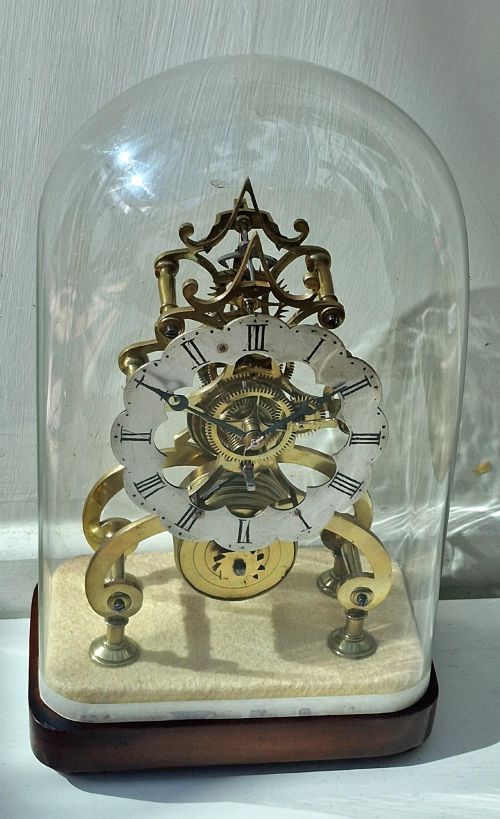
- Skeleton clock
- A timepiece designed with open plates that reveal the going train and gear mechanisms to view. These pieces generally sit under a glass dome on a wooden or marble plinth.
- Drumhead clock
- A style featuring a circular clock case mounted atop a rectangular or stepped stone plinth. The profile resembles the circular head of a drum.
Victorian Marble Mantel: Frequently Asked Questions
How heavy is a typical marble clock?
These pieces possess substantial weight due to the dense blocks of natural stone and slate used in their construction. Many require two people to lift and a sturdy fireplace shelf for safe placement.
Supporting the heavy stone body safely prevents tipping and protects the delicate mechanical movement inside from accidental impact.
Do these clocks run on an eight day movement?
A significant portion of nineteenth-century examples feature eight-day mechanical movements driven by coiled springs or hanging weights. This mechanism requires winding approximately once a week to maintain accurate timekeeping.
The inclusion of a striking train often accompanies these movements, producing a chime on the hour or half-hour.
What are clock garnitures used for?
Garnitures serve as decorative side pieces designed to sit alongside the central clock on a mantelpiece. They provide visual symmetry and echo the materials, such as bronze mounts and marble bases, used in the main clock.
These matching sets of urns, candelabras, or figures complete the formal presentation favoured in nineteenth-century interiors.
How do I identify French versus English pieces?
French examples frequently bear the marks of prominent foundries or clockmakers like Samuel Marti and Japy Frères on the movement backplates. They often incorporate gilt bronze mounts and colourful rouge or sienna marble.
English pieces tend to favour simpler architectural forms executed in black slate and local marbles, sometimes featuring signatures from London or provincial makers on the dial.