




Victorian Mantle Ornaments
These Victorian mantle ornaments bring character and historic weight to a hearth, offering everything from earthenware spaniels to ruby glass lustres.
Victorian Mantle Ornaments
When you search for Victorian mantle ornaments, you encounter a diverse array of decorative objects designed to sit atop a fireplace during the nineteenth century. These pieces range from earthenware portrait figures and spill vases to cut-glass lustres and porcelain figurines.
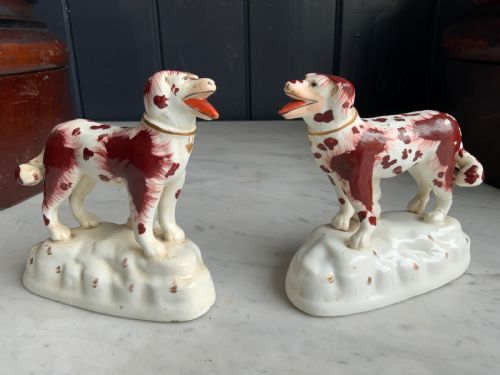
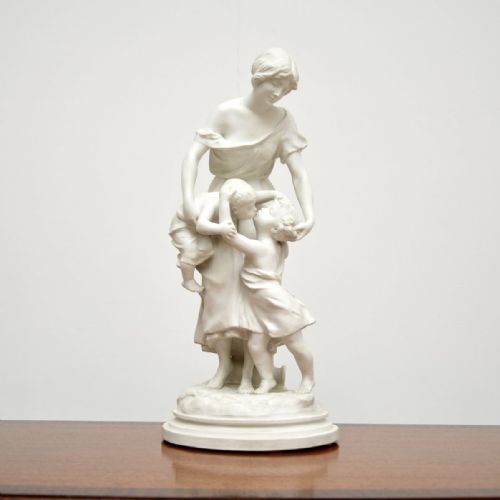
The most common items on this page are Staffordshire pottery figures and pairs of dogs, alongside glass lustres and bisque porcelain groups. Their styles stretch from Victorian Country and Neo-Classical to Rococo Revival and French Empire.
Makers and retailers represented include Royal Worcester, Minton, and Jennens & Bettridge, with origins spanning English potteries and French workshops.
Materials and methods
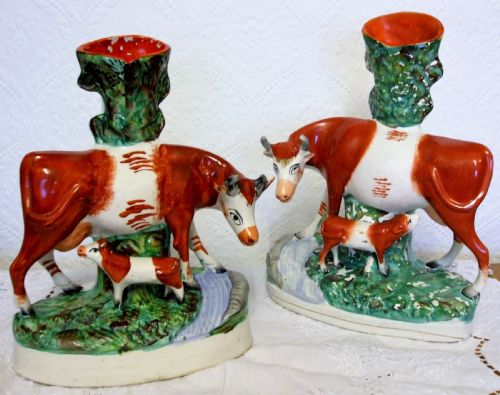
Pottery figures and vases rely on earthenware, ceramic, and bisque porcelain, often finished with glaze, enamel, and gilt details. Staffordshire potters shaped animals and human subjects into flatbacks and hollow-cast models.
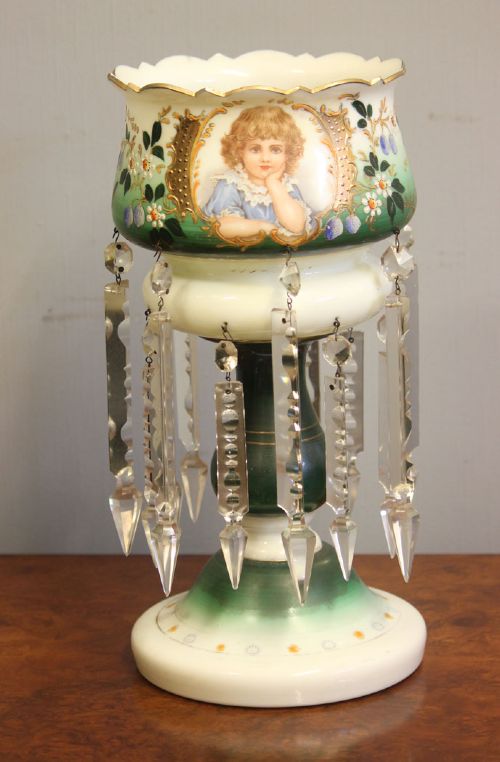
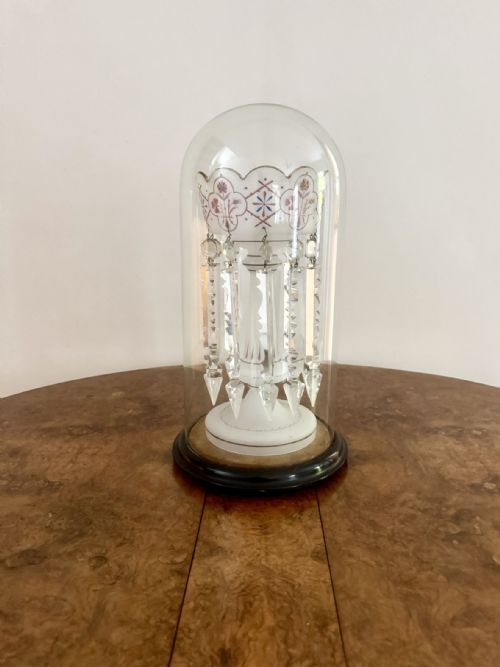
Glass lustres utilise ruby, green, or clear glass decorated with cut prisms and hand-painted motifs. Metal elements appear in bronze, spelter, and lacquered papier-mâché garniture sets.
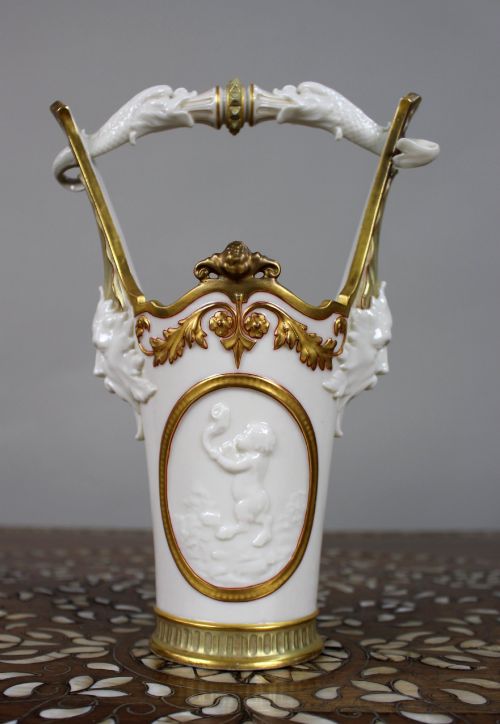
Techniques range from pate-sur-pate porcelain decoration to bronze casting and hand-painted enamel highlights on pottery.
Victorian Mantle Ornaments Retail Price Guide 2026
Typical asking prices for victorian mantle ornaments among the pieces listed under this phrase on Sellingantiques today, from the lower quarter to the upper quarter. They describe what is for sale here now, not the wider market.
Staffordshire spaniels frequently feature mischievous glass eyes that seem to track visitors across the parlor.
Assessing quality
In glass and crystal items, quality depends on the clarity of the material and the brilliance of the cut glass prisms hanging from the lustres. Complete sets with matching crystal drops outrank incomplete examples.
The presence of maker stamps or retailer signatures, such as those by Minton or Jennens & Bettridge, elevates an object's historical standing.
Royal Worcester·A.B. Daniell & Son·Vion et Baury·Minton·Jennens & Bettridge
The Victorian Mantle Ornaments Glossary
- Flatback
- A Staffordshire pottery figure finished primarily on the front and sides with a flat, unglazed rear designed to stand against a wall.
- Lustre
- A glass or ceramic vase fitted with hanging crystal prisms that catch and reflect candlelight or daylight.
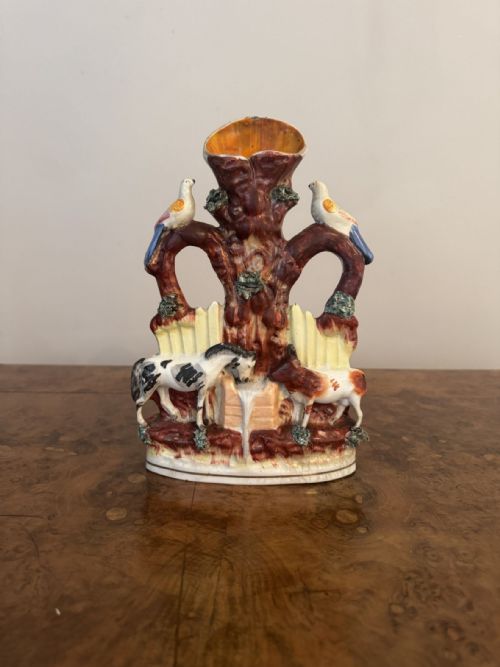
- Spill vase
- A hollow pottery cylinder integrated into a figure group, intended to hold wooden spill sticks for lighting pipes and fires.
- Bisque porcelain
- Unglazed white porcelain fired to a matte, marble-like texture often used for delicate figural groups.
- Pate-sur-pate
- A ceramic decoration technique where liquid porcelain slip is built up in successive layers to create a low relief cameo effect.
Victorian Mantle Ornaments: Frequently Asked Questions
What are mantle lustres?
Mantle lustres are decorative glass or ceramic vases adorned with hanging crystal pendants designed to reflect light from a fireplace.
They stood in pairs on nineteenth-century mantelpieces, adding sparkle and formal symmetry to a room.
How do I style Staffordshire dogs?
Staffordshire dogs look best placed in mirrored pairs at either end of a mantelpiece or atop a wooden sideboard.
Their traditional placement was facing inward toward one another on the hearth.
What is a spill vase?
A spill vase combines a decorative figural sculpture with an integrated cylindrical holder for wooden taper matches.
Victorians used these spills to transfer fire from the hearth to lamps and pipes.
How do I identify Victorian pottery?
Victorian pottery is identified through characteristic earthenware bodies, hand-painted enamel glazes, and moulded flatback constructions depicting historical events or animals.
Period subjects often include royalty, literary scenes, and domestic animals popular during the nineteenth century.