



Victorian Mantelpiece Glass
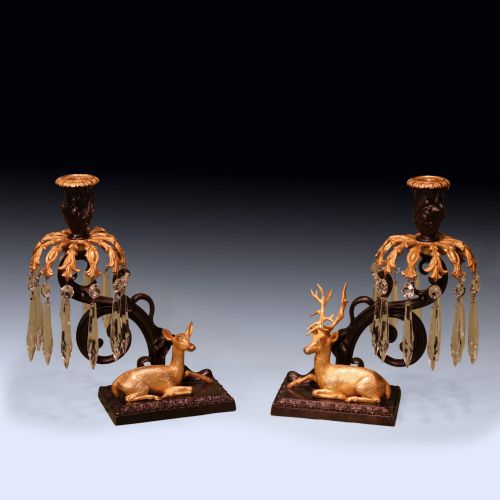
Victorian mantelpiece glass comprises the lustres, mirrors and clocks that sat upon nineteenth century hearths to catch and scatter the flickering light of the room.
Victorian Mantelpiece Glass
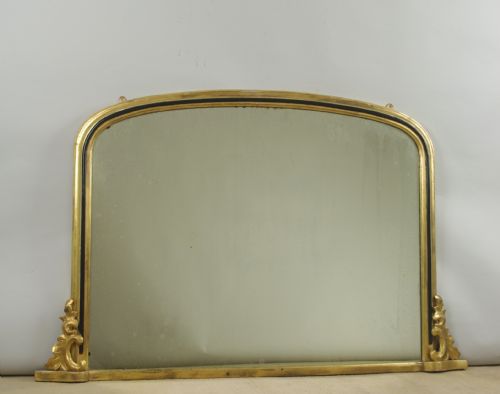
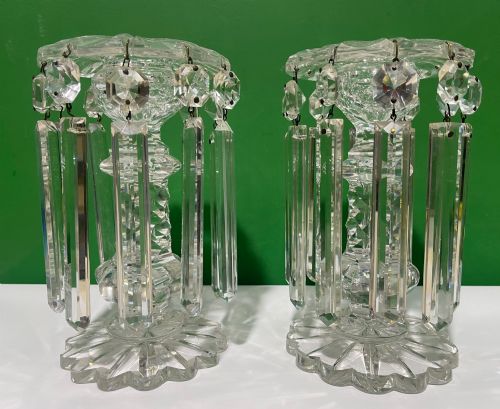
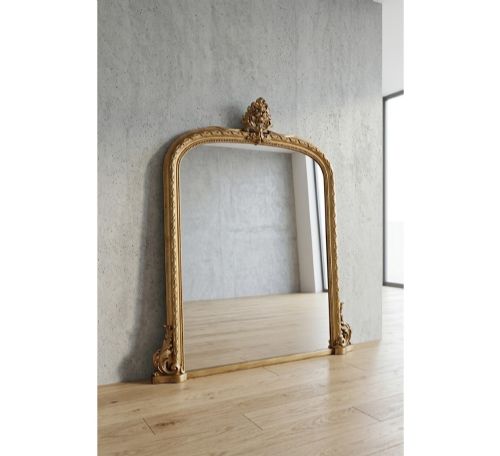
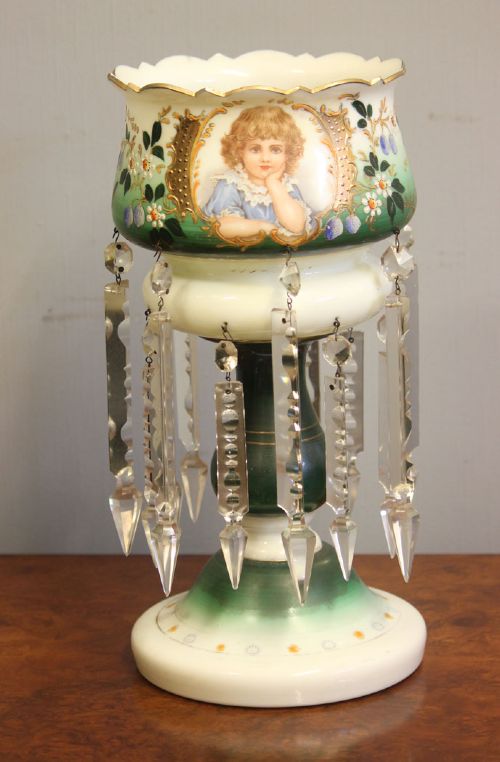
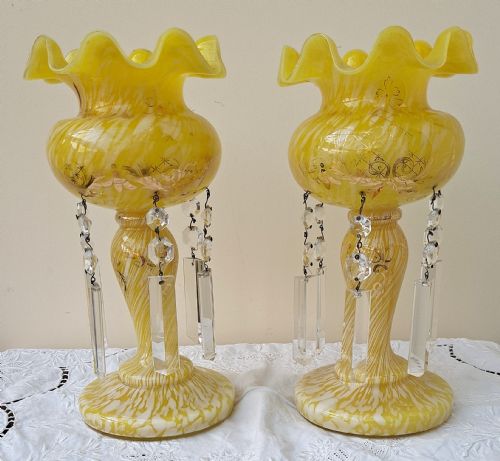
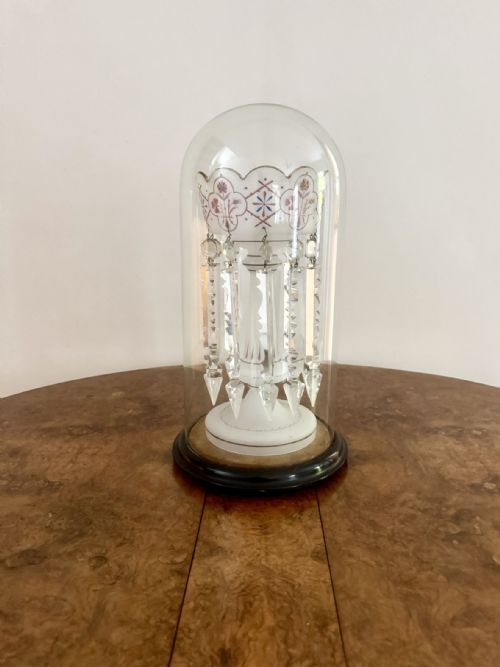
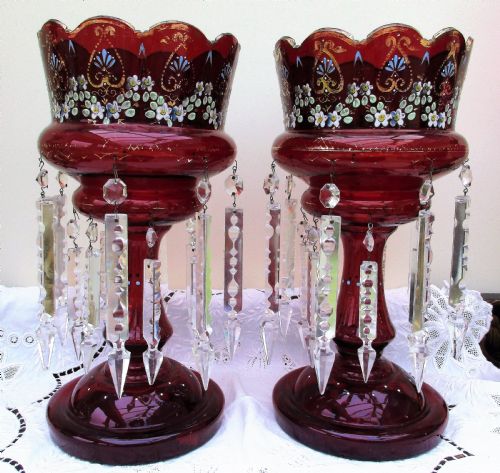
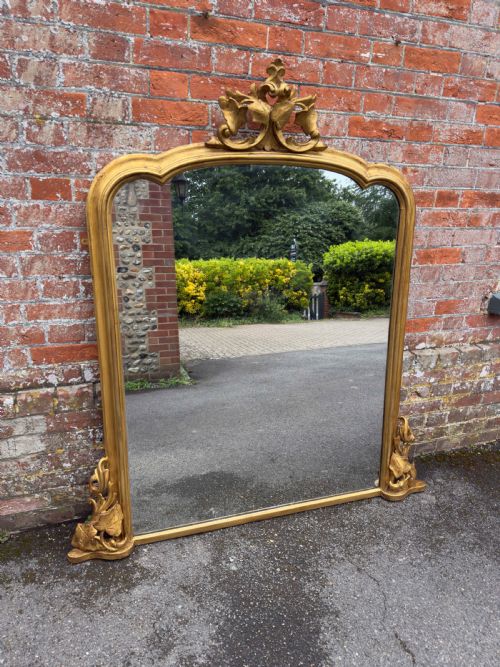
When you search for victorian mantelpiece glass, you encounter two main forms: the decorative pair of mantel lustres hung with crystal drops and the large overmantel mirrors that reflect them. These objects originate from the nineteenth century, spanning decades from the early Victorian period through to eighteen ninety.
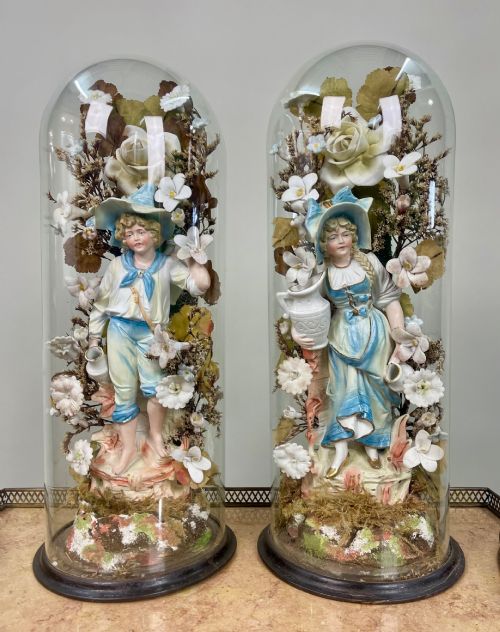
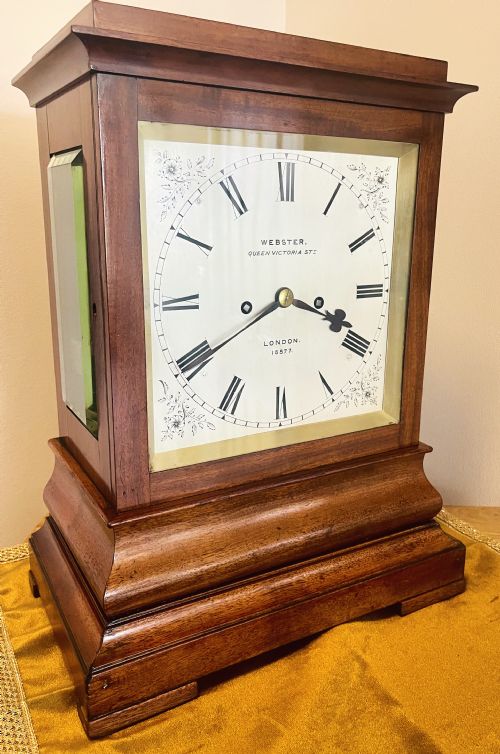
Beyond lustres and mirrors, the category includes mantel clocks framed in glass or porcelain, alongside candelabra and glass domes. English and continental makers produced these items for domestic interiors, employing styles that range from simple wood frames to elaborate Rococo revival designs.
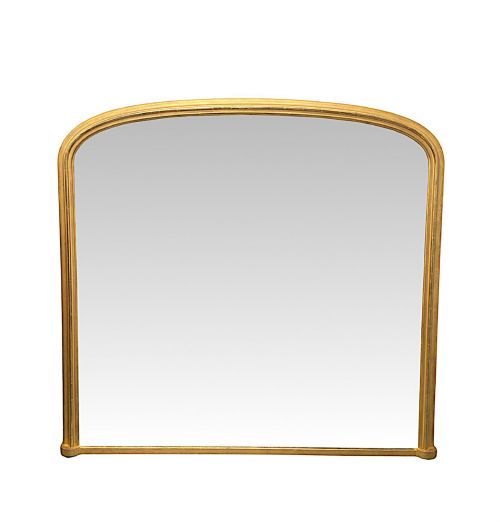
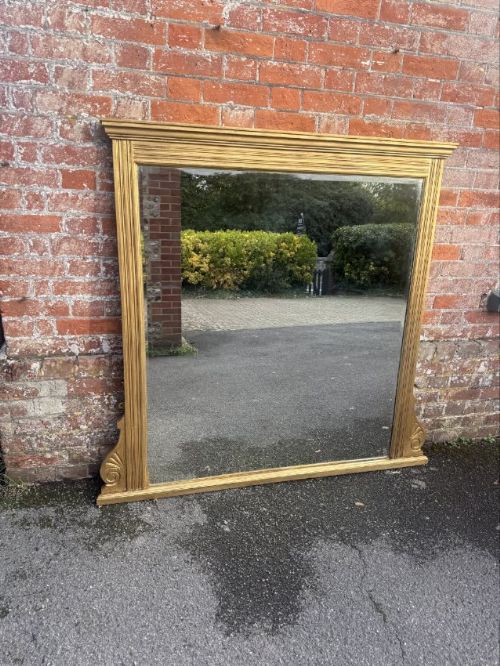
Pairs of glass lustres dominate the smaller table pieces, often rendered in ruby, yellow, peachblow or bohemian overlay glass. Overmantel mirrors provide the larger architectural counterpart, designed specifically to mount above a fireplace opening.
Materials and construction
Makers utilised blown and moulded glass, shaping coloured and overlay materials into vases and stems for hanging crystal prisms. These glass components frequently combine with bronze, ormolu, brass and porcelain panels.
For the large mirrors, craftsmen carved wood and applied gesso before laying gold leaf or silvered finish across arched, ribbed or hour glass frames. Structural woods such as oak and mahogany support the heavier mirror plates and clock movements.
Victorian Mantelpiece Glass Retail Price Guide 2026
Typical asking prices for victorian mantelpiece glass among the pieces listed under this phrase on Sellingantiques today, from the lower quarter to the upper quarter. They describe what is for sale here now, not the wider market.
Victorian mantelpiece glass includes stubborn Staffordshire lions standing guard beside the hearth.
Assessing quality in these pieces
Quality rests upon the depth of the gilding and the crispness of the carved wood and gesso ornamentation on mirror frames. The best examples display hand-tooled detail rather than heavy, uniform casting.
In glass lustres, the brilliance of the glass body, the saturation of colours like ruby or peachblow, and the completeness of the original cut crystal drops determine the standard of the piece.
Clerke Royal Exchange London·A Delépine
The Victorian Mantelpiece Glass Glossary
- Lustre
- A decorative table ornament featuring a central vase or candlestick hung with cut glass prisms. These pendants refract candlelight across the room.
- Overmantel mirror
- A large wall glass specifically proportioned to hang on the wall directly above a fireplace mantelpiece. They often feature arched tops or elaborate crests.
- Gesso
- A plaster-based material applied to wood frames before gilding. It allows craftsmen to carve intricate relief decoration.
- Ormolu
- Gilded bronze used for mounts and decorative accents on clocks and candelabra. The technique produces a bright golden finish.
- Overlay glass
- A glass-blowing technique where a layer of coloured glass is fused over a clear or contrasting body. Artisans then cut through the top layer to reveal the colour underneath.
Victorian Mantelpiece Glass: Frequently Asked Questions
What is a mantel lustre?
A mantel lustre is a decorative ornamental vase fitted with a ring of hanging crystal prisms. Placed upon a fireplace, they catch and multiply candlelight.
Pairs usually stood at either side of a clock or urn, serving a purely decorative function in the nineteenth-century parlour.
How do you style an overmantel mirror?
An overmantel mirror hangs directly above the fireplace surround, anchored to the wall to anchor the focal point of the room. Their generous proportions help to bounce natural light around darker spaces.
Pair them with smaller objects on the mantel shelf below, such as candlesticks or small clocks, keeping proportions balanced.
What colours did Victorian glass come in?
Victorian glass makers produced items in deep ruby red, sunny yellows, opaque opaline and complex bohemian overlay colours. Peachblow glass, appearing towards the end of the century, offered a shaded pink gradient.
These rich hues were achieved by adding various metallic oxides to the molten glass batch before blowing and shaping.
How do you date a Victorian mirror?
Dating relies on the frame style, construction methods and the characteristics of the glass plate itself. Early pieces show different moulding styles compared to later aesthetic movement or rococo revival examples.
Checking the backboards, fixings and any remnants of original paper labels also helps narrow down the decade of manufacture.