


Victorian Mahogany Tripod Stand
A victorian mahogany tripod stand offers sturdy elegance for a lamp, plant or book.
Victorian Mahogany Tripod Stand
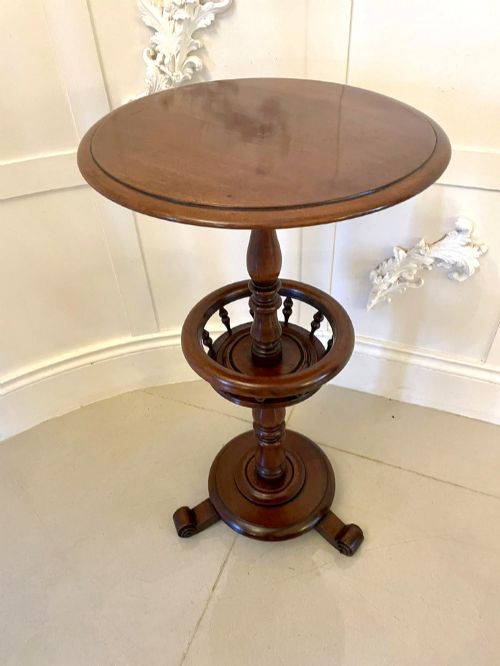
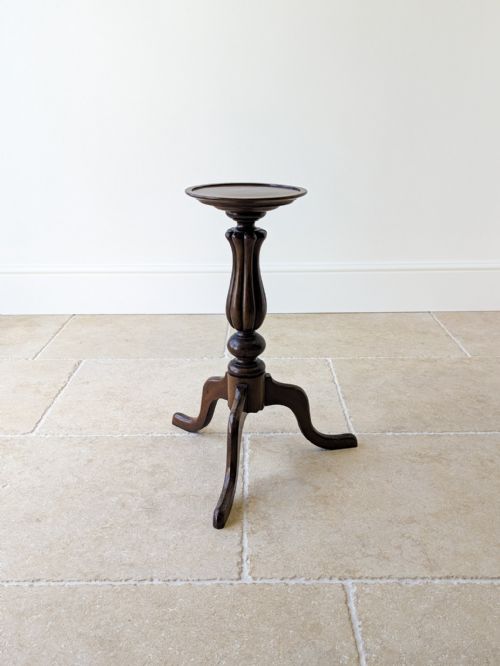
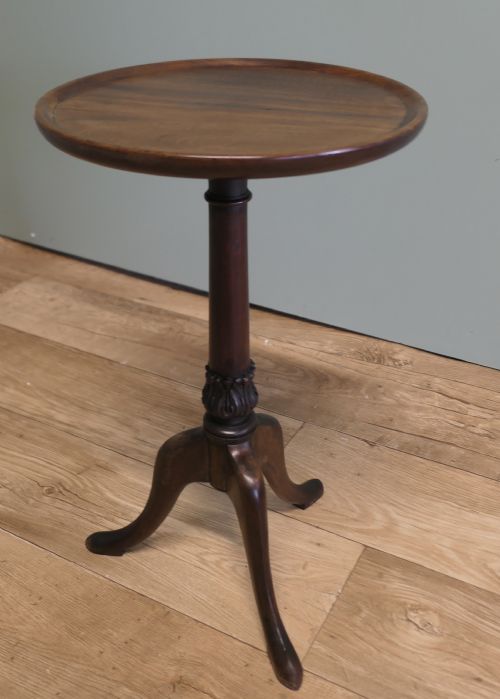
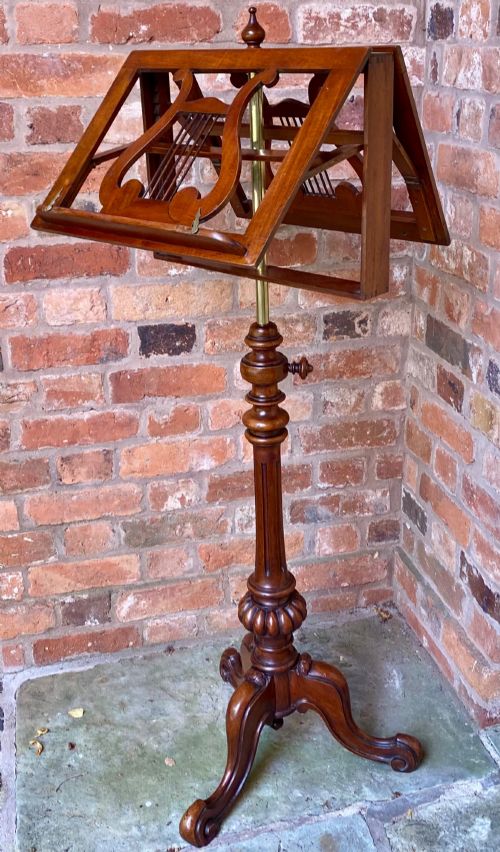
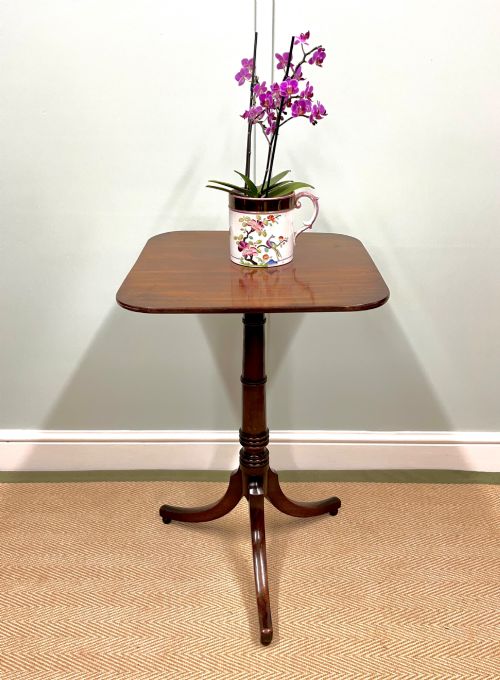
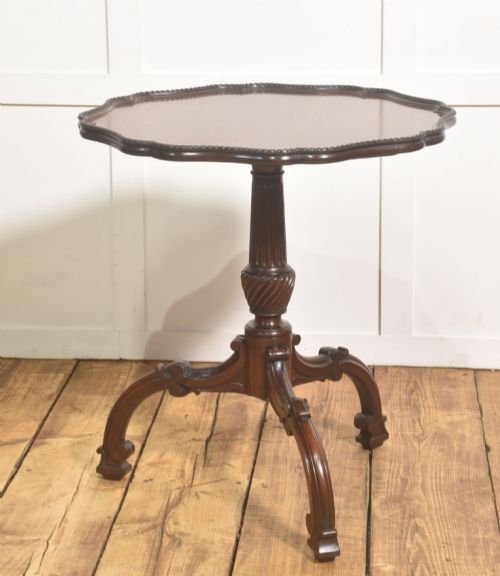
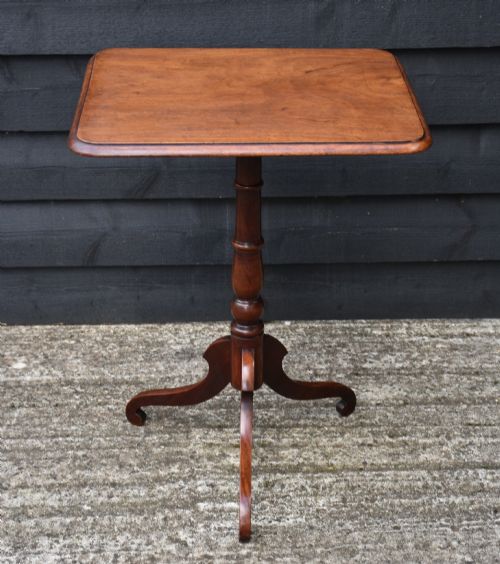
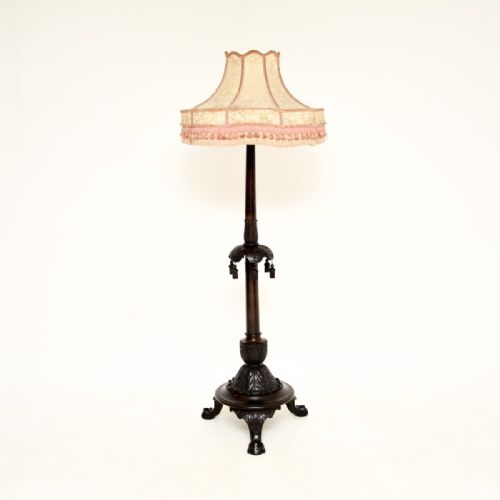
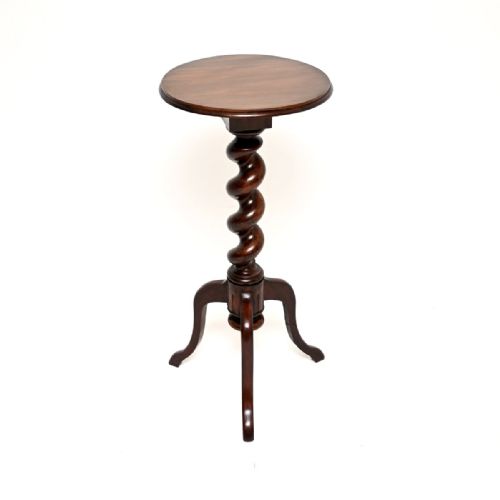
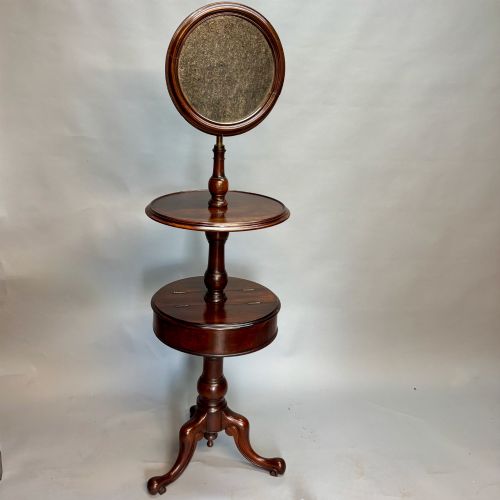
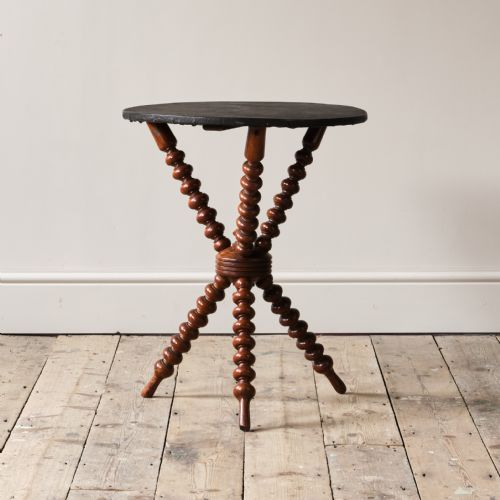
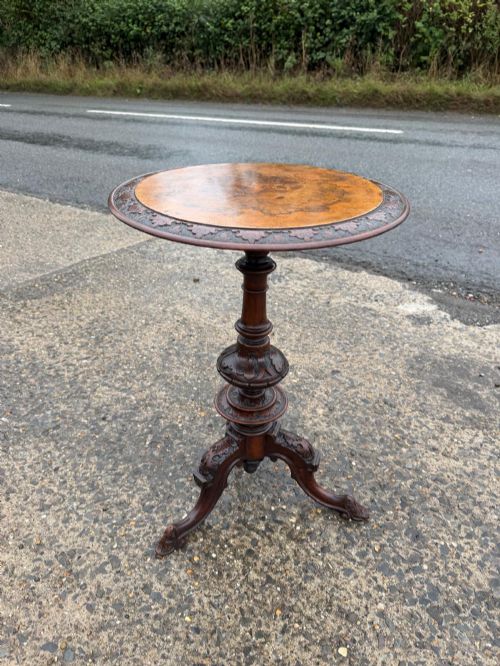
A victorian mahogany tripod stand encompasses a diverse group of nineteenth-century small furniture supported by three-legged bases. These pieces span occasional tables, wine tables, music stands, shaving stands, plant stands and dumb waiters.
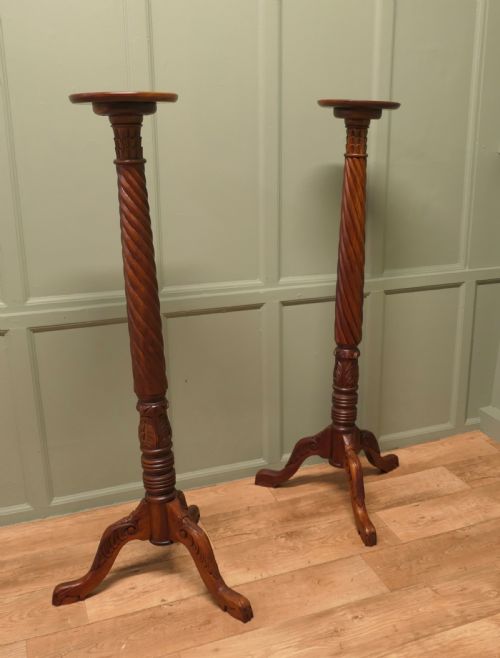
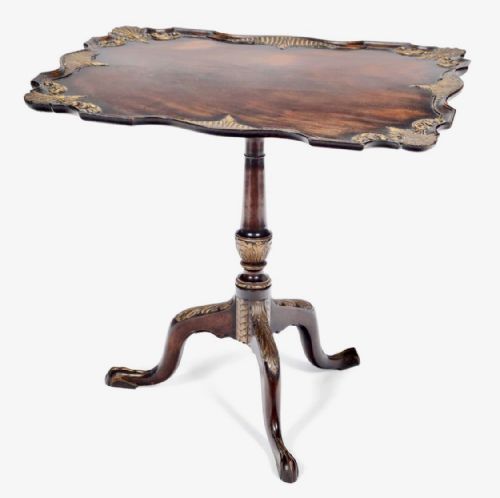
The selections on this page draw predominantly from nineteenth-century Victorian production, alongside related William IV, Regency and Edwardian revivals. Common formats include circular lamp tables, tilt-top wine tables and tall torcheres.
Buyers encounter variations such as burr wood tops, adjustable telescopic columns and revolving tiers. The fundamental three-legged pedestal design remains constant across these functional household forms.
Materials and Construction
Makers utilised solid mahogany and hardwood substrates, frequently enhanced with wood inlay, parcel gilding or burr wood veneers on circular and dish-topped surfaces. Brass and glass components appear on telescopic mechanisms and mirrors.
Structural stability relies on the central pillar anchored by three splayed legs, joined in some examples by tilt-top mechanisms, brass catches or screw adjustments for height.
Listings feature nineteenth-century periods, incorporating mahogany, brass, glass, oak and walnut across table and stand forms.
The Measure of Quality
Superior examples demonstrate crisp carving on the cabriole or swept legs and refined turning on the central pillar, avoiding rigid or heavy-handed proportions. The selection of timber grain, particularly on burr wood or figured mahogany tops, distinguishes finer workshop output.
Mechanical integrity defines the better pieces, where tilt-top latches, telescopic screws and adjustable music or shaving mirrors operate smoothly without excessive play in the tripod joints.
Gillows·Swann and Millican
The Victorian Mahogany Tripod Stand Glossary
- Tripod base
- A three-legged support structure typical of small nineteenth-century tables and stands. This configuration provides stability on uneven floor surfaces.
- Tilt-top
- A hinged table top that pivots to a vertical position for storage when not in use. It is often secured with a brass catch or wooden peg.
- Torchere
- A tall, slender stand designed to elevate a lamp, candle or plant. These pieces utilise the characteristic three-legged base.
- Dumb waiter
- A multi-tiered stand used for serving food or holding books and objects. Examples in this category feature revolving tiers on tripod bases.
- Barley twist
- A spiral turning technique applied to table columns and upright supports. This decorative woodworking style appears frequently on nineteenth-century side stands.
Victorian Mahogany Tripod Stand: Frequently Asked Questions
What is a victorian mahogany tripod stand used for?
These versatile stands serve multiple domestic purposes, traditionally holding lamps, wine glasses, books, sheet music or shaving mirrors.
Today, buyers frequently utilise them as compact side tables or plant pedestals in smaller living spaces.
How do I spot a tilt-top table?
Look underneath the circular or dish top for a wooden or brass catch mechanism that releases the pivot. This allows the surface to fold flat against the central pillar.
Original mechanisms should lock securely into the horizontal position without wobbling.
Are these stands suitable for small rooms?
The compact footprint and slender central column make these pieces ideal for corners and narrow spaces beside seating.
The three-legged splayed base provides stability while occupying minimal floor area.
How do I tell a torchere from a wine table?
Torcheres are built taller and narrower, specifically designed to elevate a single light source or decorative plant above eye level.
Wine tables feature wider, lower surfaces intended to hold drinks or books within reach of an armchair.