

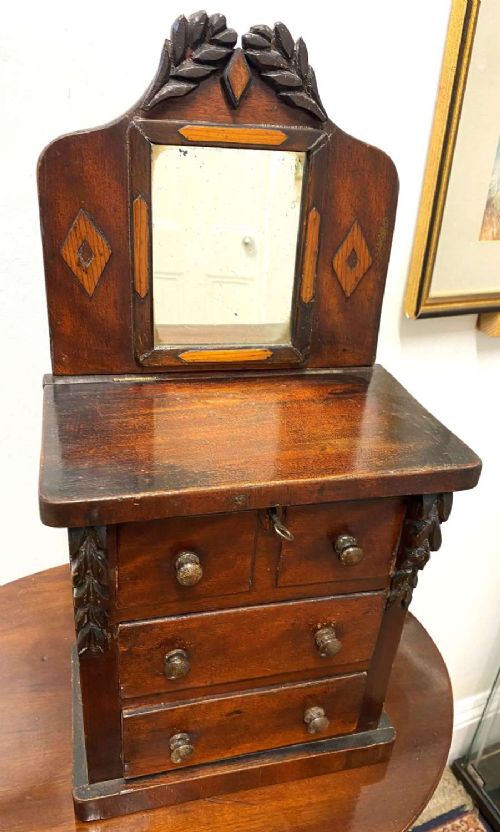
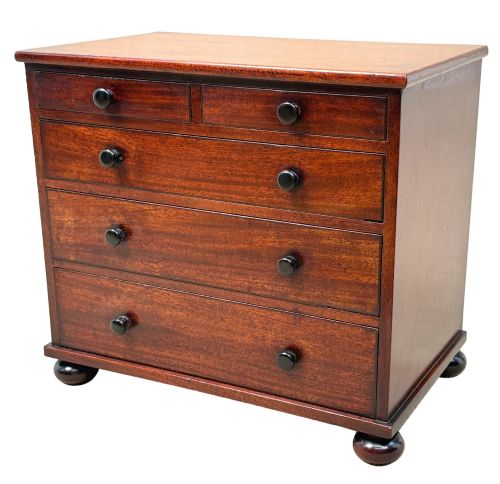
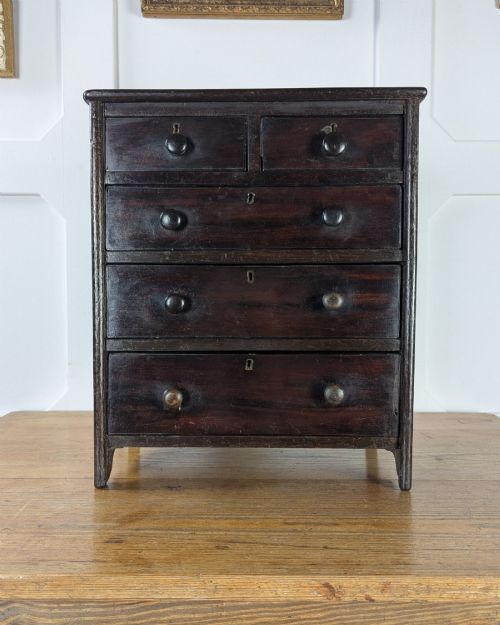
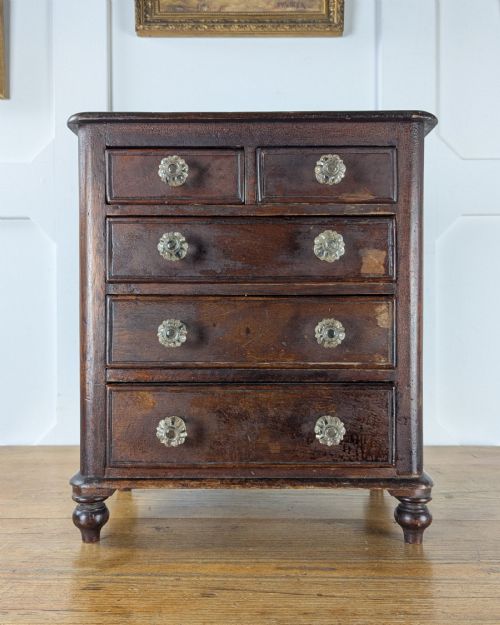






Victorian Mahogany Mini Chest
These compact pieces of Victorian mahogany mini chest furniture offer miniature scale and precise cabinetmaking for tabletop display and small storage.
Victorian Mahogany Mini Chest
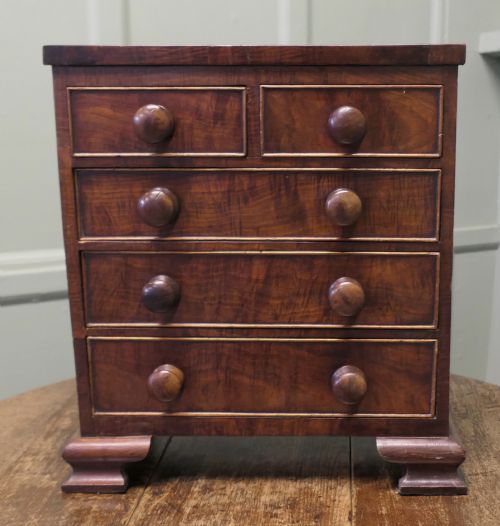
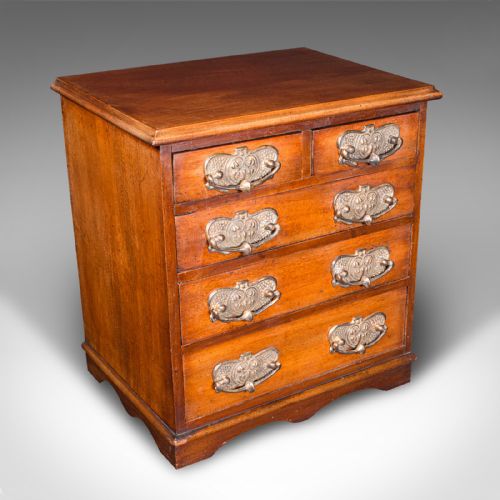
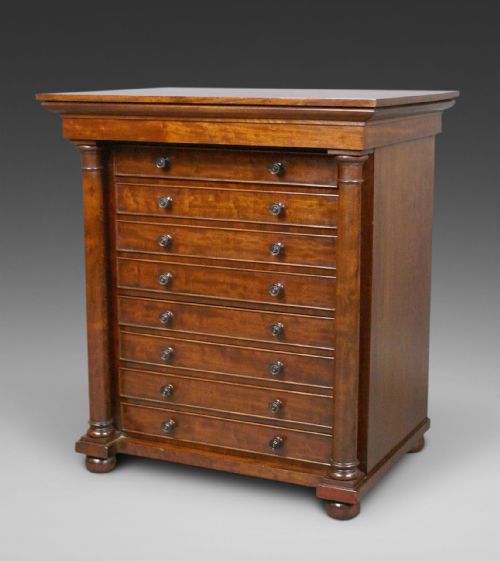
A victorian mahogany mini chest represents a scaled-down version of full-sized domestic furniture, appearing in formats like miniature chests of drawers, apprentice pieces, and collectors cabinets. These small pieces emerge primarily from the Victorian and Georgian periods, showcasing traditional drawer configurations on miniature scales.
Most examples found in this range adopt straight or bowfront chest designs, alongside occasional variations such as dresser bases, campaign styles, and tea caddies. Cabinetmakers built these items to demonstrate skill, serve as salesman samples, or provide desktop storage for jewellery and specimens.
Origins span English workshops as well as Anglo-Indian interpretations, reflecting the varied geography of nineteenth-century cabinet production. The primary forms maintain the proportions and construction methods of large furniture while fitting neatly onto tabletops and shelves.
Materials and construction methods
Makers constructed these items predominantly using solid mahogany, often complemented by secondary woods such as oak and boxwood for internal framing and stringing. Brass hardware frequently appears on handles, escutcheons, and campaign-style mountings.
Joinery techniques mirror those of standard domestic furniture, featuring dovetailed drawer construction and turned feet. Selected pieces incorporate glass elements or specialised brass fittings to suit desktop specimen cases and jewellery chests.
Victorian Mahogany Mini Chest Retail Price Guide 2026
Typical asking prices for victorian mahogany mini chest among the pieces listed under this phrase on Sellingantiques today, from the lower quarter to the upper quarter. They describe what is for sale here now, not the wider market.
The listings show mahogany combined with brass, boxwood, and oak across Victorian and Georgian forms.
Judging the quality of a victorian mahogany mini chest
Quality in a victorian mahogany mini chest depends on the precision of the miniature joinery and the depth of the wood patina. Superior examples display carefully matched timber grains and tight dovetails that withstand close inspection.
The refinement of turned feet, hardware integration, and drawer operation distinguish finer workshop productions from simpler items. Proportion and balance relative to full-sized prototypes also dictate the overall success of the piece.
The Victorian Mahogany Mini Chest Glossary
- Apprentice piece
- A miniature item created by a trainee cabinetmaker to demonstrate proficiency to a guild or master. These objects served as proof of skill before full certification.
- Bowfront
- A curved cabinet front that swells outward in the centre. This configuration requires advanced woodworking skill to shape the drawers and frame accurately.
- Collectors cabinet
- A specialised storage unit containing multiple small drawers for organising specimens or small objects. They often feature secure doors or fitted compartments.
- Patina
- The surface sheen and colour developed by wood over decades of handling and exposure to light. A desirable finish shows natural warmth and depth.
- Ogee
- An S-shaped moulding profile commonly used on cornices and plinths. This decorative contour adds architectural weight to the piece.
Victorian Mahogany Mini Chest: Frequently Asked Questions
What is an apprentice piece?
An apprentice piece is a small-scale item created by a trainee to demonstrate mastery of cabinetmaking techniques. These pieces allowed young craftsmen to prove their ability to cut dovetails and shape timber.
They mirror full-sized furniture in construction but exist in miniature format for tabletop display.
How were these mini chests used?
Makers originally constructed these items as salesman samples, journeyman test pieces, or desktop storage for jewellery and small specimens. Owners placed them on tables and desks for practical containment.
Today, collectors use them primarily as decorative display items within a room.
Are these chests made of solid mahogany?
Most examples utilise solid mahogany for visible exterior surfaces, frequently paired with secondary timbers like oak for drawer linings. Boxwood and brass often provide contrast and hardware.
Construction methods match standard nineteenth-century furniture production on a reduced scale.
How do I date a mini chest?
Dating relies on examining the timber species, construction joinery, foot styles, and hardware configurations against known period traits. Nineteenth-century examples often feature turned feet and mahogany primary wood.
Stylistic cues such as bowfront shaping and brass campaign mounts also help narrow the production era.