


Victorian Mahogany Daybed
A victorian mahogany daybed offers structured daytime reclining, combining rich timber frames with generous upholstered seating for nineteenth-century interiors.
Victorian Mahogany Daybed
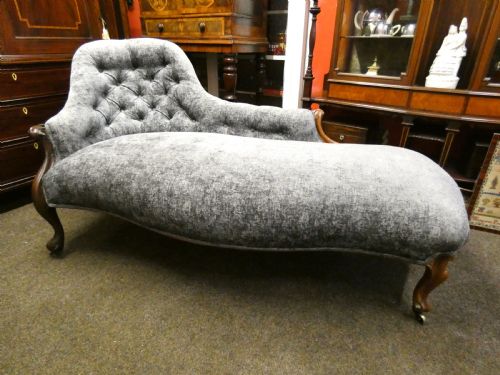
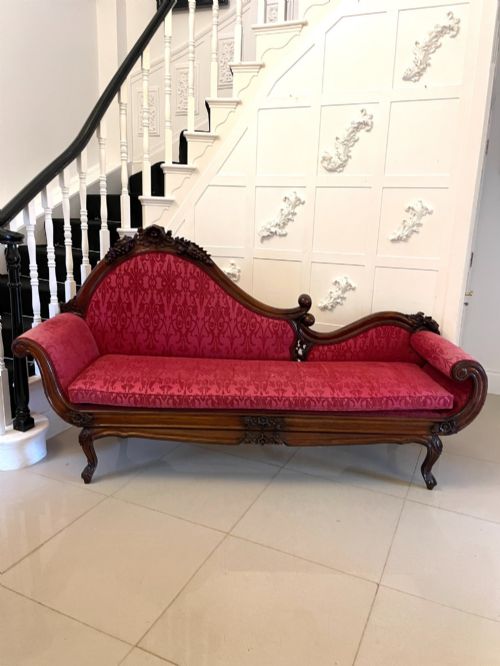
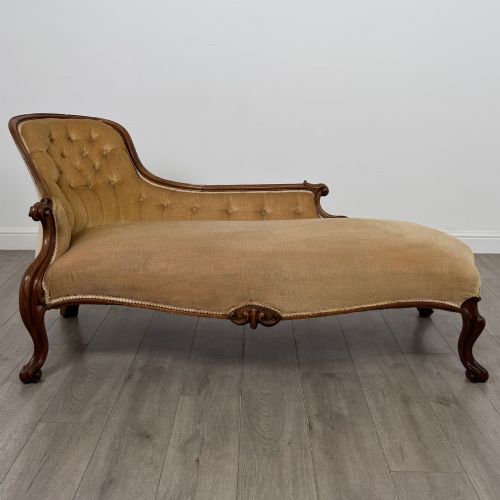
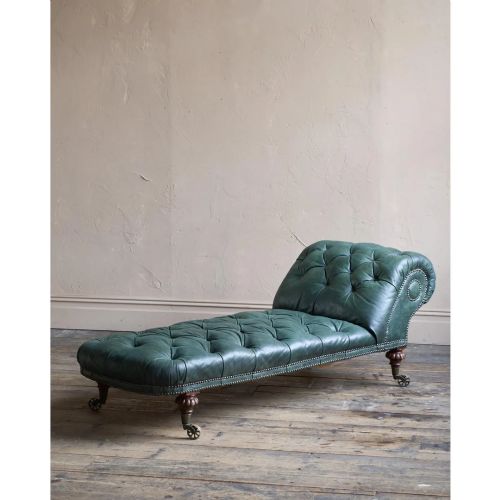
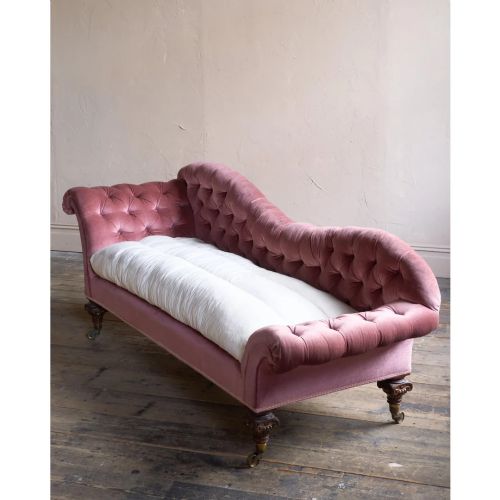
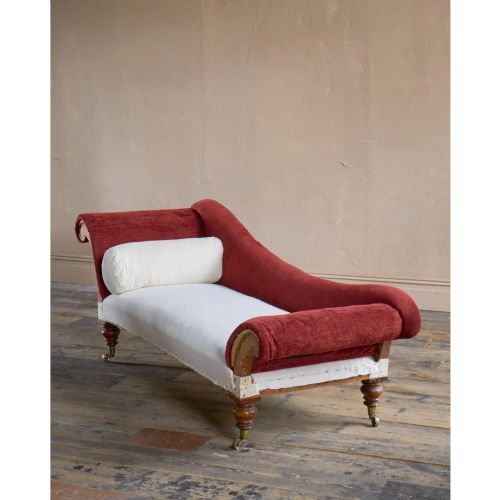
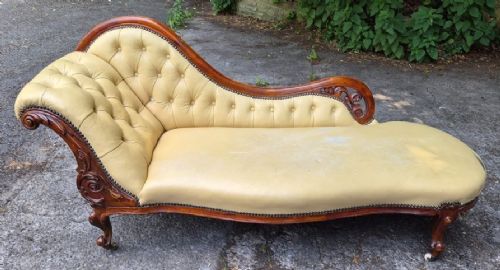
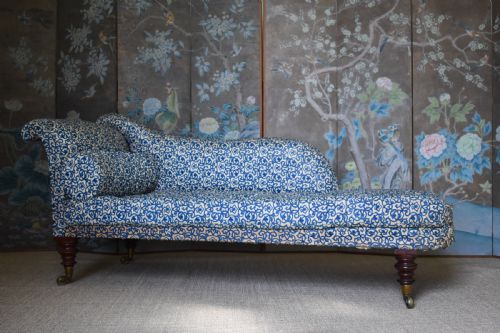
A victorian mahogany daybed encompasses nineteenth-century chaise longues, scroll end sofas, and campaign beds framed in rich tropical hardwood. These pieces serve as elongated seats designed for daytime reclining, often featuring a raised scroll arm or headrest at one end.
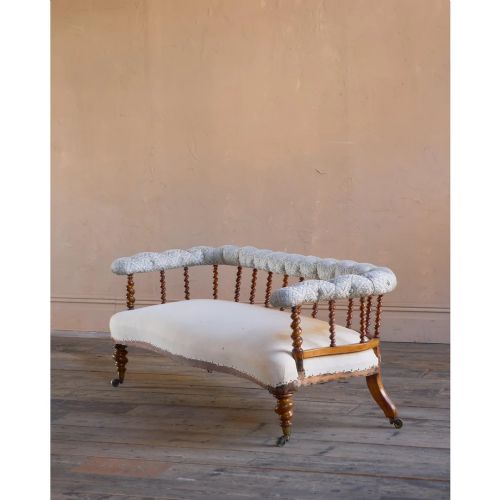
The version most commonly encountered on this page is the Victorian chaise longue or scroll arm sofa, spanning dates from the 1850s through to 1880. Makers configured these forms with single raised ends, spindle backs, or ionic column legs, reflecting Regency, William IV, and colonial styles.
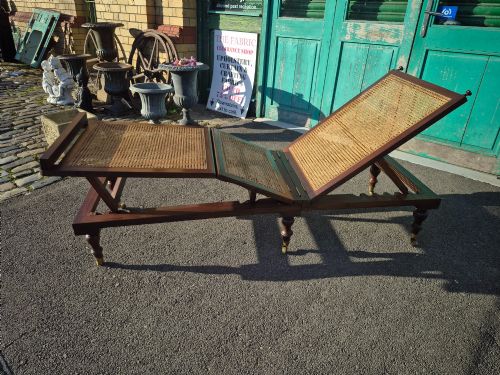
Surviving examples range from country house settees to adjustable campaign daybeds with detachable legs. They appear under various descriptions including ottoman couches, salon sofas, and window seats, united by their mahogany construction and upholstered surfaces.
Materials and construction methods
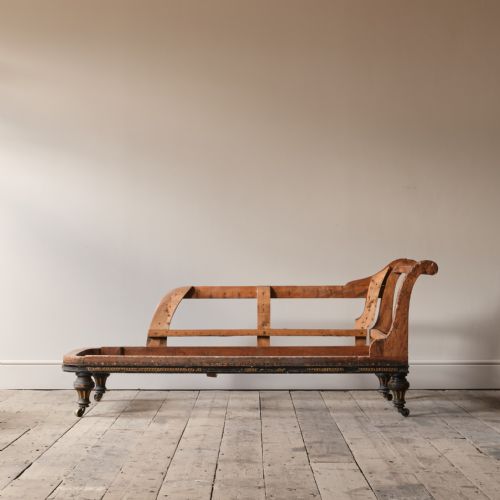
Cabinetmakers utilised solid mahogany and mahogany veneers for the structural frames, shaping scroll arms, carved backs, and turned feet. Hardwood foundations provided the necessary strength to support extended reclining forms without warping.
Upholstery techniques involved traditional stuffing secured over webbing and springs, finished in materials such as leather, velvet, damask, calico, and various upholstery fabrics. Brass castors, hinges, and campaign mounts frequently completed the lower framework.
Makers integrated architectural elements like ionic columns and deep wood carving directly into the timber chassis. Adjustable mechanisms on campaign variants utilised fitted brass pins and detachable wooden legs for transport.
Some nineteenth-century travellers required detachable legs and brass campaign mounts just to nap in adequate mahogany comfort.
Distinctions in craftsmanship
The standard of carving on the mahogany frame dictates much of the visual distinction between pieces. Crisp, deeply undercut scrollwork and detailed foliate motifs indicate superior workshop output compared to simpler, mechanical mouldings.
Attribution to prominent cabinetmakers elevates an example through demonstrable finesse in joinery and proportion. The integration of high-grade secondary timbers and sophisticated internal springing systems separates standard utility furniture from fine salon pieces.
Holland and Sons·C. Hindley and Sons·Howard and Sons·Jas Shoolbred·Miles and Edwards
The Victorian Mahogany Daybed Glossary
- Chaise longue
- A long seated piece of furniture for reclining, combining elements of a chair and a sofa. Most examples in this group feature a single raised headrest.
- Campaign style
- Portable furniture designed for military or colonial travel, typically incorporating detachable legs and brass mounts. These pieces dismantle for ease of movement.
- Scroll arm
- A structural end support curved inward in a spiral profile. This decorative terminal defines the silhouette of many nineteenth-century couches.
- Damask
- A reversible figured fabric traditionally woven on a jacquard loom with patterns of floral or geometric motifs. It appears frequently as a formal upholstery covering.
- Calico
- A plain-woven cotton fabric utilised as an internal lining or under-upholstery layer beneath decorative outer textiles.
Victorian Mahogany Daybed: Frequently Asked Questions
Where were daybeds placed in a nineteenth-century home?
These pieces sat primarily in formal drawing rooms, ladies' boudoirs, and spacious libraries for daytime relaxation. Country house interiors also utilised them in large reception rooms and morning parlours.
Campaign variants were built for travel or temporary residences, later finding permanent placement in colonial plantation houses and domestic bedrooms.
How do I care for nineteenth-century mahogany frames?
Maintain the timber by applying appropriate natural wax polish sparingly to nourish the grain and preserve the surface sheen. Avoid positioning the furniture near direct heat sources or strong sunlight to prevent timber splitting.
Upholstery requires gentle vacuuming with a soft brush attachment to remove dust without stressing the historic textile fibres beneath.
What indicates a piece is from the Regency period?
Regency pieces often display classical revival motifs, drawing inspiration from ancient Roman, Greek, and Egyptian design. Look for clean architectural lines, brass inlay, and elements like ionic columns.
Proportions tend to be crisp and restrained, preceding the heavier, more exuberant carvings characteristic of later Victorian production.