

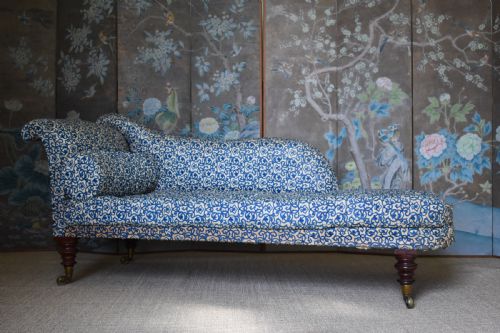


Victorian Mahogany Chaise Longue
A victorian mahogany chaise longue brings solid timber and long-seated comfort to a room, designed for reclining in the nineteenth-century manner.
Victorian Mahogany Chaise Longue
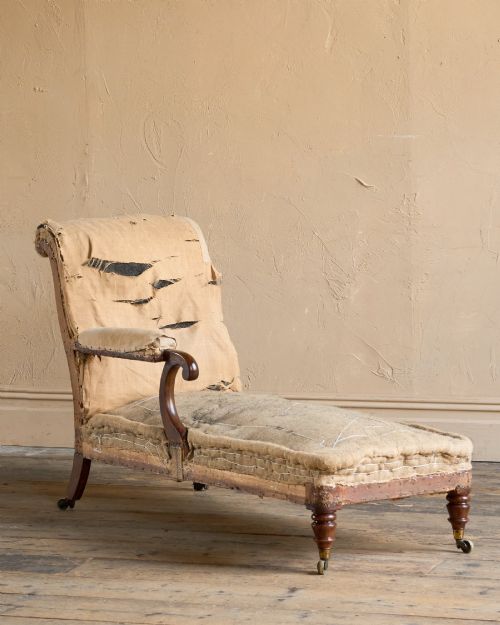
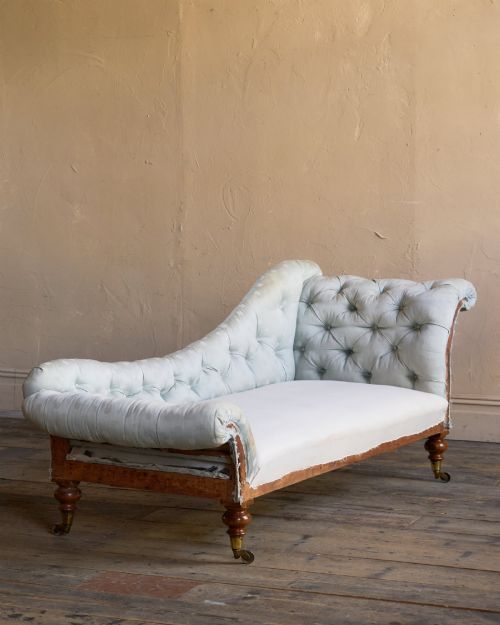
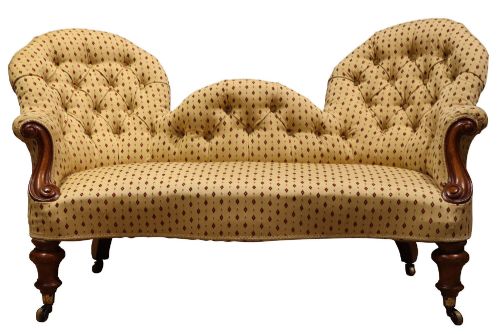
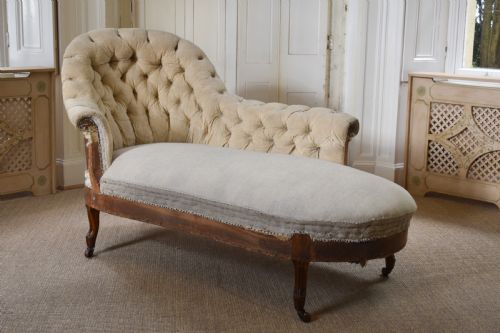
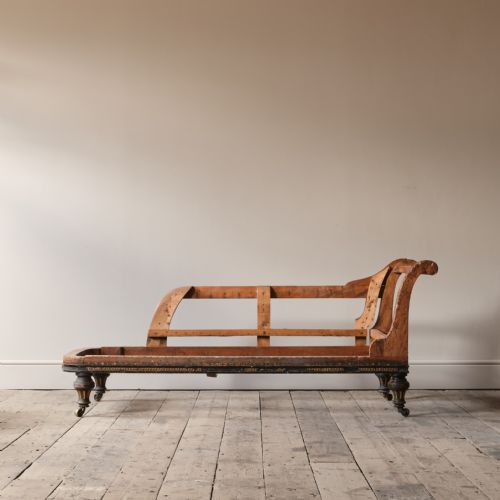
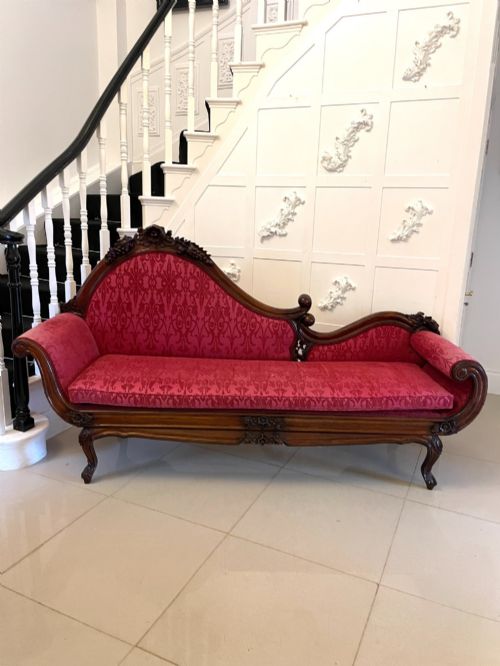
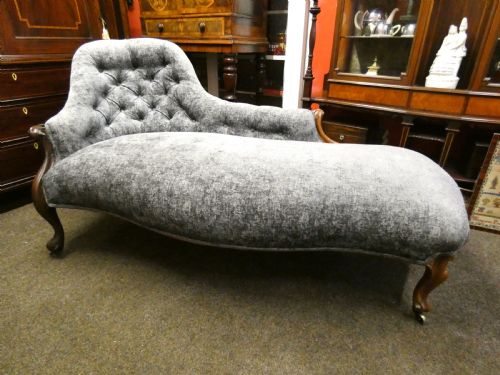
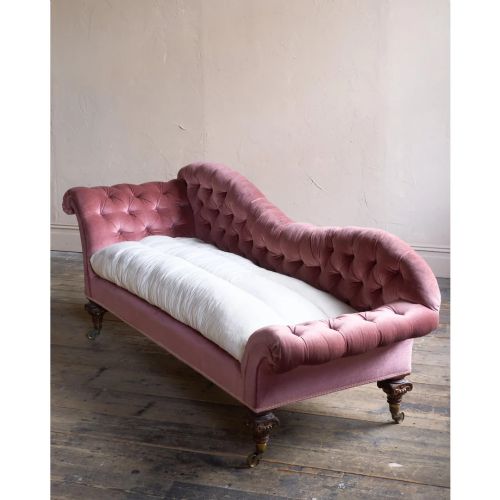
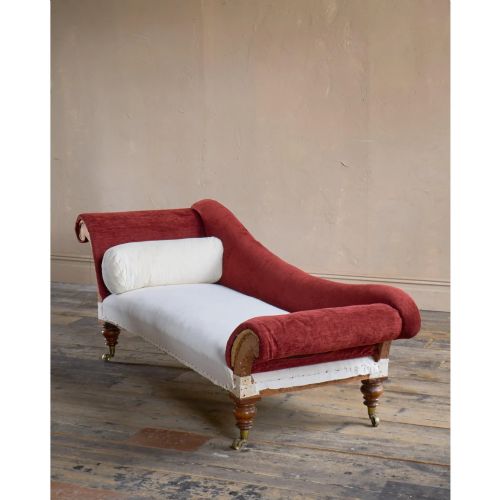
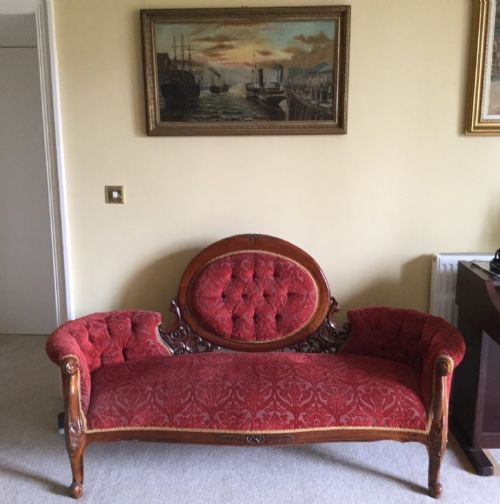
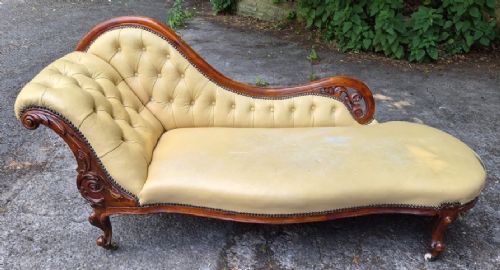
A victorian mahogany chaise longue takes several distinct shapes across the nineteenth century, ranging from double-ended settees to single scroll-arm day beds. Pieces emerge from periods including Early Victorian, William IV, and Regency, reflecting changing tastes in domestic lounging furniture.
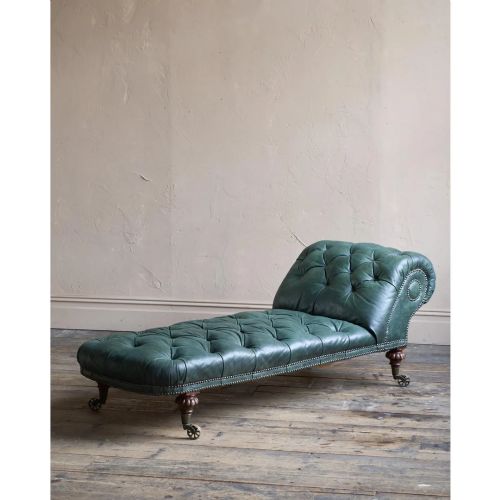
The single-ended scroll design appears frequently, alongside double-ended frames and kidney sofas. Makers constructed these items for parlours and drawing rooms, often pairing carved timber frames with button backs and sprung bases.
Materials and Construction
Workshops built these frames primarily in mahogany, occasionally utilising brass castors for mobility on timber floors or carpets. Woodwork often displays carved detail, scroll ends, and column legs.
Upholstery materials vary from leather and deep pile brocade to damask and standard velvet fabrics. Interiors rely on sprung settees and webbed bases to support the long seat.
Victorian Mahogany Chaise Longue Retail Price Guide 2026
Typical asking prices for victorian mahogany chaise longue among the pieces listed under this phrase on Sellingantiques today, from the lower quarter to the upper quarter. They describe what is for sale here now, not the wider market.
Listings feature mahogany frames paired with materials including leather, velvet, damask, and brass fittings across the nineteenth-century period.
Quality and Execution
The depth and crispness of the timber carving separate standard frames from pieces associated with known cabinet makers. Fine execution shows in the scrollwork, showwood framing, and structural joinery.
The grade of upholstery materials, from simple cottons to heavy leather or damask, alters the tactile weight of the object. Hand-finished buttoning and traditional springing indicate higher standards of workshop production.
Holland & Sons·Howard & Sons·Jas Shoolbred·Miles & Edwards
The Victorian Mahogany Chaise Longue Glossary
- Scroll arm
- A curved wooden armrest resembling a rolled scroll, seen on many nineteenth-century sofas and day beds. This shape defines the silhouette of numerous regional and London-made examples.
- Double-ended
- A settee or chaise longue with raised headrests at both extremities rather than a single raised end. This configuration allows a user to recline facing either direction.
- Button back
- An upholstery method where tufts are pulled tight and secured with buttons to create a diamond pattern across the fabric. This technique provides firm support and decorative depth.
- Showwood
- Exposed polished timber framing around an upholstered piece, allowing the grain and carving of the mahogany to remain visible. Cabinet makers used this to display the quality of the wood.
Victorian Mahogany Chaise Longue: Frequently Asked Questions
How do I style a chaise longue?
Position the piece against a main wall or floating in a large room where the profile of the scroll arm remains visible. Allow sufficient floor space around the long frame so the timber legs and upholstery can be appreciated without crowding.
Balance the asymmetric shape by placing a small side table near the low end for lamps or books. Keep surrounding seating low to let the height of the backrest or headrest anchor the corner.
How do I care for nineteenth century mahogany?
Dust the polished mahogany surfaces regularly with a dry, soft cloth to prevent grit accumulation on the showwood frame. Avoid placing the timber in direct sunlight or near heat sources to prevent the wood from drying out.
Treat the polished finish periodically with appropriate furniture wax applied sparingly and buffed gently. Protect leather or fabric upholstery according to its specific textile requirements.
How do I identify a Victorian piece?
Examine the timber for solid mahogany framing and look for characteristic nineteenth-century joinery methods beneath the upholstery. Heavy scroll arms, button backs, and turned or column legs point directly to this era.
Check for attribution marks or stamps on the wooden rails, as major cabinet makers often signed their frames. Stylistic markers such as robust proportions and dark polished finishes confirm the Victorian origin.