
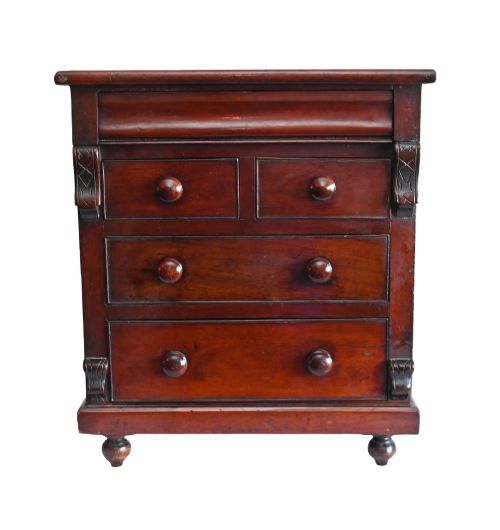
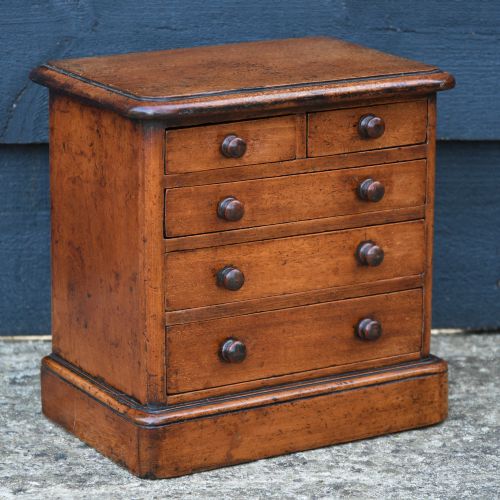
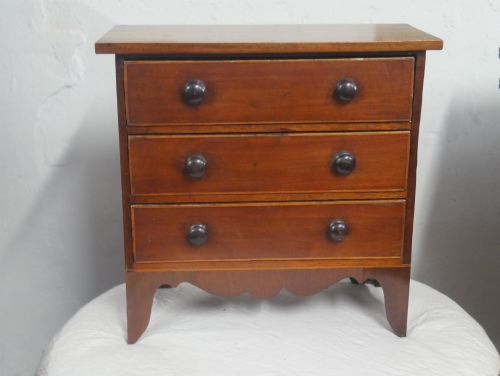
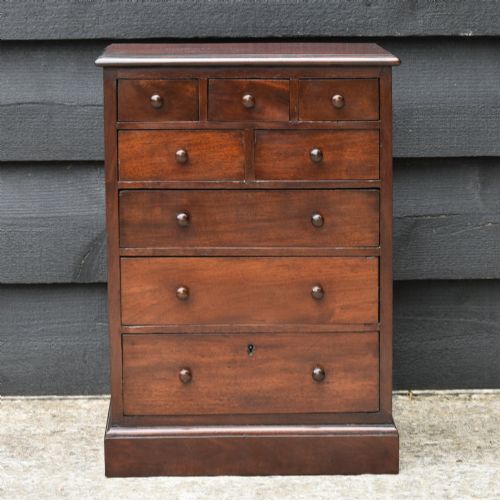
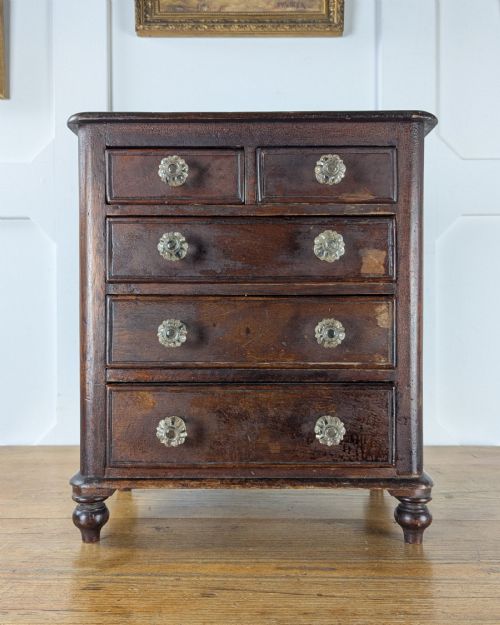
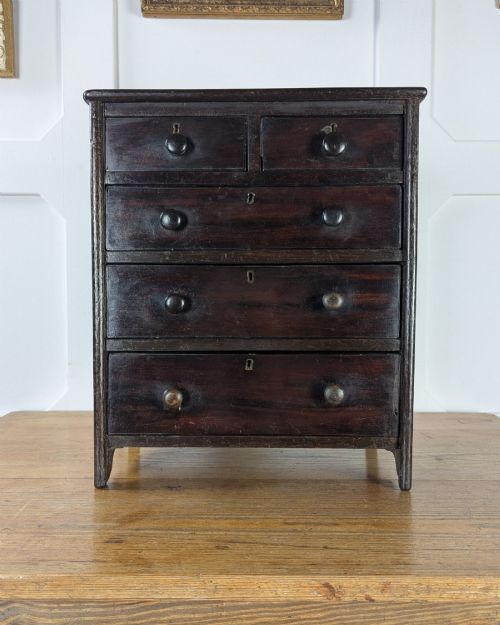
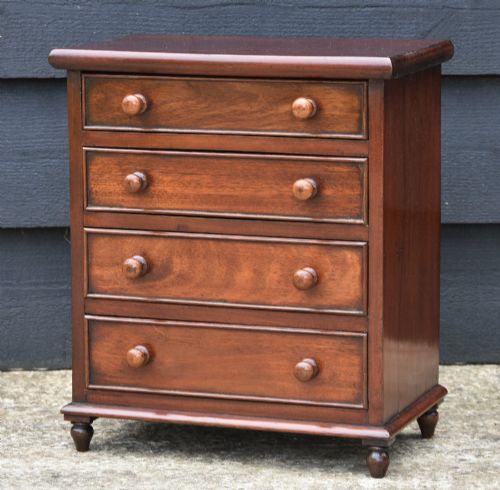
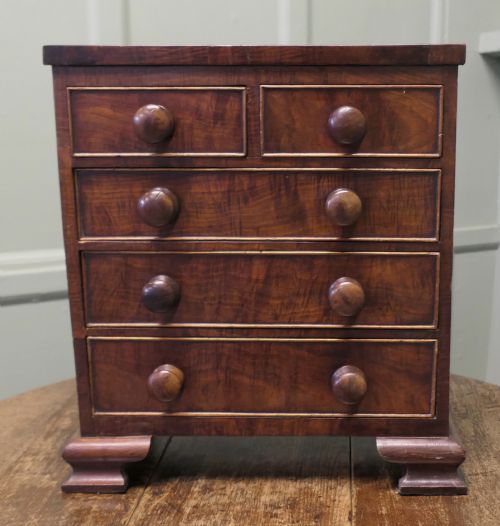


Victorian Mahogany Apprentice Piece
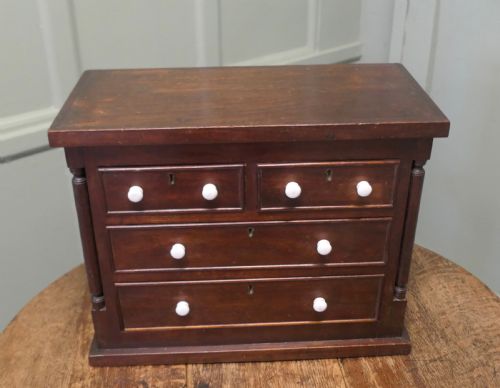
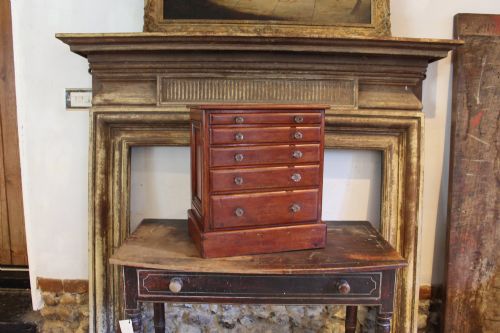
A victorian mahogany apprentice piece distils full-scale cabinet-making into miniature, offering collectors charming scaled-down furniture samples and miniature chests.
Victorian Mahogany Apprentice Piece
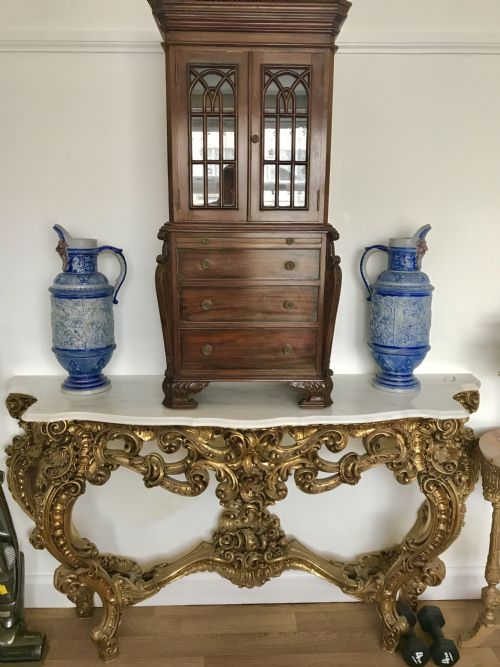
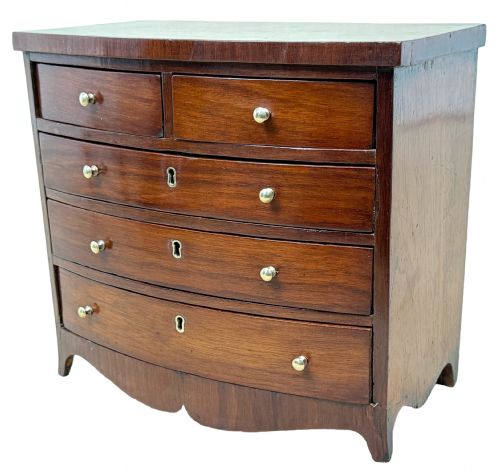
A victorian mahogany apprentice piece typically takes the form of a miniature chest of drawers, alongside less common cabinets, dressers, and centre tables. These small-scale items represent portable masterworks or salesman samples produced during the nineteenth century.
The objects span periods from early Victorian years through to eighteen eighty and nineteen hundred, frequently manifesting as miniature bowfront chests or Scotch chests. Buyers encounter various compact storage forms that double as decorative collectors pieces or jewellery boxes.
Construction and Materials
Makers utilised solid mahogany and mahogany veneers over secondary timbers such as pine, occasionally incorporating boxwood or mother of pearl inlay for decorative contrast. Structural stability relied on traditional joinery scaled down to miniature dimensions.
Surfaces received traditional French polishing to accentuate the grain and colour of the mahogany, while smaller details utilised brass fittings, glass panels, and turned feet.
The archive shows that miniature washstands with accessories and tea caddies styled as chests of drawers occasionally accompany standard miniature chests.
Assessing Quality and Proportion
Proportion and fidelity to full-scale furniture determine the success of a miniature, separating skilled cabinet-making from crude toy-making. Fine examples maintain correct architectural scaling in drawers, mouldings, and feet.
The presence of secondary woods, patination, and careful inlay work distinguish superior pieces from utilitarian boxes. Superior execution shows in the precision of the miniature dovetails and the warmth of the polished timber.
The Victorian Mahogany Apprentice Piece Glossary
- Apprentice piece
- A scaled-down item of furniture created by a craftsman to demonstrate skill or serve as a trade sample. These pieces mirror full-sized equivalents in construction methods.
- Bowfront
- A curved cabinet front that swells outward in the centre. This shape appears frequently on nineteenth-century miniature chests.
- Scotch chest
- A regional furniture style featuring a deep top drawer over multiple smaller drawers. Scottish examples often display distinct proportions and timber selection.
- French polish
- A shellac finish applied in numerous thin layers using a rubbing pad. This technique produces a high gloss that highlights the grain of mahogany.
- Specimen case
- A small cabinet or chest designed for holding natural history samples or small collectibles. They share similar scaling to miniature furniture.
Victorian Mahogany Apprentice Piece: Frequently Asked Questions
What is an apprentice piece?
An apprentice piece is a miniature item of furniture made by a woodworker to demonstrate mastery of a trade. Cabinet-makers produced these scaled-down models to prove their skill before qualifying as master craftsmen.
They also served as travelling salesman samples to show clients design options without transporting large furniture. Today, collectors value them for their intricate detail and compact size.
How old are these miniature chests?
Most surviving pieces date from the nineteenth century, particularly the Victorian era between eighteen forty and eighteen eighty. Stylistic clues such as turned feet and bowfronts help narrow down the period.
Craftsmen produced them across several decades, with some examples extending into the early twentieth century. Each piece reflects the cabinet-making fashions of its specific decade.
Were these items meant for children?
Despite resembling dollhouse furniture, most miniature chests and cabinets were created by adult craftsmen as trade samples or display pieces. Their robust construction and use of fine mahogany distinguish them from children's toys.
Some later examples functioned practically as jewellery boxes or desktop storage for small valuables. Their refined proportions suited adult domestic interiors rather than nurseries.
How do I care for mahogany miniature furniture?
Keep mahogany furniture out of direct sunlight to prevent the timber from fading and the French polish from drying out. Maintain a stable room temperature away from heat sources to avoid wood movement.
Dust gently with a soft cloth and avoid using modern spray polishes that can damage the antique finish. Occasional application of suitable wax helps preserve the patina of the wood.