
Victorian Low Open Bookcase
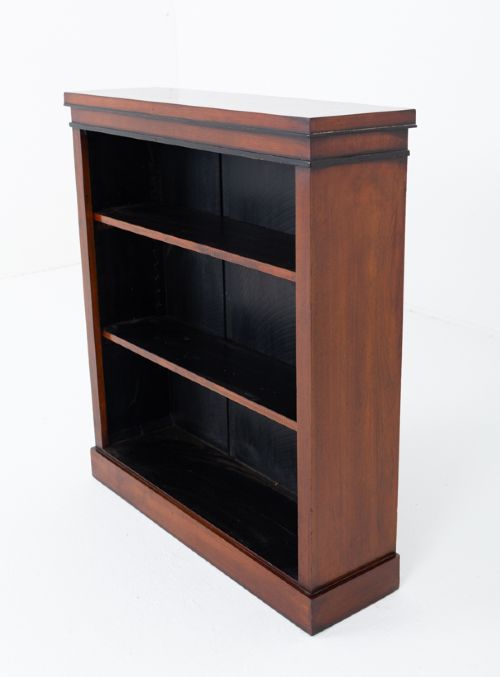
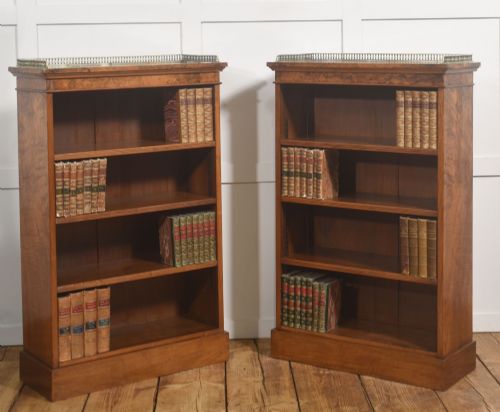
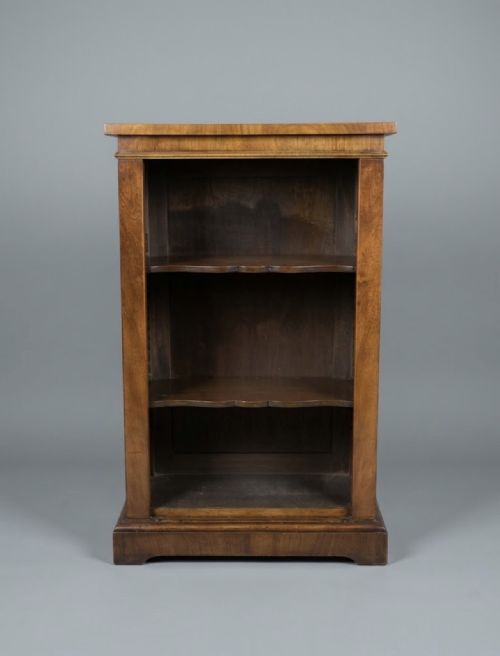
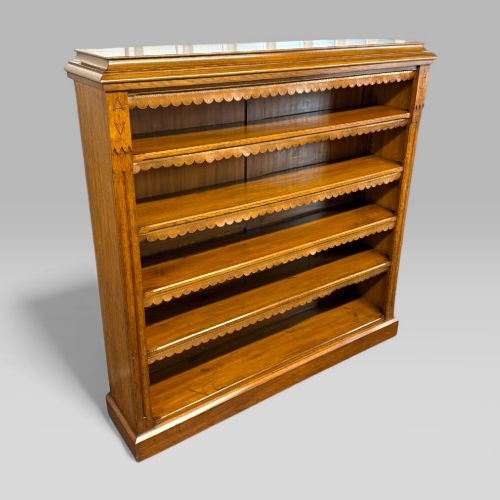
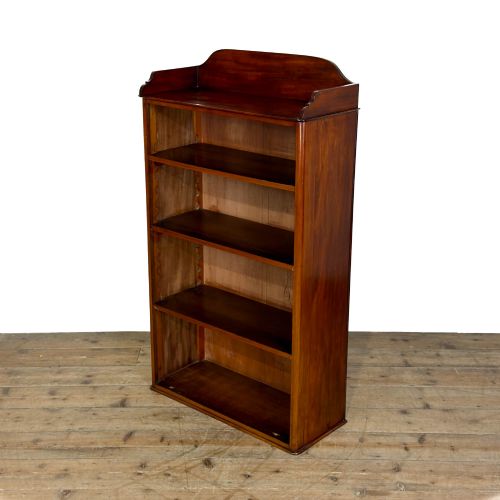
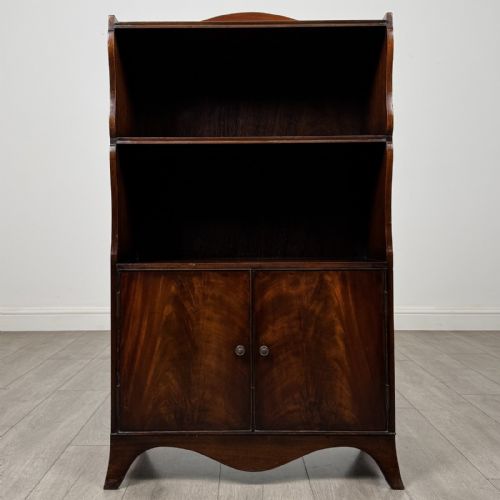
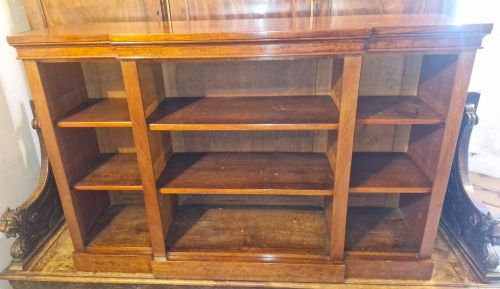
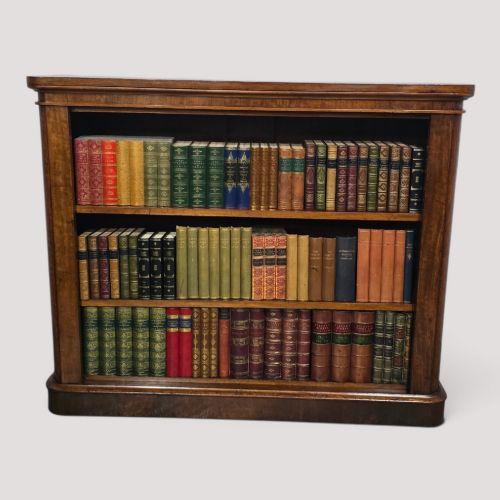
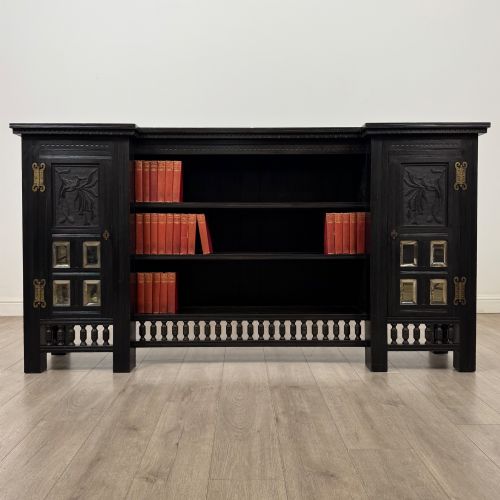
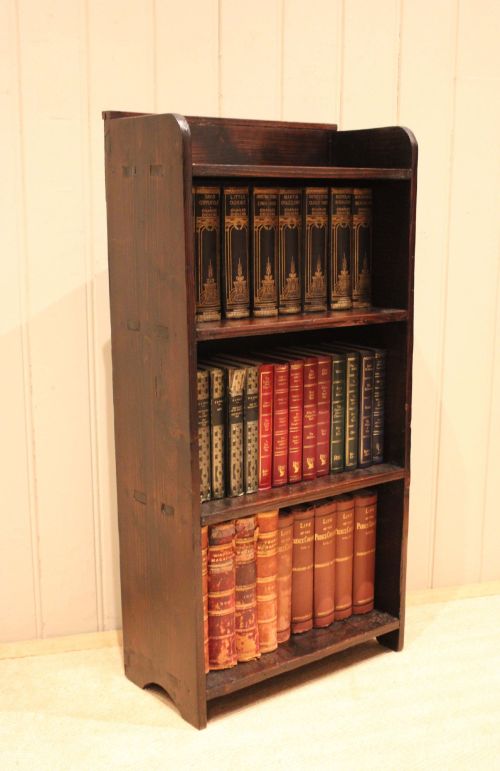
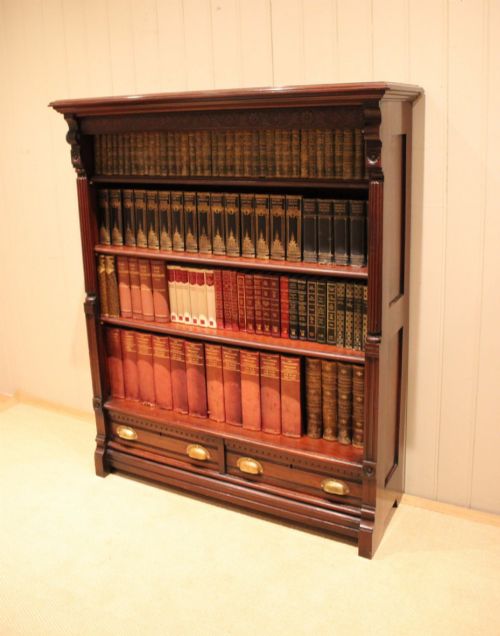
A victorian low open bookcase brings accessible shelving and rich timber grain to a room without blocking the light.
Victorian Low Open Bookcase
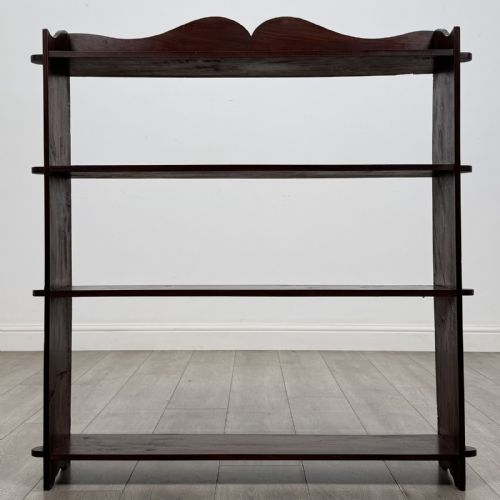
Mahogany, oak, and walnut dominate the selection, appearing in both simple domestic formats and grander library proportions. Dwarf bookcase variants and stepped profiles offer alternative heights while retaining the open front structure.
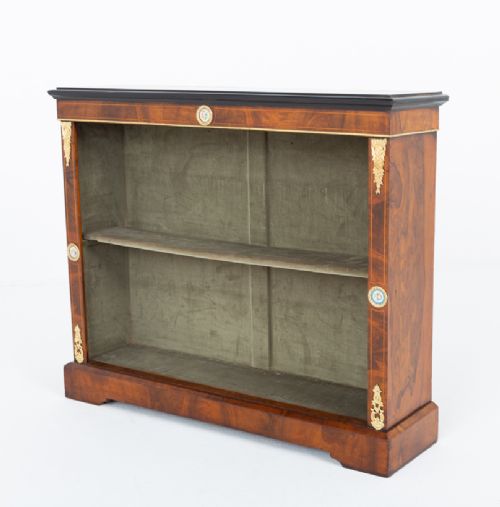
Makers utilised rich timbers like rosewood, burr walnut, and amboyna, sometimes mounting ormolu details to elevate the design. Edwardian and later 1920 pieces continue this low open format using pine, oak, and mahogany.
Materials and construction
Cabinet makers built these bookcases using solid timbers and decorative veneers such as flame mahogany, burr walnut, and rosewood applied over secondary woods. Brass pins and slotted uprights commonly support the movable internal shelving.
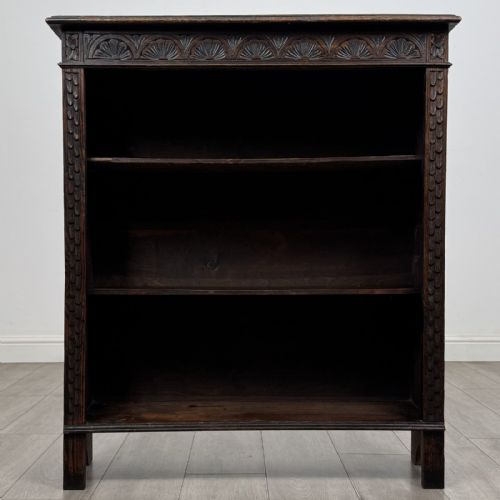
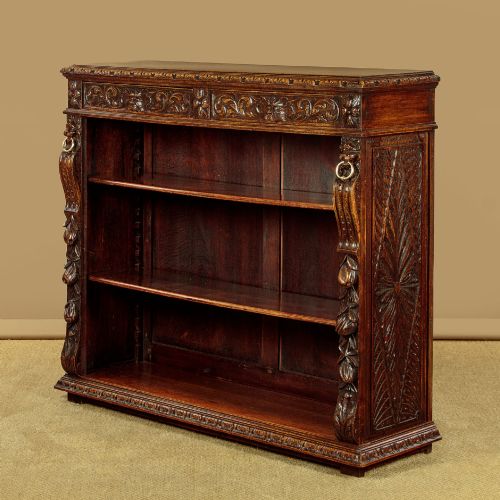
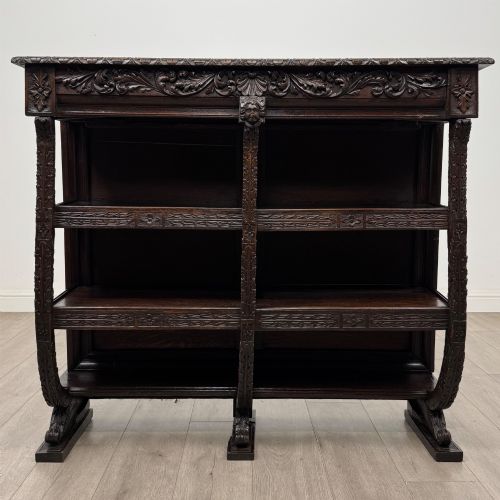
Carved ornament, ebonised highlights, and cast ormolu mounts appear on finer examples alongside simpler rustic pine and oak finishes. Joinery relied on traditional housing joints and sturdy backboards to keep the open frame square.
Certain late Victorian shelves hide carved green man masks amongst their foliage, watching quietly over the library.
Distinctions in craftsmanship
The choice of timber grain fundamentally divides standard utility shelving from high-status library pieces. Finely figured burr walnut, flame mahogany, and amboyna demand superior selection and matching by the cabinet maker.
Subtleties of proportion, such as a stepped top or integrated brass mounts, separate basic workshop production from the output of recorded cabinet makers like Johnstone and Jeanes.
Johnstone and Jeanes
The Victorian Low Open Bookcase Glossary
- Dwarf bookcase
- A low shelving unit designed to sit beneath dado height. These pieces leave wall space clear above them.
- Adjustable shelves
- Shelves resting on movable supports that allow the internal height to change. This system uses slotted wooden strips or brass tracks inside the carcass.
- Ormolu
- Gilt bronze mounts applied for decorative effect. Makers cast and chased these metal ornaments to embellish walnut and exotic timber surfaces.
- Breakfront
- A piece of furniture where the central section projects forward from the outer wings. This architectural layout creates depth in larger library bookcases.
- Flame mahogany
- Timber showing a distinctive tongue-like flame figure pattern. Cabinet makers cut this veneer from the point where major branches diverge from the trunk.
Victorian Low Open Bookcase: Frequently Asked Questions
What is a low open bookcase?
A low open bookcase is a waist-height shelving unit without doors, designed to keep books within easy reach.
These pieces emerged to serve domestic libraries and sitting rooms where shorter furniture preserved wall space and light.
How do I adjust the shelves?
Most period bookcases use either traditional wooden tooth racks or brass pins inserted into vertical strips.
Lifting the shelf allows you to reposition the supports into alternative slots to accommodate different book heights.
Where should I place it?
Low bookcases fit well beneath windows or along living room walls because their height leaves upper wall space open.
Keep them away from direct heat sources and strong sunlight to protect the polish and prevent timber splitting.
How do I date the wood?
Dating relies on observing timber choices, construction methods, and characteristic decorative styles like aesthetic movement carving.
Earlier pieces often feature flame mahogany or rosewood, while later editions lean towards oak, pine, and simpler Edwardian forms.