



Victorian Louis XV Chair
A victorian louis xv chair brings fluid Rococo lines and rich walnut or giltwood frames into a nineteenth-century interior.
Victorian Louis XV Chair
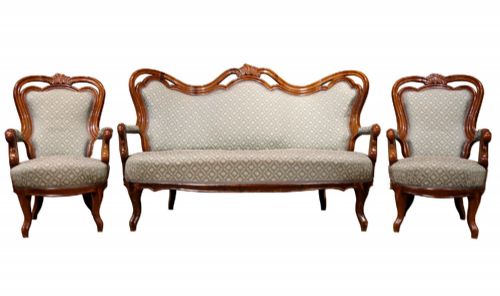
A victorian louis xv chair draws on the curves and asymmetric flourishes of eighteenth-century French design, reinterpreted by nineteenth-century makers. Buyers encounter open armchairs, side chairs, salon suites, and piano stools spanning the decades from eighteen fifty to nineteen hundred.
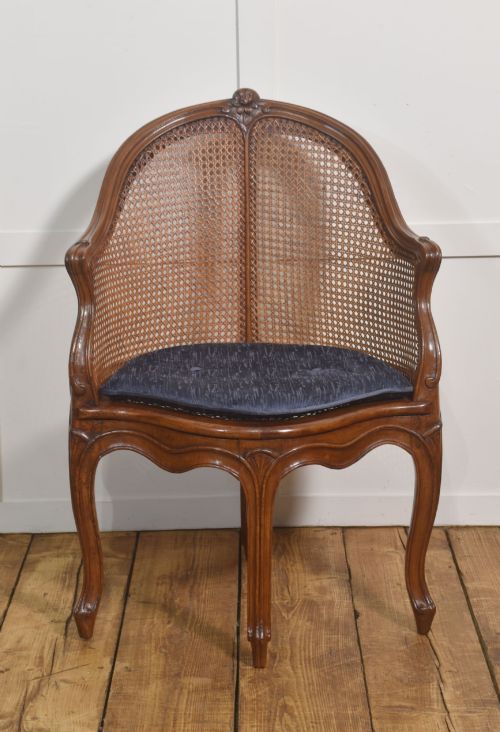
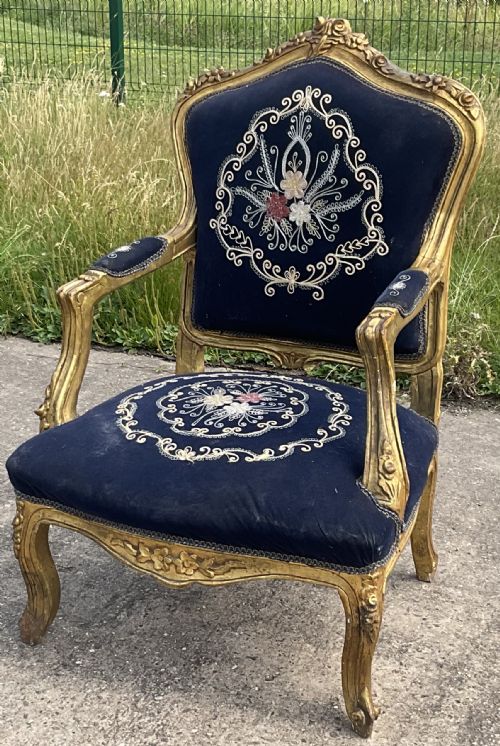
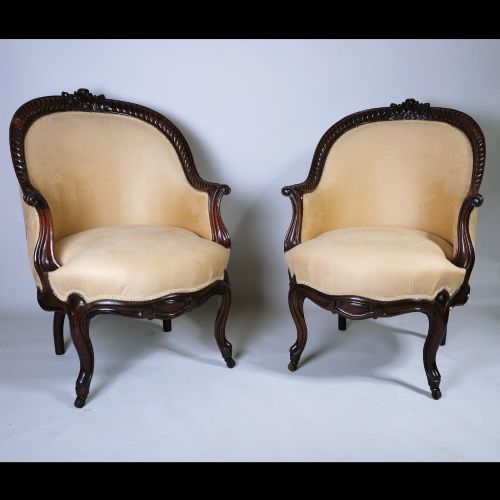
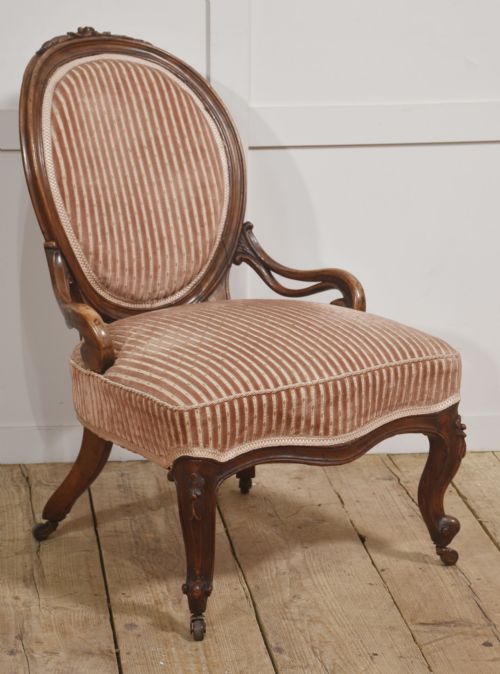
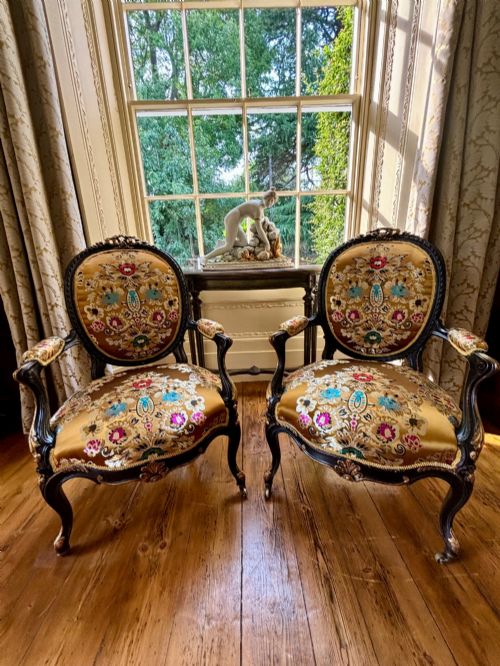
The walnut framed open armchair represents the most frequent form on this page, often accompanied by pairs of giltwood salon chairs and carved dining chairs. These seating pieces combine substantial nineteenth-century timber frames with French revival aesthetics.
Materials and construction
Framing relies predominantly on walnut, mahogany, and rosewood, alongside giltwood and painted finishes applied to solid timber. Makers shaped these dense woods through detailed carving to achieve the characteristic cabriole legs and scrolled cartouche backs.
Upholstery materials range from silk fabric and velvet to petit point textiles, secured to frames that occasionally incorporate cane panels or adjustable mechanisms for piano stools.
Victorian Louis XV Chair Retail Price Guide 2026
Typical asking prices for victorian louis xv chair among the pieces listed under this phrase on Sellingantiques today, from the lower quarter to the upper quarter. They describe what is for sale here now, not the wider market.
Some nineteenth-century makers added adjustable swivel mechanisms to piano stools so musicians could spin while maintaining proper posture.
Assessing craftsmanship
Quality separates along the depth and crispness of the hand carving on the wooden frames, particularly where floral motifs meet the rails and knees. Finer examples display fluid, deeply undercut ornamentation rather than shallow, mechanical stamping.
The integrity of the structural joinery and the selection of primary timbers, such as richly figured walnut or substantial giltwood, dictate the durability and visual weight of each chair.
The Victorian Louis XV Chair Glossary
- Cabriole leg
- An S-shaped furniture leg that curves outward at the knee and tapers inward to the foot, mimicking animal limbs. This form defines much of the Louis XV revival aesthetic.
- Giltwood
- Wood that has been coated with a thin layer of gold leaf or gilt paint. It provides a bright, reflective surface popular on formal salon chairs.
- Cartouche
- An ornamental frame resembling a scroll or a sheet of parchment with scrolling margins, often carved into the backrest of an armchair.
- Petit point
- A fine, count-thread needlepoint stitch executed on canvas. It creates detailed pictorial or geometric upholstery patterns seen on period seating.
- Fauteuil
- An open-armed upholstered armchair with exposed wooden arms. French makers popularised this form during the eighteenth century.
Victorian Louis XV Chair: Frequently Asked Questions
What is a Victorian Louis XV chair?
These pieces are nineteenth-century British and Continental interpretations of French Rococo design, combining traditional forms with later manufacturing dates. They offer decorative seating with curved wooden frames and ornate carved details.
Buyers find them in various formats, including single armchairs, pairs of salon chairs, and complete multi-piece suites intended for formal reception rooms.
How do I date these chairs?
Dating relies on examining the timber species, construction methods, and stylistic markers recorded across the nineteenth century. Mid-century examples often feature heavier mahogany or walnut frames, while later decades show lighter painted finishes or specific revival flourishes.
Documentation and archival comparisons help narrow down the production window between eighteen fifty and nineteen hundred.
Where were these chairs used?
In nineteenth-century homes, such seating furnished formal drawing rooms, parlours, boudoirs, and halls. Smaller side chairs and salon suites accommodated guests during social gatherings and musical evenings.
Piano stools and adjustable variants served specifically in music rooms alongside keyboard instruments.
How should I care for the upholstery?
Maintenance depends on whether the chair retains silk fabric, velvet, or petit point needlework. Gentle dusting and professional textile cleaning preserve the integrity of vintage fabrics.
Wooden frames benefit from occasional waxing to protect walnut, rosewood, and giltwood surfaces from drying out.