



Victorian Long Ottoman
These Victorian long ottoman pieces are extended seating forms built for comfort and display, offering deep upholstery and sturdy timber frames that anchor a traditional room.
Victorian Long Ottoman
When you search for a victorian long ottoman, you encounter an array of extended seating forms ranging from daybeds and chaise longues to long footstools, fender stools, and window benches. These pieces originate across the nineteenth century, including specific dates such as eighteen-sixty, eighteen-eighty, and the late Victorian era.
The predominant forms found here are low stools, window seats, and daybeds designed for reclining or extended seating. They serve multiple functions within period interiors, operating as hallway benches, fireside fender stools, or companion seating at the foot of a bed.
Construction and materials
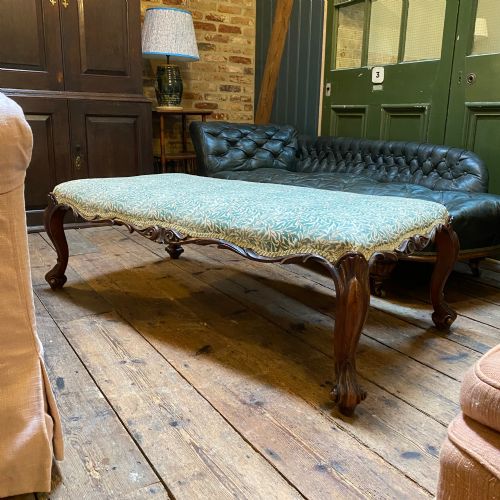
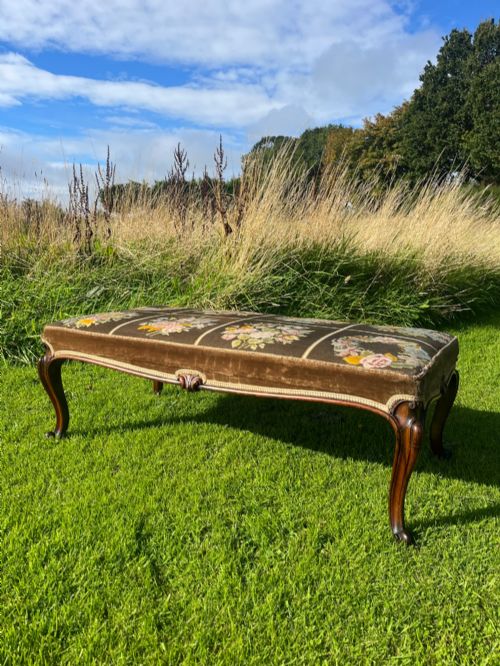
Makers utilised dense timbers such as walnut, mahogany, oak, rosewood, and ebonised wood to build the structural frames of these pieces. Turned, fluted, and cabriole legs provide the primary support, occasionally supplemented by cane panels or brass details.
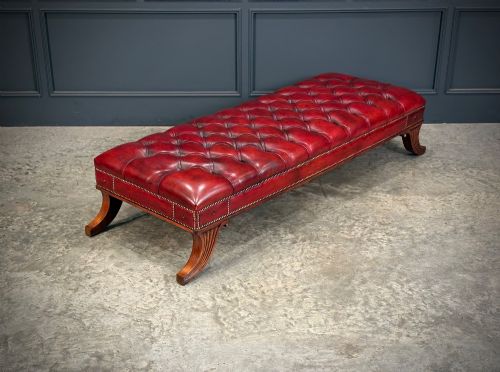
Upholstery techniques involve textiles, leather, and original fabrics or modern linen and beige fabric coverings. Box frames and hinged lids on specific ottoman variations incorporate internal storage compartments beneath the padded top.
Victorian Long Ottoman Retail Price Guide 2026
Typical asking prices for victorian long ottoman among the pieces listed under this phrase on Sellingantiques today, from the lower quarter to the upper quarter. They describe what is for sale here now, not the wider market.
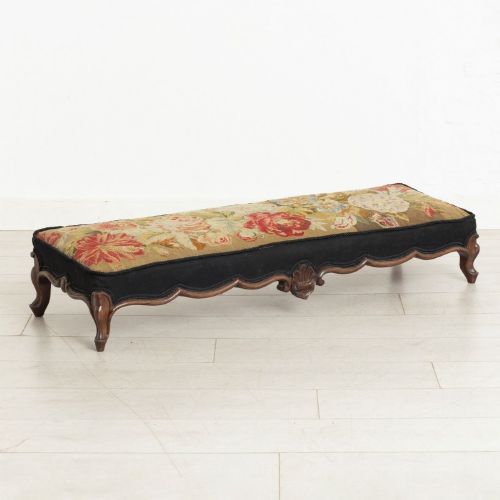
Fender stools were built specifically low so people could warm their shins by the hearth without blocking everyone else's view of the fire.
Factors of quality
The refinement of the timber carving and the choice of primary wood distinguish standard examples from finer works. Walnut and rosewood frames with well-executed cabriole legs demonstrate a higher level of cabinet-making skill than simpler mahogany or oak counterparts.
The integrity of the frame construction and the preservation of original elements, such as leather, cane, or early fabric, determine the overall character. Pieces that retain their original structural joinery without excessive intervention command greater interest from collectors.
The Victorian Long Ottoman Glossary
- Ottoman
- A low upholstered seat or bench, frequently featuring a padded top that lifts to reveal a storage compartment inside the base. This form evolved to serve as both a resting place for feet and a trunk.
- Cabriole leg
- A furniture leg that curves outward in a convex arc and then bends inward in a concave arc, terminating in a foot. This decorative feature appears frequently on mid-nineteenth-century seating.
- Fender stool
- A long, narrow footstool designed to sit immediately in front of a domestic hearth fender. These low seats allowed individuals to warm their feet close to the fire.
- Daybed
- An elongated piece of furniture intended for reclining during the day, combining elements of a chair and a bed. They often feature raised ends or backs upholstered in textile or leather.
- Ebonised wood
- Timber treated with a chemical stain or finish to imitate the dense, dark appearance of ebony. This treatment was popular for achieving a formal contrast in Victorian furniture.
Victorian Long Ottoman: Frequently Asked Questions
What is a Victorian long ottoman?
A Victorian long ottoman is an extended nineteenth-century seat or bench, often combining a timber frame with a padded top for resting or reclining.
Many examples function as low stools, window seats, or daybeds upholstered in leather, fabric, or cane.
How were these ottomans used?
These pieces served multiple roles in period homes, acting as hallway benches, fireside fender stools, or daybeds for resting.
Versions with hinged tops provided concealed storage for blankets, linens, or personal items within the frame.
Which woods are most common?
Frames are constructed primarily from hardwoods such as walnut, mahogany, oak, and rosewood, alongside ebonised wood.
Secondary materials like brass, cane, and various textiles appear in the legs, structural mounts, and upholstery.
How do I date a piece?
Dating relies on stylistic markers, timber choices, and construction methods associated with the nineteenth century, including specific decades like the eighteen-eighties.
Details such as cabriole legs, Gothic Revival motifs, or Rococo Revival curves help place a piece within the Victorian era.