



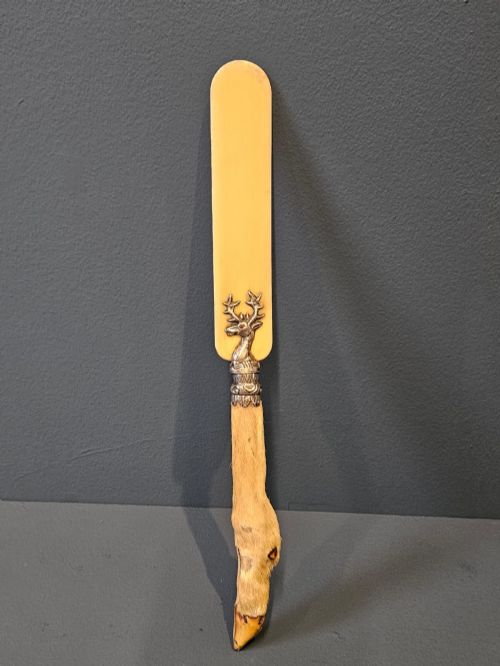


Victorian Letter Knife
These Victorian letter knife examples bring tactile Victorian weight to a desk, handling correspondence through silver, tortoiseshell, and wood.
Victorian Letter Knife
A Victorian letter knife serves as a functional desk accessory for opening envelopes and turning pages, bridging utilitarian office use with decorative craft. When searching for a victorian letter knife, buyers encounter forms ranging from simple wooden blades to elaborate desk items mounted in sterling silver.
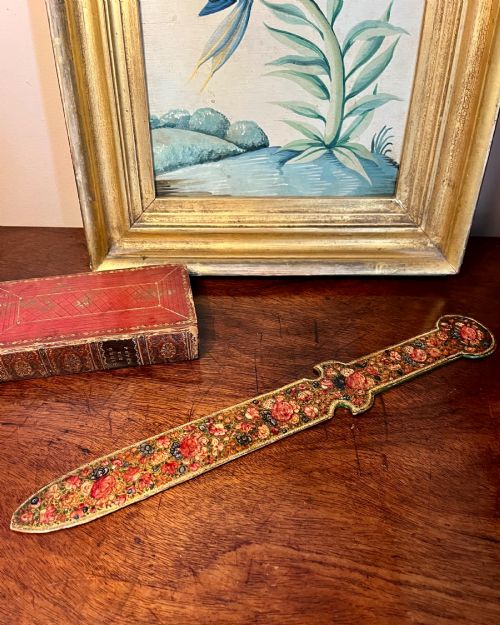
The materials and styles span traditional British silverwork alongside Kashmiri papier-mâché, French gilded bronze, and novelty animal motifs. Pieces emerge from periods stretching through the nineteenth century into the early twentieth century, including Georgian elements and later Victorian production.
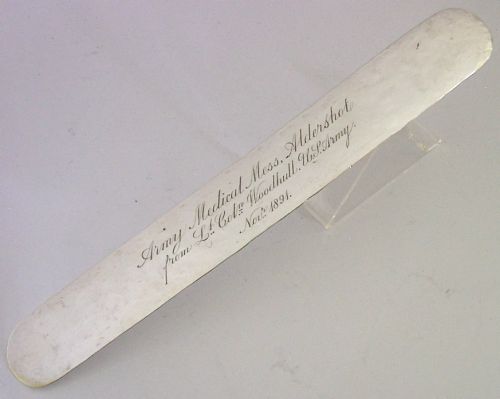
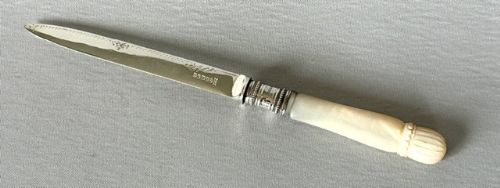
Desk accessories of this scale often double as page turners, integrating silver mounts, mother-of-pearl, and tortoiseshell into slender implements designed for the library or study. Each piece reflects the desk culture of its era, combining utility with decorative ornamentation.
How they were made
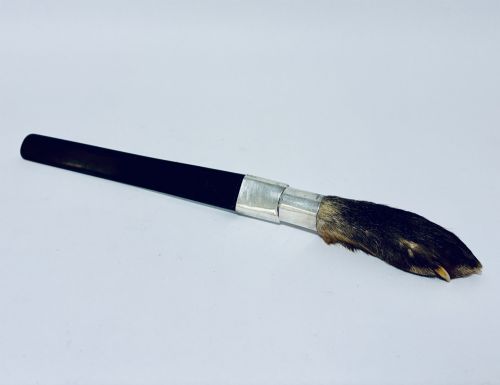
Makers shaped these objects using sterling silver, tortoiseshell, papier-mâché, and dense woods like ebony and yew, often mounting organic materials with metal hafts. Metalwork components involve casting and silver plating, whilst bronze pieces utilise detailed casting techniques seen in animal figures and figural desk sets.
Surface decoration relies on painted Kashmiri lacquer, ebonising, and hand-chased silver hallmarks denoting assay offices such as Chester and Birmingham. Artisans combined disparate elements like pewter, wood, and mother-of-pearl into balanced hand-held implements.
Victorian Letter Knife Retail Price Guide 2026
Typical asking prices for victorian letter knife among the pieces listed under this phrase on Sellingantiques today, from the lower quarter to the upper quarter. They describe what is for sale here now, not the wider market.
Desk sets occasionally feature four-faced humorous pewter heads staring back at you while you open the morning post.
What varies in quality
The distinction between standard desk items and superior examples lies in the execution of the handle and the integration of precious materials. Finely cast novelty heads, crisp hallmarks, and unblemished tortoiseshell or mother-of-pearl elevate an implement beyond basic utility.
Artisanal detail in carved wooden forms, such as yew wood or ebonised lizard bodies paired with silver plated components, dictates the refinement of the piece. Maker attribution, such as work by Sampson Mordan & Co., further distinguishes the workmanship.
Sampson Mordan & Co.
The Victorian Letter Knife Glossary
- Letter Opener
- A thin blade designed specifically for slicing open sealed envelopes. These implements evolved from earlier paper knives and page turners.
- Page Turner
- A larger handheld implement used for separating uncut pages in books and periodicals. They share materials and forms with letter openers.
- Hallmark
- An official stamp applied to precious metals indicating purity, maker, and assay office location. British silver pieces typically carry these marks.
- Papier-mâché
- A composite material made from paper pulp or layers of paper bound with glue, reinforced and lacquered. Kashmiri examples demonstrate this technique.
- Tortoiseshell
- The shell of certain sea turtles utilised for decorative inlay and handles. It appears frequently paired with sterling silver mounts.
Victorian Letter Knife: Frequently Asked Questions
What is a victorian letter knife used for?
These implements were designed for opening sealed correspondence and slicing open uncut pages in books and newspapers. They served as standard desktop accessories in nineteenth-century studies and libraries.
Today, they function both as functional desk tools and decorative objects collected for their craftsmanship and variety of materials.
How do I identify a silver mount?
Silver mounts usually display stamped hallmarks indicating the assay office, metal purity, and date letter. Birmingham and Chester are common assay locations found on these pieces.
These marks help verify the period and origin of the metal components attached to the blades.
What materials are common?
Common materials include sterling silver, tortoiseshell, papier-mâché, mother-of-pearl, and dense woods such as ebony and yew. Some examples incorporate gilded bronze or pewter.
Combination pieces frequently pair organic materials with metal hafts or decorative animal heads.
Are these items strictly Victorian?
While many pieces date from the Victorian era and the late nineteenth century, related desk accessories span from the Georgian period into the early twentieth century. Styles also include Edwardian and Kashmiri influences.
Production dates reflect the broader era of traditional desk stationery manufacture rather than a single decade.