



Victorian Ladder Back
Victorian ladder back chairs are honest country seating built for daily use, offering sturdy frames and woven rush seats that suit both rustic kitchens and modern dining spaces.
Victorian Ladder Back
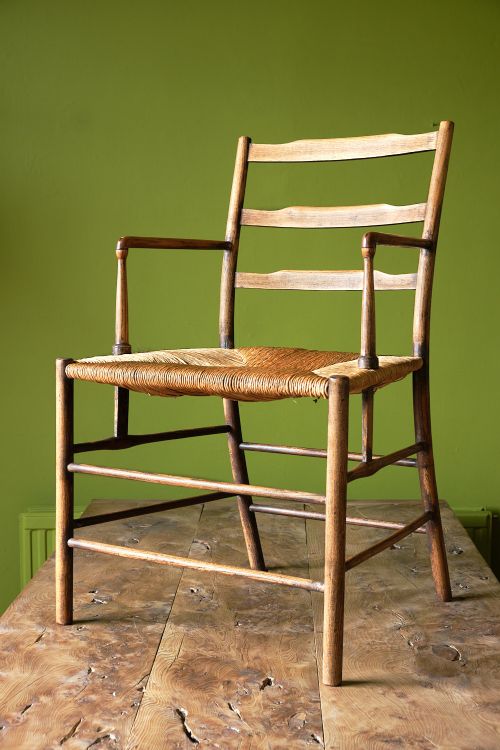
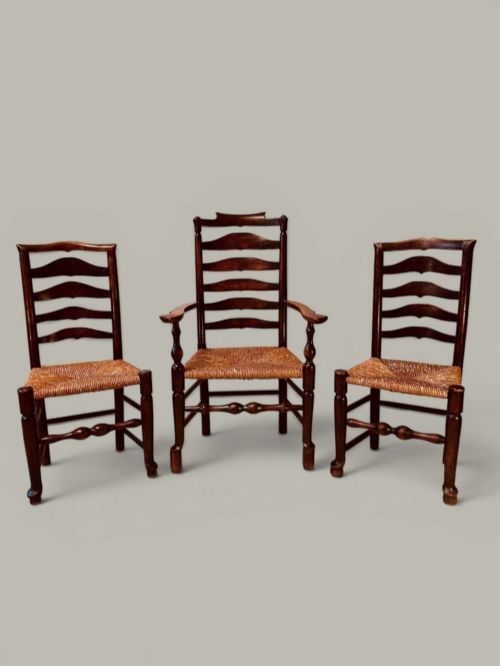
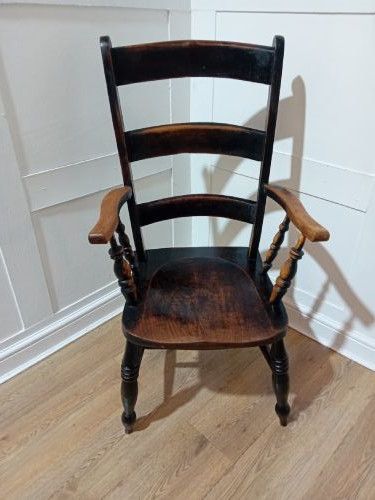
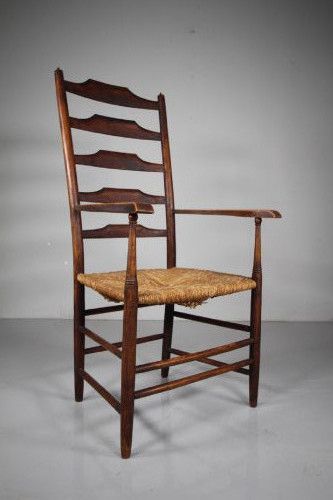
Victorian ladder back seating encompasses a range of utilitarian forms spanning side chairs, carvers, and rocking chairs created during the nineteenth century. Most examples found here originate from English vernacular traditions, featuring tiered horizontal slats across the backrest.
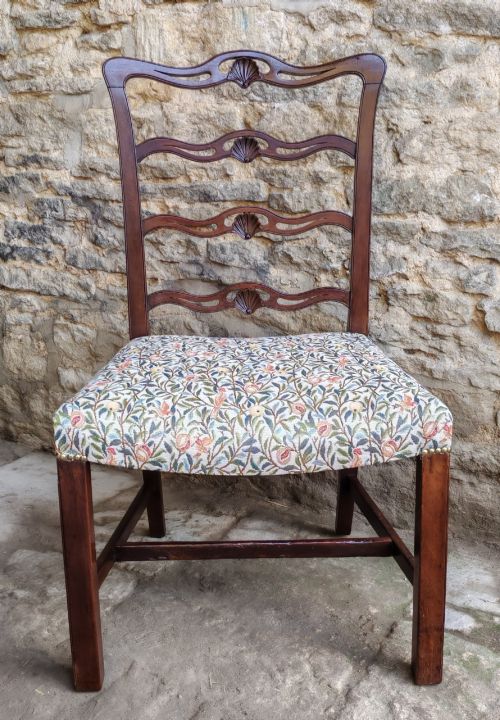
The materials used across these forms lean heavily towards regional hardwoods, with ash, oak, elm, and beech appearing frequently alongside mahogany in more refined urban interpretations. Seating surfaces predominantly utilise woven rush, though timber and leather also emerge within the broader grouping.
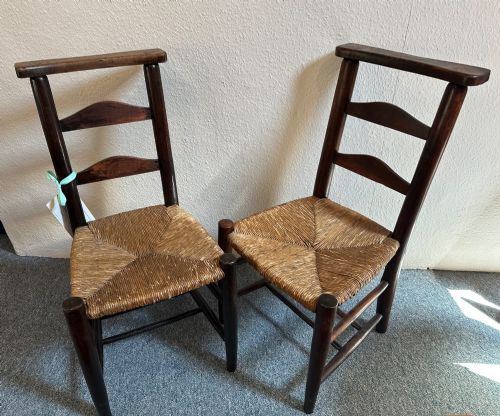
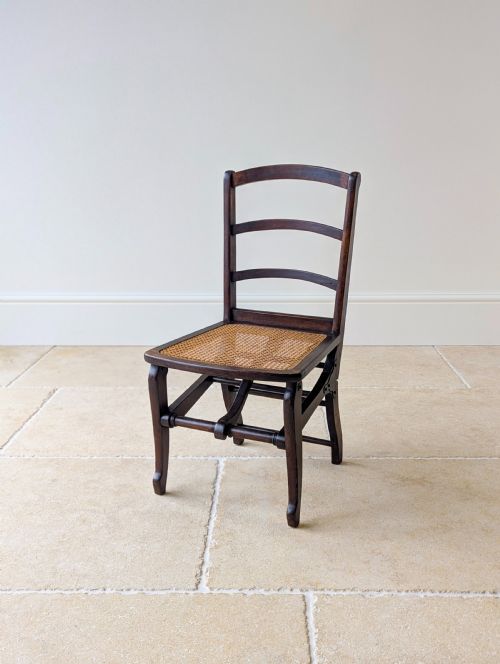
Makers produced these chairs for various domestic and institutional settings, ranging from farmhouse kitchens to cathedral seating and specialised library steps that convert into chairs. Buyers encounter everything from single fireside rockers to large matched sets of dining chairs.
How they were made
Woodworking techniques rely on traditional joinery suited to vernacular furniture production, where turned uprights receive shaped horizontal slats. Ash and elm provide the structural strength for country ladder backs, while beech and oak support turned spindles and framework.
Rush seating involves tight hand-weaving around internal frame rails, creating a resilient surface designed to withstand regular domestic wear. Surface finishes remain largely straightforward, preserving the natural grain and original patination of the native timbers.
Victorian Ladder Back Retail Price Guide 2026
Typical asking prices for victorian ladder back among the pieces listed under this phrase on Sellingantiques today, from the lower quarter to the upper quarter. They describe what is for sale here now, not the wider market.
Listings feature nineteenth-century seating constructed from ash, elm, oak, beech, and mahogany, frequently paired with rush or leather.
What varies in quality
Quality rests primarily in the harmony of the proportions and the crispness of the turning on the uprights and stretchers. Finer pieces demonstrate careful selection of timber matching across a set, whereas simpler workshop iterations show greater variation in grain and colour.
The integrity of the original construction and the survival of untouched surface patination distinguish superior examples. Retaining original rush seating or early finish adds considerable character compared to later re-weaving or heavy surface stripping.
Philip Clissett
The Victorian Ladder Back Glossary
- Ladder back
- A chair featuring a tall backrest composed of several horizontal curved slats resembling the rungs of a ladder. This vernacular design dates back centuries and remains a staple of country furniture.
- Rush seat
- A seating surface woven from dried marsh grasses twisted around a core and laced tightly across the chair rails. It provides a springy and durable platform for daily sitting.
- Carver
- An armchair designed to match a set of smaller side chairs, often placed at the head of a dining table. These pieces typically feature supportive armrests integrated into the front uprights.
- Vernacular
- Everyday furniture built by local craftsmen using regional timbers and traditional methods rather than following high-style academic designs. These pieces prioritize utility and local material availability.
Victorian Ladder Back: Frequently Asked Questions
Are ladder back chairs comfortable?
The curved horizontal slats provide good lumbar support when leaning back against the frame. Woven rush seats offer a slightly yielding surface that adapts well to sitting for meals.
Adding a loose squab cushion can increase comfort for prolonged sitting during long dinners. Most vernacular examples were built with ergonomics and daily labour in mind.
How do I clean a rush seat?
Dust the woven surface gently using a soft brush attachment on a vacuum cleaner. Avoid using excessive water, as moisture can cause dried marsh grass to become brittle and snap.
Treat occasional spills by blotting immediately with a barely damp cloth and drying thoroughly. Keeping the room humidity stable prevents the natural fibres from drying out completely.
Can I use these chairs daily?
These nineteenth-century chairs were originally constructed for heavy household use and remain robust enough for modern dining. Checking that the joints remain tight ensures safety during everyday seating.
Avoid placing antique wooden furniture near direct heat sources or rapid temperature shifts. Regular inspection of the rush weave helps catch any loose strands early.
How do I date a ladder back?
Dating relies on examining the turning style of the uprights, the construction joints, and the wear patterns on the timber feet. Regional country pieces often retain traditional workshop characteristics that persist across decades.
Matching sets or specific institutional markings provide further historical context for narrowing down the decade of production. Comparing wood species and finish remnants also aids in placing the piece within the Victorian era.