


Victorian Lacquer Side Table
When you search for a victorian lacquer side table, you encounter pieces combining 19th-century cabinet-making with painted, Japanned or papier-mâché surfaces that bring distinctive decorative presence to a room.
Victorian Lacquer Side Table
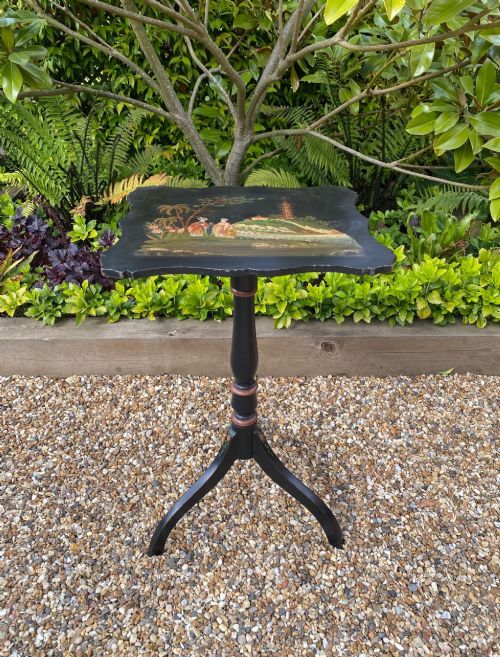
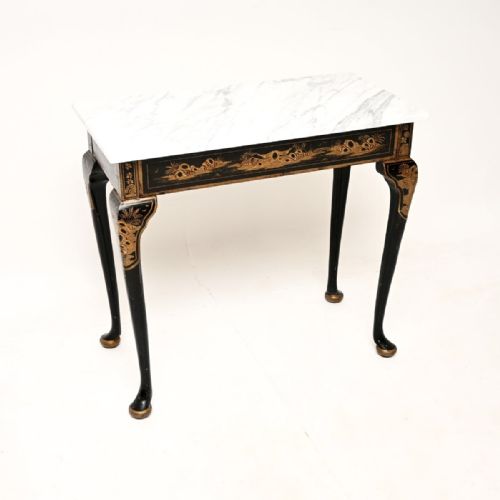
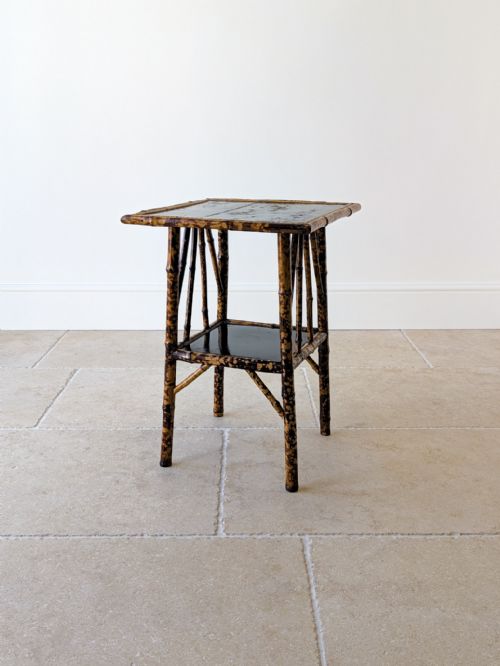
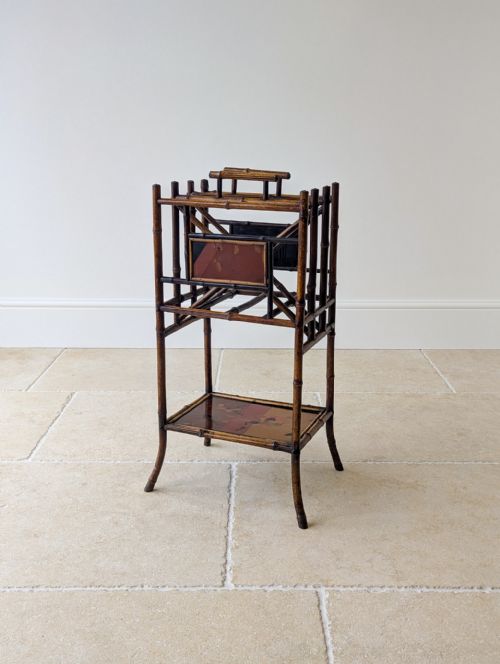
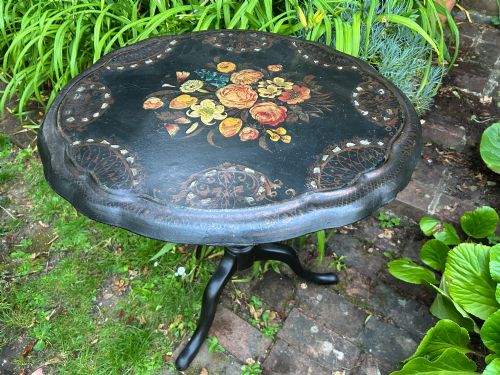
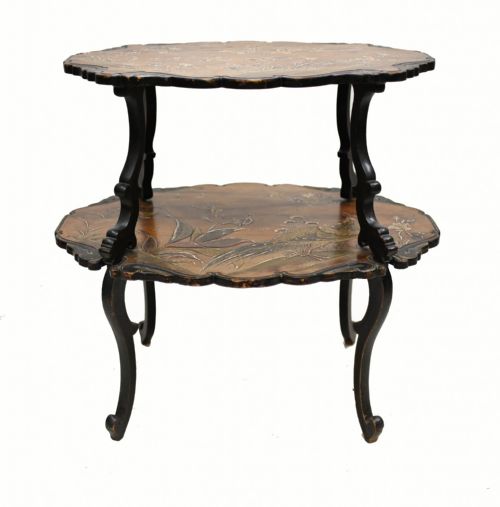
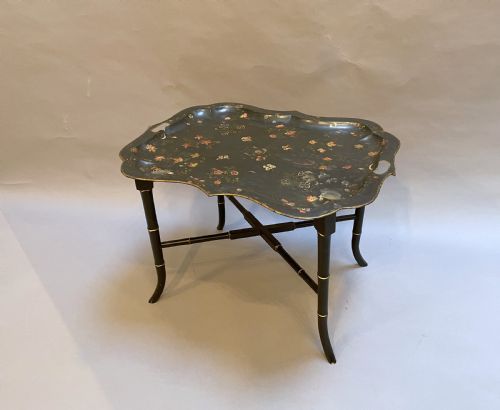
A victorian lacquer side table encompasses compact occasional furniture produced across the nineteenth century, including tripod wine tables, tray tables on folding stands, and multi-tiered bamboo designs. The surviving examples frequently display glossy black or cream grounds embellished with painted Chinoiserie scenes, gilt detailing, and occasional mother-of-pearl inlay.
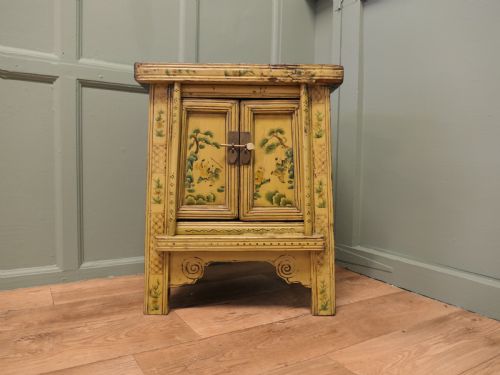
The form spans straightforward occasional tables to specialised pieces like sewing tables, card tables, and nests of four tables. Most items derive from British workshops influenced by nineteenth-century Asian trade and the later Aesthetic Movement, though French and Japanese export pieces also appear within this category.
Materials and technique
Makers constructed the structural bases from timber, ebonised wood, or lightweight tiger bamboo, paired frequently with moulded papier-mâché for table tops and trays. Artisans applied successive layers of lacquer or paint, often building up Japanned finishes that received hand-painted Oriental motifs and gold leaf highlights.
Many portable tray tables combined a detachable papier-mâché or tress-work tray resting upon a separate wooden or iron folding stand. Detail work relied on contrasting brass fittings, mother-of-pearl inlay, and protective varnish coats over the delicate surface decoration.
Listings demonstrate a strong presence of nineteenth-century bamboo frames, papier-mâché trays, and ebonised wood structures featuring Chinoiserie and Aesthetic Movement styles.
Quality variations
Quality rests on the depth of the lacquering process and the crispness of the hand-painted decoration, where layered depth and detailed brushwork distinguish superior workshops from basic commercial output. The integration between the decorative top and its supporting frame - whether turned bamboo, ebonised timber, or tripartite pedestals - dictates the structural stability of the piece.
The refinement of materials such as inlaid mother-of-pearl, fine gilt linework, and original hardware separates standard production items from exceptional workshop examples. Preservation of the original surface finish without extensive over-painting remains central to the integrity of any piece.
Jennings and Betteridge
The Victorian Lacquer Side Table Glossary
- Chinoiserie
- European artistic interpretation of Chinese and East Asian decorative styles, widely utilised in nineteenth-century surface painting and lacquerwork. It frequently depicts landscapes, figures, and pavilions in gold or colour on black grounds.
- Papier-mâché
- A composite material formed from paper pulp or layers of paper reinforced with glue, pressed into moulds and baked before receiving lacquer. This technique allowed makers to create smooth, curved table tops and removable serving trays.
- Japanning
- A European imitation of Japanese and Chinese lacquerwork achieved through successive coats of varnish and paint, typically heat-cured. It produced durable, glossy black or dark surfaces finished with metallic dust or paint.
- Aesthetic Movement
- A late nineteenth-century design philosophy that emphasised visual beauty over narrative or moral purpose, promoting the integration of bamboo, Japanese motifs, and asymmetric forms in domestic furnishings.
- Tripod base
- A three-legged support structure commonly found on nineteenth-century wine and occasional tables, often featuring carved cabriole legs or ebonised pillar stems.
Victorian Lacquer Side Table: Frequently Asked Questions
How were these tables used in Victorian homes?
These compact tables served versatile roles in nineteenth-century drawing rooms and parlours, functioning as movable surfaces for tea service, needlework, or holding decorative lamps and bijouterie.
Many featured removable trays or folding stands, allowing servants to clear items quickly or adapt the furniture for card games and casual entertaining.
How do you distinguish bamboo frames from wooden ones?
Furniture from the late nineteenth century frequently utilised natural or stained tiger bamboo for lightweight occasional tables, plant stands, and multi-tiered sewing units.
In contrast, earlier pieces relied on turned ebonised wood, mahogany, or moulded papier-mâché to provide a rigid foundation for heavy lacquer and painted decoration.
How should I care for an antique lacquer surface?
Historic lacquer requires gentle maintenance using a dry or barely damp microfibre cloth to remove dust without introducing moisture that could compromise delicate painted finishes.
Keeping pieces away from direct sunlight and maintaining stable room humidity protects both the underlying wood and the fragile varnished layers from cracking.