





Victorian Knot Jewellery
Victorian knot jewellery comprises rings, bracelets, and brooches formed from interwoven precious metals that symbolise lasting affection.
Victorian Knot Jewellery
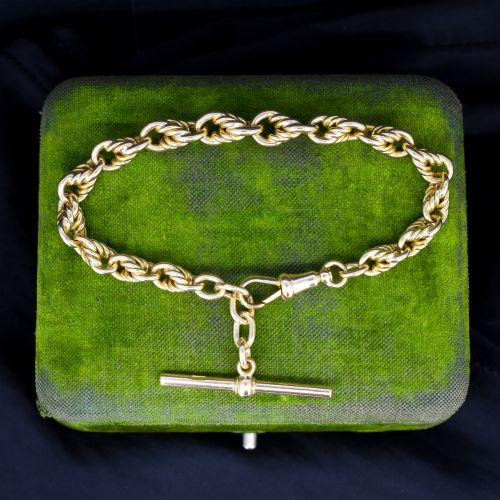
Victorian knot jewellery encompasses bracelets, brooches, necklaces, and earrings created during the nineteenth century and the early twentieth century. These pieces employ recurring motifs of love knots and lovers knots to represent fidelity and enduring bonds.
Originating largely from the broader Victorian period, these items also extend into the early 1900s with styles such as the Victorian Scottish Revival. Buyers encounter both delicate drop earrings and substantial gold chain bracelets embellished with turquoise, pearls, and diamonds.
How they were made
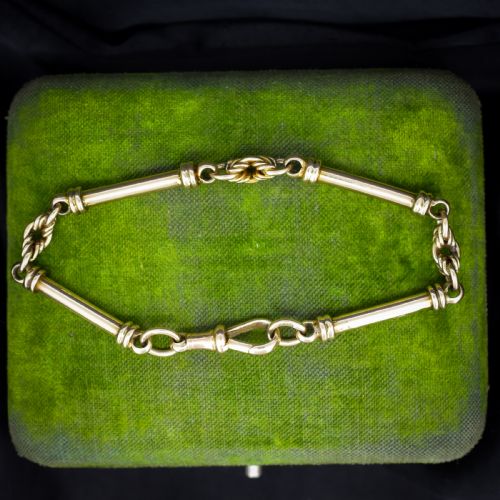
Makers utilised yellow, rose, and white gold in various purities including nine-carat, fifteen-carat, and eighteen-carat alongside sterling silver. Tubular bars, hollow or solid links, and twisted wire formed the structural framework of the chains and bracelets.
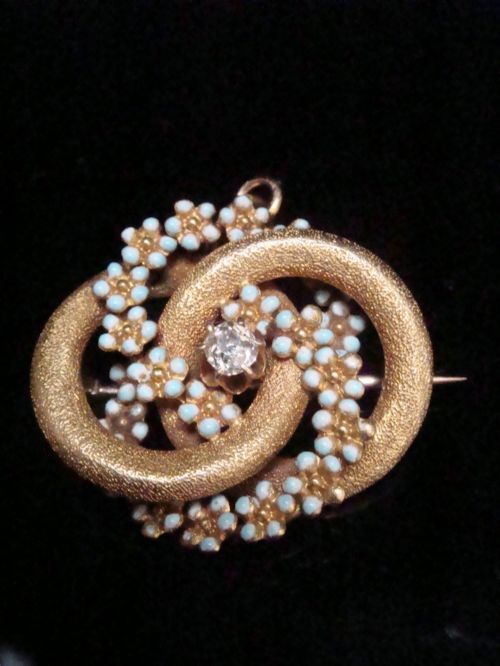
Goldsmiths integrated gemstones such as turquoise, pearls, almandine garnets, opals, and diamonds directly into the knot or heart motifs. Techniques like flat-cut settings and secure prong mounts ensured that stones remained fixed within complex braided metalwork.
Victorian Knot Jewellery Retail Price Guide 2026
Typical asking prices for victorian knot jewellery among the pieces listed under this phrase on Sellingantiques today, from the lower quarter to the upper quarter. They describe what is for sale here now, not the wider market.
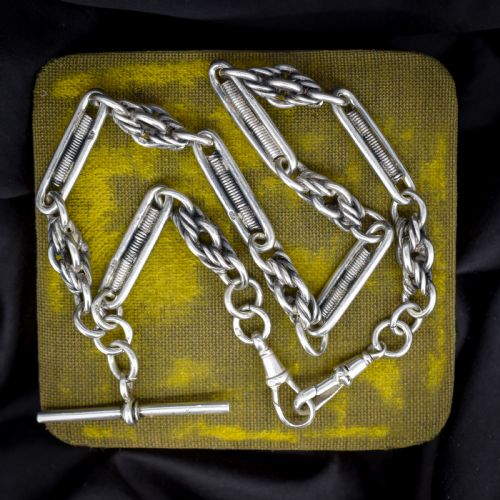
Victorian watch chains originally held pocket watches for gentlemen, but today they find a second life as statement necklaces.
What varies in quality
The grade of the precious metal dictates the baseline quality, with fifteen-carat and eighteen-carat gold pieces sitting apart from nine-carat gold and sterling silver examples. Heavier gram weights and solid construction distinguish substantial items from lighter hollow alternatives.
The complexity of the assembly influences the overall standard, particularly in pieces combining love knots with trombone links, snake chains, or gemstone hearts. Secure hinges, original dog clips, and well-matched natural pearls or turquoise cabochons elevate the execution.
The Victorian Knot Jewellery Glossary
- Albert chain
- A short watch chain designed to be attached to a waistcoat buttonhole, frequently featuring trombone links and love knots.
- Dog clip
- A spring-loaded clasp used to secure watch chains and charm bracelets, common in nineteenth-century jewellery.
- Love knot
- A decorative motif formed by two or more intertwined strands of metal, symbolising an unbreakable connection.
- T-bar
- A transverse metal bar attached to the centre of an Albert chain to secure it through a buttonhole.
- Turquoise
- A hydrous phosphate of copper and aluminium valued for its opaque blue-green colour, frequently set into Victorian gold pieces.
Victorian Knot Jewellery: Frequently Asked Questions
How do I wear an antique watch chain?
Antique watch chains, including those with love knot and trombone links, can be worn draped around the neck as a necklace.
Many examples feature original dog clips and T-bars that allow the wearer to add pendants or secure the chain in versatile configurations.
What materials are used in these pieces?
The materials span nine-carat, fifteen-carat, and eighteen-carat yellow and rose gold, alongside sterling silver. Gemstones such as garnets, opals, seed pearls, and turquoise frequently accent the metalwork.
Some items also incorporate decorative elements like agate and flat-cut diamonds.
How can I identify a Scottish Revival piece?
Scottish Revival items from the Victorian era often combine traditional local stones such as agate with gold knot work and regional motifs.
These pieces reflect the nineteenth-century revival of interest in Scottish heritage popularized during the reign of Queen Victoria.