
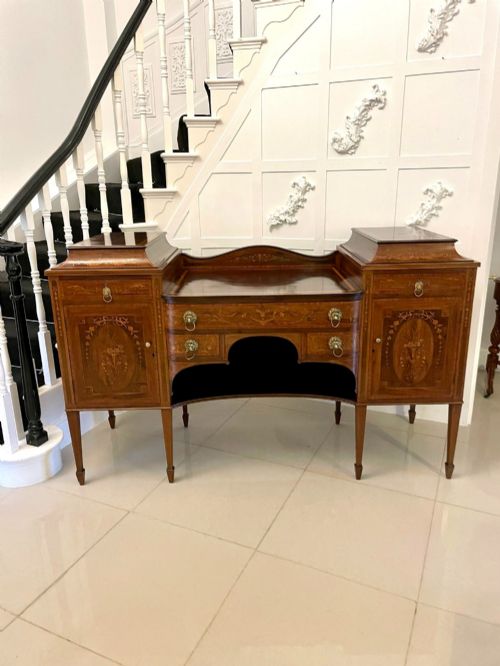


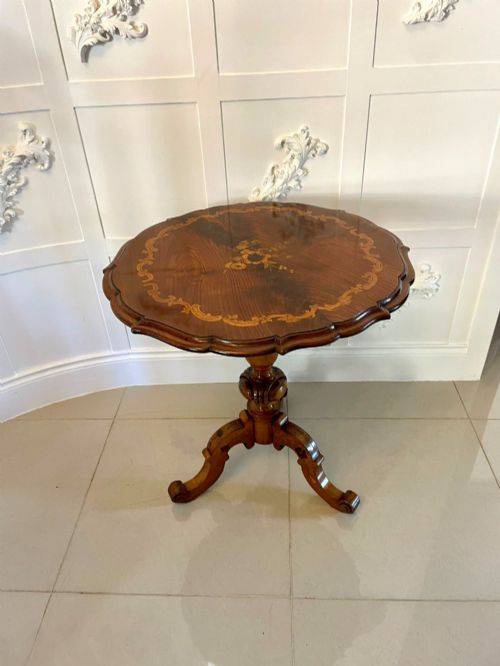
Victorian Inlaid Pedestal
These nineteenth-century pieces combine structural timber with intricate surface decoration, offering functional support alongside ornamental distinction.
Victorian Inlaid Pedestal
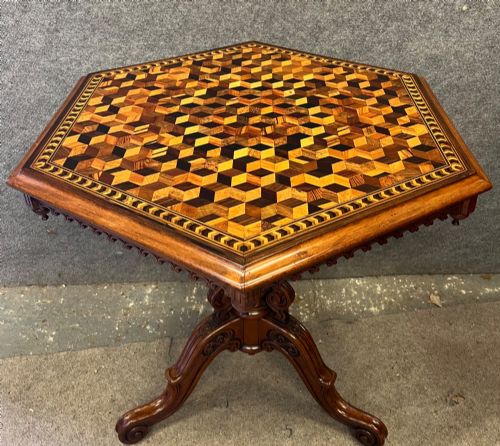
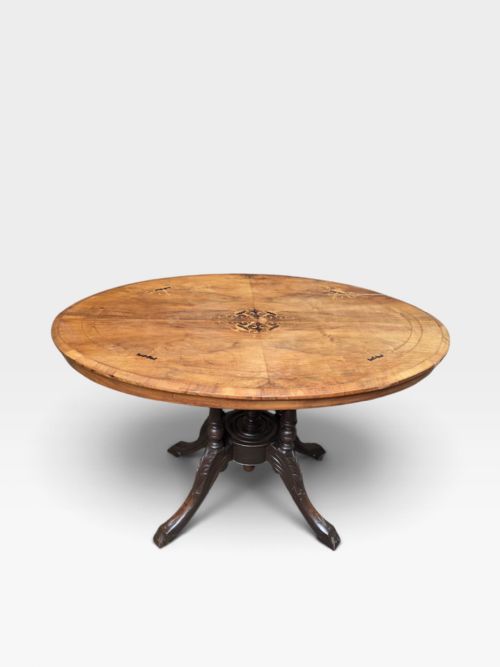
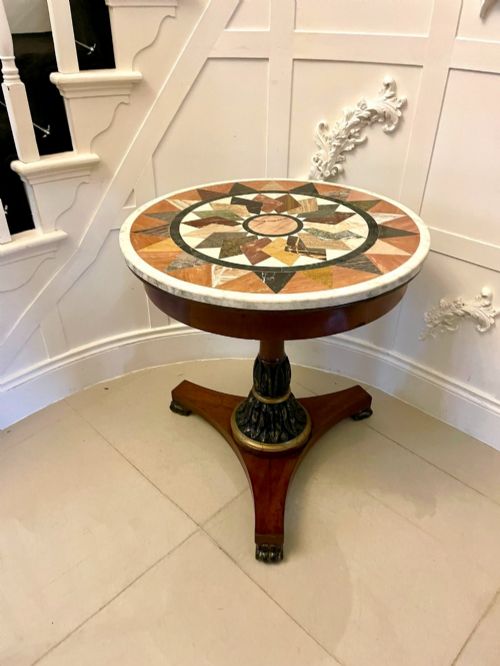
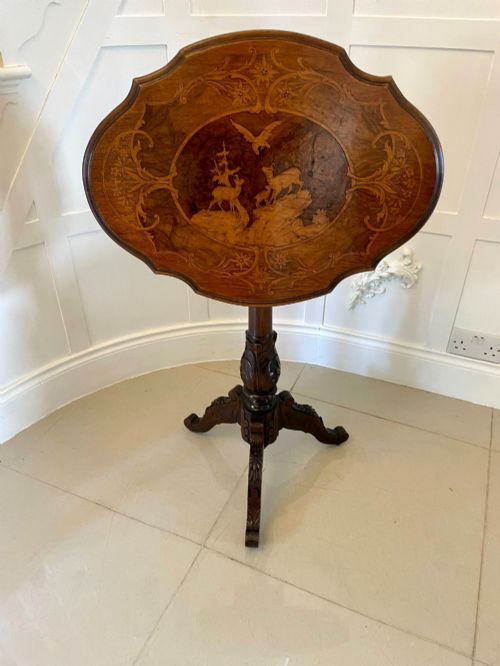
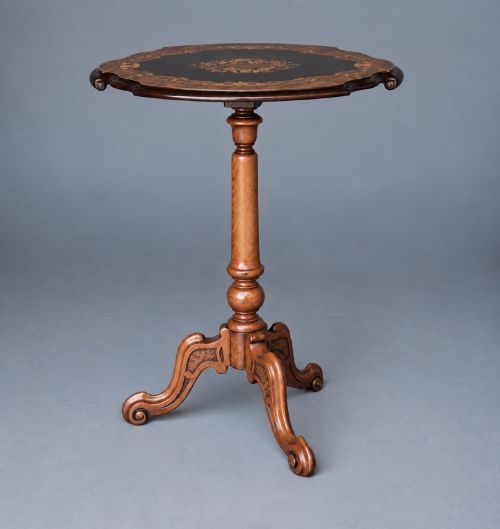
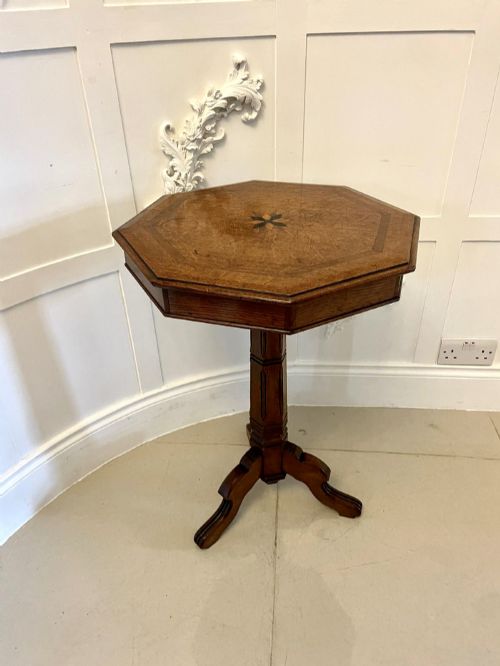
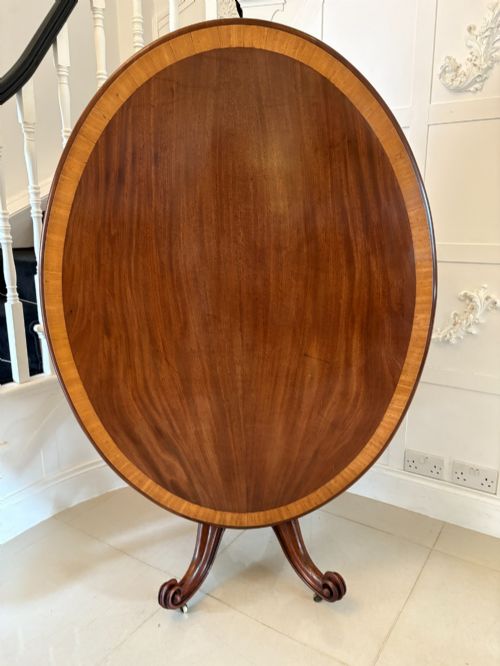
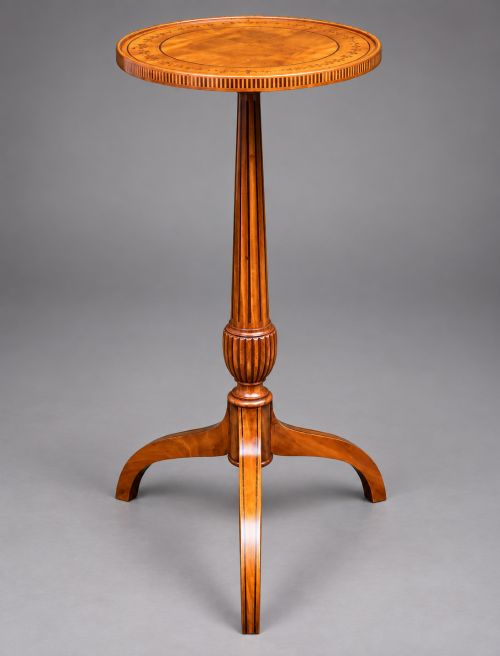
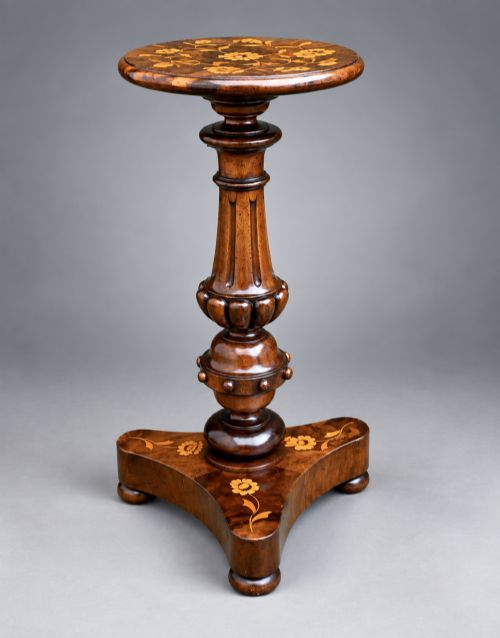
A victorian inlaid pedestal typically takes the form of a wine table, lamp table, or centre table supported by a central column. These items served functional roles in nineteenth-century sitting rooms, holding lamps, drinks, or decorative objects.
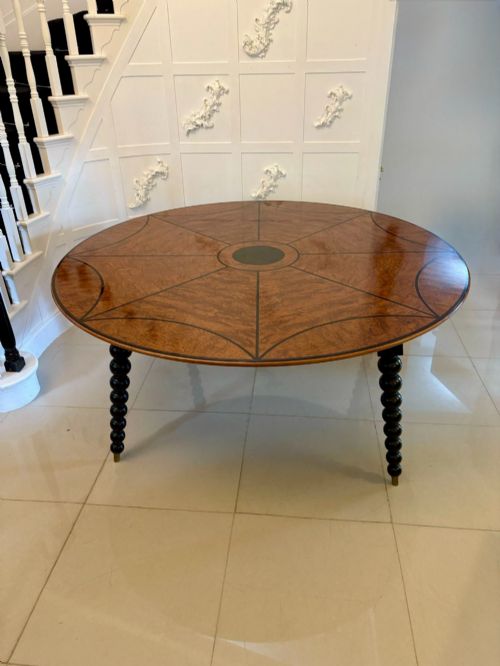
Burr walnut and mahogany provide the primary timber foundations across the pieces on this page. Makers incorporated satinwood, rosewood, and various contrasting woods to create detailed surface patterns.
Dating ranges from the mid-nineteenth century through to the Edwardian era. Examples span styles from straightforward Victorian designs to Sheraton Revival and Aesthetic Movement interpretations.
How they were made
Cabinet makers utilised solid timbers such as mahogany and oak for structural stability on central columns and bases. Veneers of burr walnut and satinwood were then applied to tabletops to display rich grain patterns.
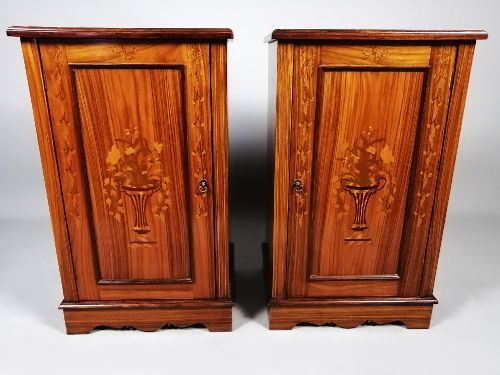
Decoration relied heavily on marquetry and wood inlay techniques, embedding contrasting woods into the primary surface. Some variations also integrated brass, ivory, or marble inserts into the timber framework.
Some nineteenth-century tables doubled as chess boards, concealing games within the furniture.
What varies in quality
The precision of the marquetry and the choice of timber veneer determine the visual standard of each piece. Finely figured burr walnut and delicate satinwood enrichment separate standard examples from superior workshop productions.
Structural execution in the pedestal column and base stability dictate the overall integrity. Well-executed turning and substantial timber weight distinguish the finer items found on this page.
Hewetsons London·Edwards and Roberts·Gillows·Jackson and Graham·Holmes Baldock·Wolfe and Hollander
The Victorian Inlaid Pedestal Glossary
- Marquetry
- The art of applying pieces of veneer to a structure to form decorative patterns and pictures. This technique defines the ornamented surfaces seen on many nineteenth-century tables.
- Pedestal
- A structural support consisting of a central column rising from a weighted base. It frees up floor space compared to four-legged table designs.
- Burr Walnut
- A specialised timber cut from walnut tree growths, yielding intricate and swirling grain patterns. It was favoured by Victorian makers for high-status cabinet work.
- Satinwood
- A durable, yellowish-toned timber used extensively in Sheraton Revival furniture. Its light colour provided strong contrast for detailed inlay work.
- Occasional Table
- A small, movable table designed for specific, temporary uses in reception rooms. These form a large portion of the pedestal tables available here.
Victorian Inlaid Pedestal: Frequently Asked Questions
Where were pedestal tables placed?
These tables sat in nineteenth-century drawing rooms and parlours, often positioned beside seating or in the centre of a room.
Their compact footprint allowed them to hold lamps, books, or decorative objects without obstructing movement.
How do I identify a Victorian table?
Look at the timber selection, such as burr walnut or mahogany, paired with nineteenth-century construction methods. Details like marquetry inlay and turned central pedestals point directly to this era.
Stylistic cues from Aesthetic Movement or Sheraton Revival influences also help confirm the period.
What is the difference between a wine table and a centre table?
Wine tables feature smaller tabletops supported by a single pedestal, designed for portability and light items. Centre tables are larger, engineered to stand in the middle of a room as a prominent focal point.
Both utilise pedestals, but their scale determines their placement and historic function.
How do I care for inlaid wood surfaces?
Keep these pieces away from direct sunlight and steady heat sources to prevent the timber and delicate veneers from drying out. Regular dusting with a soft, dry cloth preserves the polished finish.
Avoid using harsh chemical polishes that can degrade historical surface treatments.