





Victorian Inlaid End Table
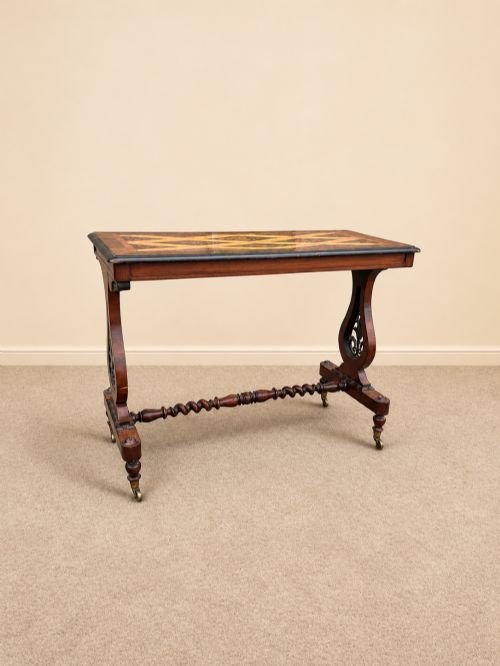
These victorian inlaid end table pieces combine dense timber frames with intricate marquetry, offering practical surface space alongside period character.
Victorian Inlaid End Table
A victorian inlaid end table serves as a compact surface within the home, appearing across various forms including side tables, lamp tables, nests, and occasional tables. The selection spans the Victorian era alongside related pieces from the nineteenth century, Edwardian period, and Georgian eras.
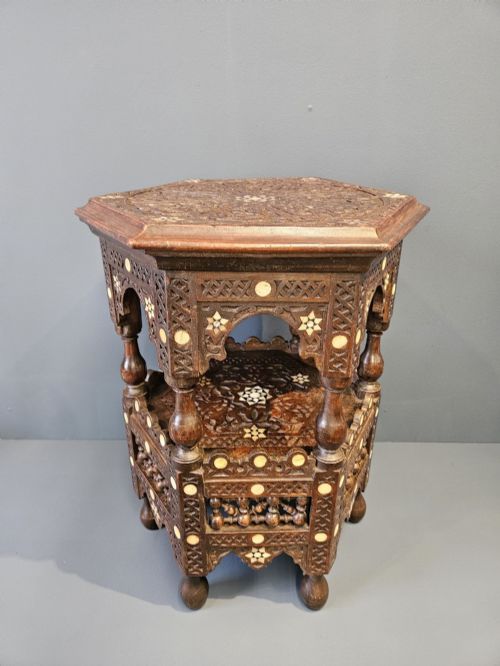
Makers utilised diverse timber grounds like mahogany, walnut, rosewood, and satinwood, often embellishing the tops with boxwood and marquetry inlay. Regional variations also emerge, ranging from Hoshiarpur brass inlaid work and Moorish carved octagonal designs to Italian specimen wood and French workshops.
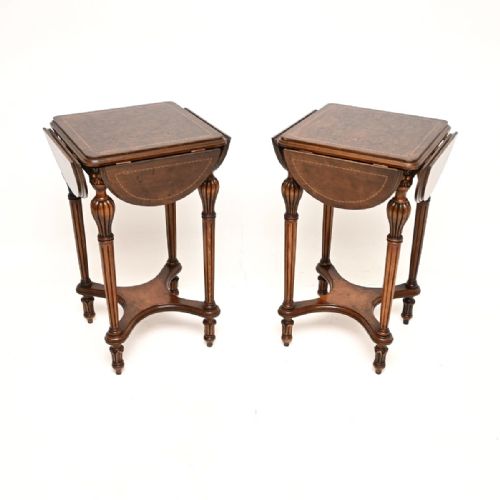
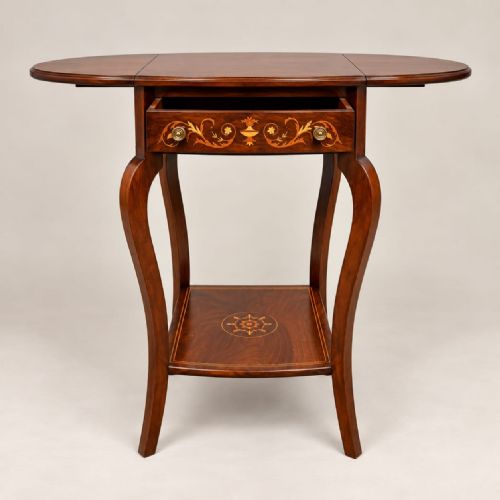
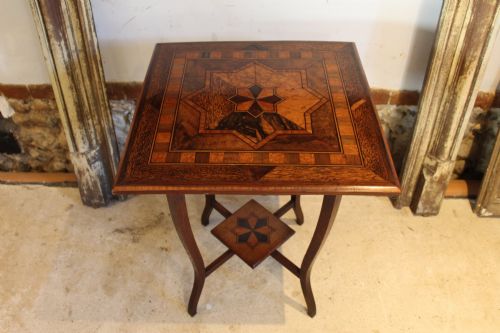
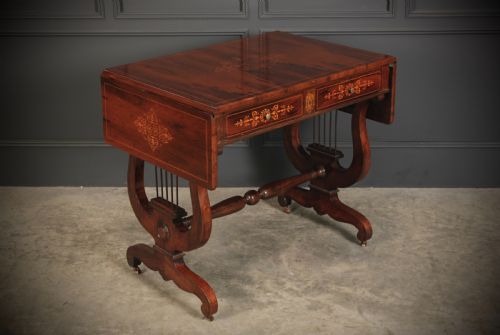
Occasional tables and bedside nightstands dominate the current offerings, alongside specialised forms such as chess top tables, drop leaf tables, and sofa tables. Buyers will regularly encounter pieces defined by geometric stringing or floral marquetry set into contrasting dark woods.
Materials and construction
Cabinet makers built these tables using dense tropical hardwoods such as mahogany, rosewood, walnut, and satinwood for the structural frames and table tops. Burr walnut and kingwood frequently provided figured veneers to create decorative surface panels.
Marquetry and boxwood inlay formed intricate floral or geometric patterns set flush into the timber ground. Brass wire, brass sheet, and carved elements further enriched specific regional styles such as Anglo-Indian Hoshiarpur or Moorish revival pieces.
Victorian Inlaid End Table Retail Price Guide 2026
Typical asking prices for victorian inlaid end table among the pieces listed under this phrase on Sellingantiques today, from the lower quarter to the upper quarter. They describe what is for sale here now, not the wider market.
The documented periods span the Georgian era, Victorian reign, and Edwardian period, alongside specific nineteenth-century dates.
Distinguishing quality
The sophistication of the marquetry and the precision of the timber matching dictate the standing of a piece. Finer examples display meticulous hand-cut veneers and complex contrasting stringing rather than simple stencilled decoration.
Timber selection marks another clear division, with burr walnut, figured mahogany, and dense rosewood commanding greater attention than plain secondary woods. The integration of structural elements, such as turned legs or solid brass mounts, determines the overall execution.
The Victorian Inlaid End Table Glossary
- Marquetry inlay
- Decorative patterns formed by fitting small pieces of veneer into a prepared wood ground. This technique creates pictorial or geometric designs across table tops.
- Specimen wood
- Furniture constructed from a multitude of different native and exotic timbers arranged to showcase their natural colours and grain patterns. These pieces often originate from specific regional workshops.
- Stringing
- Thin strips of contrasting wood inlaid into channels cut into the surface of the furniture. It frames table borders and highlights structural outlines.
- Occasional table
- A small, movable table designed for a specific, intermittent use within a room rather than a permanent seated dining arrangement. They function widely as lamp or side tables.
- Drop leaf
- A table top featuring hinged flaps that fold down to reduce the overall footprint when not in use. Brackets or swing legs support the leaves when raised.
Victorian Inlaid End Table: Frequently Asked Questions
How were these tables used originally?
These tables served as versatile movable surfaces for holding lamps, books, sewing equipment, or tea services in nineteenth-century reception rooms. Their compact proportions allowed them to sit beside seating or against walls where larger furniture would not fit.
Specialised versions accommodated specific pastimes, such as chess top tables designed for board games or sewing tables fitted with internal storage compartments.
How do I distinguish Victorian from Edwardian pieces?
Victorian examples tend to employ heavier timbers like rosewood and dark mahogany, frequently paired with dense, elaborate marquetry or brass embellishments. The overall construction prioritises solid presence and deep polished tones.
Edwardian pieces often lighten the palette by favouring satinwood or lighter mahogany grounds with more delicate, restrained inlay work. They reflect a shift towards airier domestic interiors at the turn of the twentieth century.
Where should I place an end table today?
These pieces integrate naturally beside sofas, armchairs, or beds as functional surfaces for modern lighting and daily items. Their compact footprints suit smaller empty corners or narrow hallways.
Nests of tables offer particular flexibility because individual pieces can be pulled out when entertaining guests and stacked away afterwards to save floor space.
What is the difference between marquetry and inlay?
Inlay involves inserting contrasting materials into a carved cavity within a solid wood surface. It is a broad term for embedding wood, metal, or shell into a base.
Marquetry is a specific type of inlay where assembled veneers form a complete pictorial or decorative mosaic across the entire top surface of the table.