
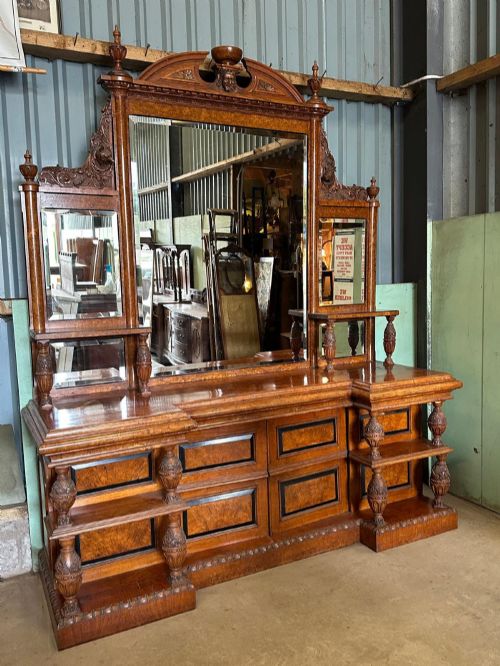
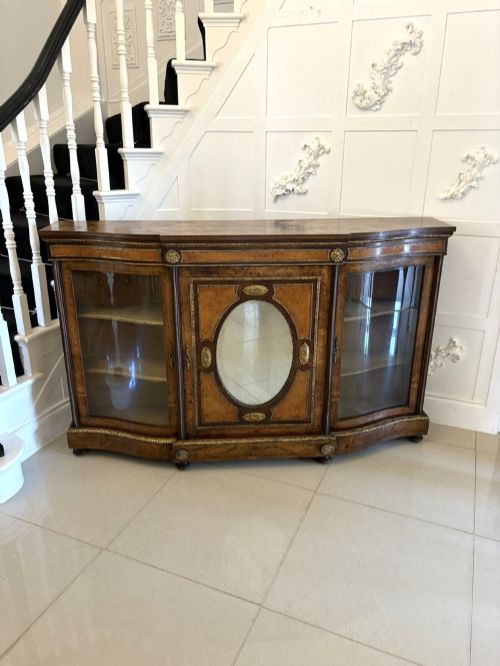
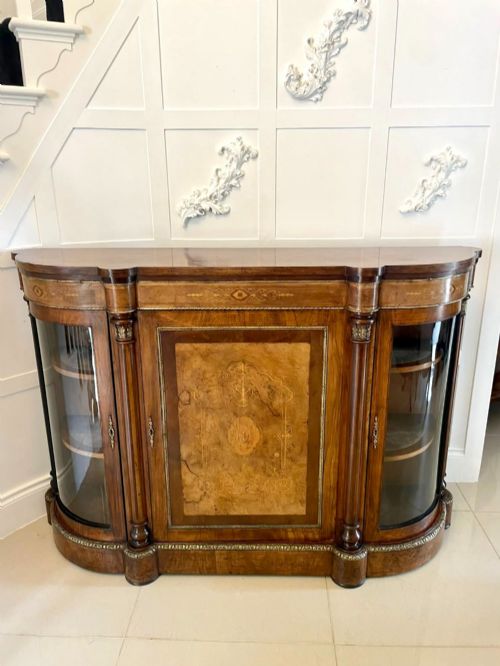
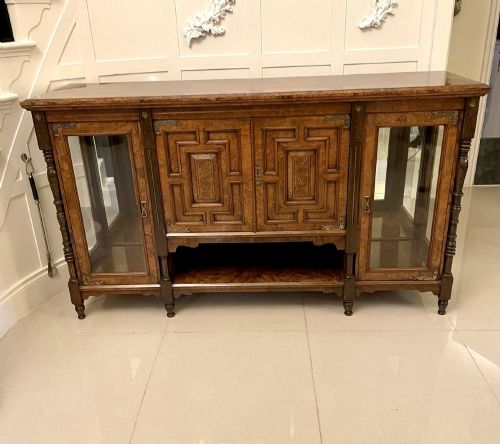

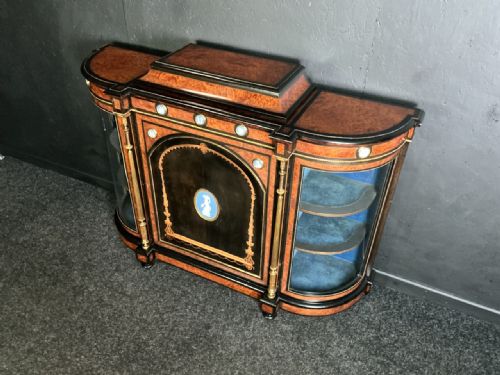
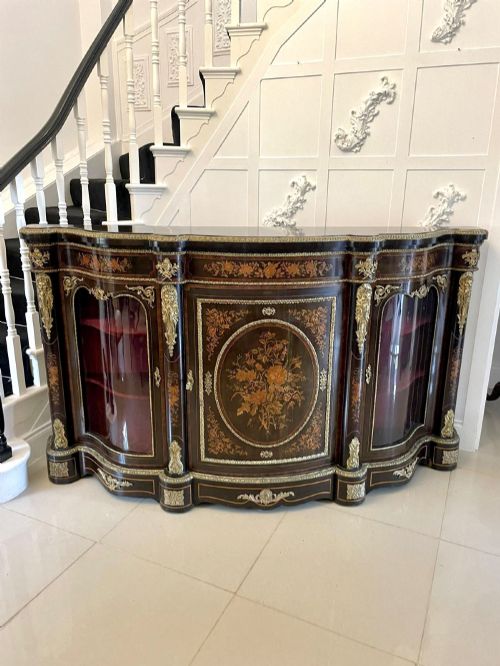
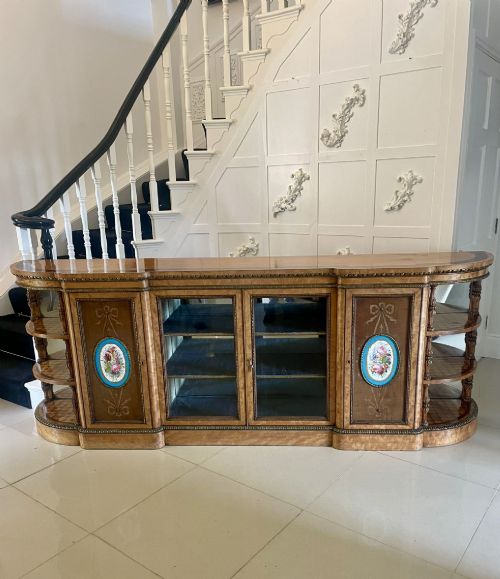
Victorian Inlaid Display Sideboard
These victorian inlaid display sideboard pieces combine generous timber surfaces with glass and metal mounts for grand domestic display.
Victorian Inlaid Display Sideboard
A victorian inlaid display sideboard typically takes the form of a credenza, pier cabinet, or glazed side cabinet originating from the nineteenth century.
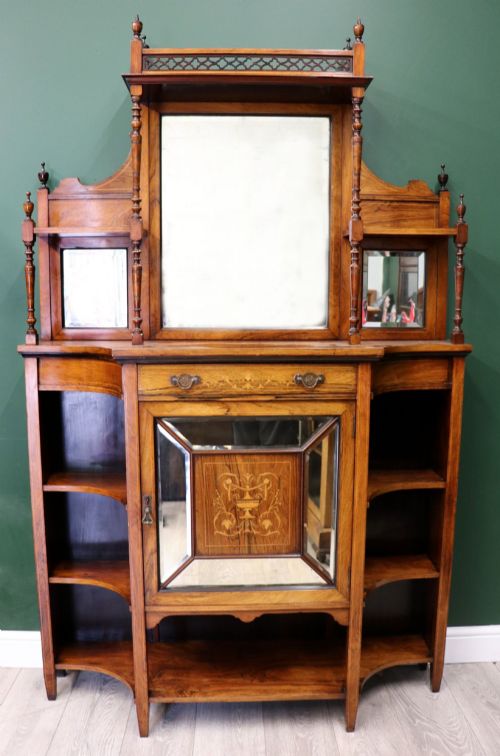
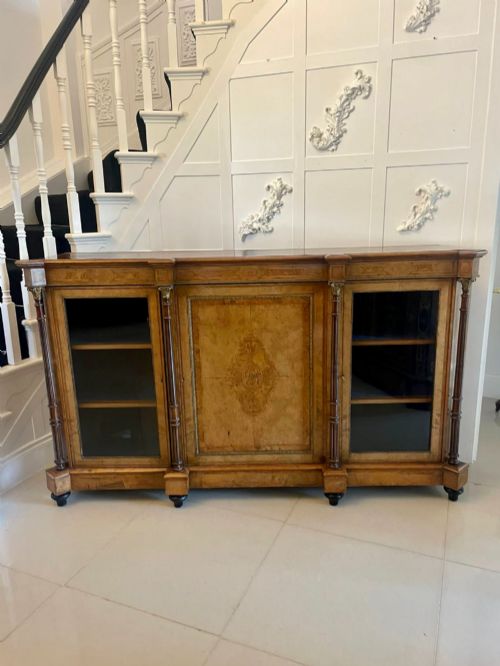
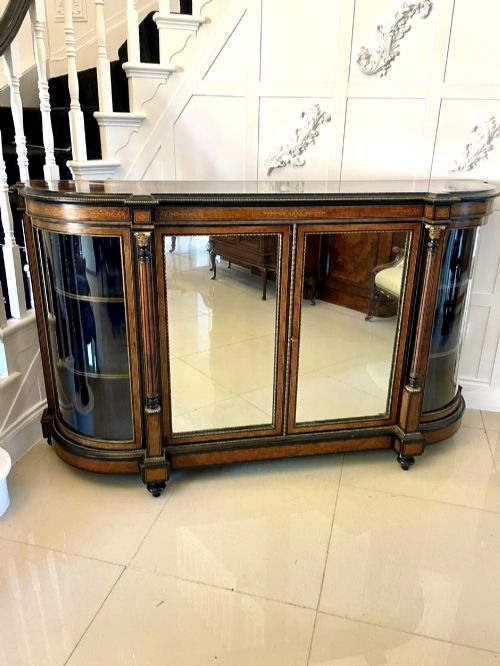
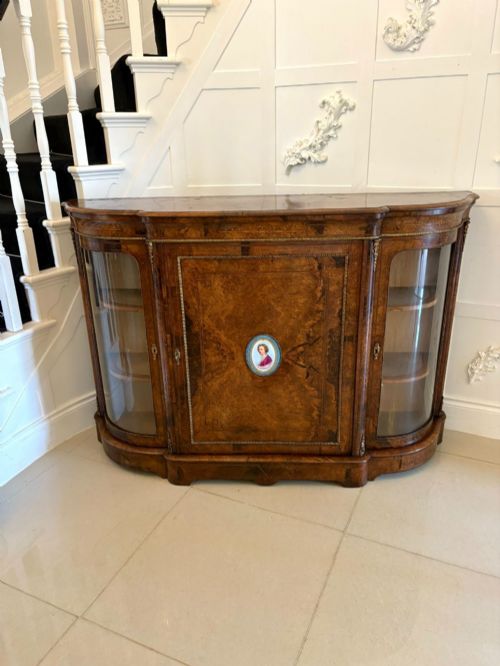
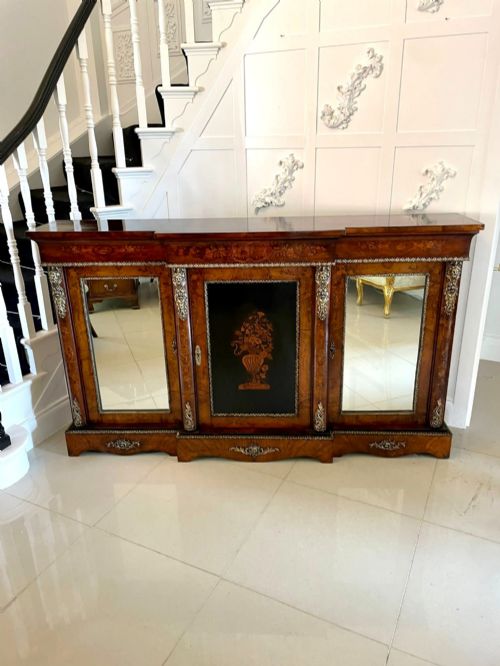
The version most commonly encountered on this page is the burr walnut credenza featuring glazed doors, central display sections, and intricate marquetry.
Makers working in the Victorian, Aesthetic Movement, and Sheraton Revival styles produced these heavy display pieces to anchor formal reception rooms.
Materials and Construction
Cabinet makers constructed carcass frames from solid woods before applying decorative veneers of burr walnut, rosewood, satinwood, and ebonised timber.
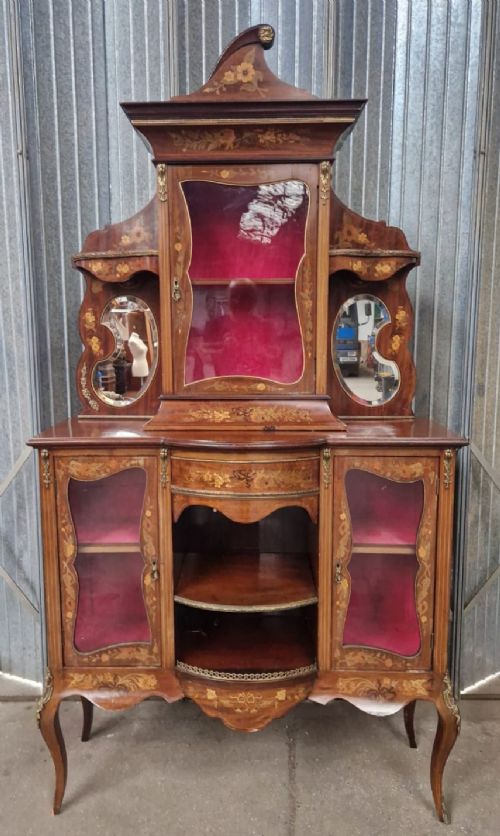
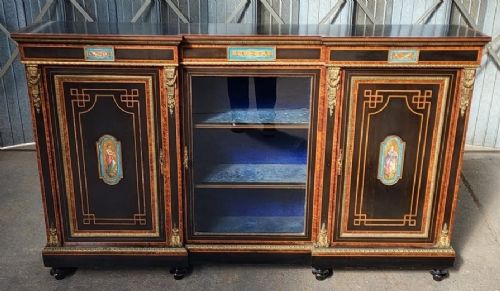
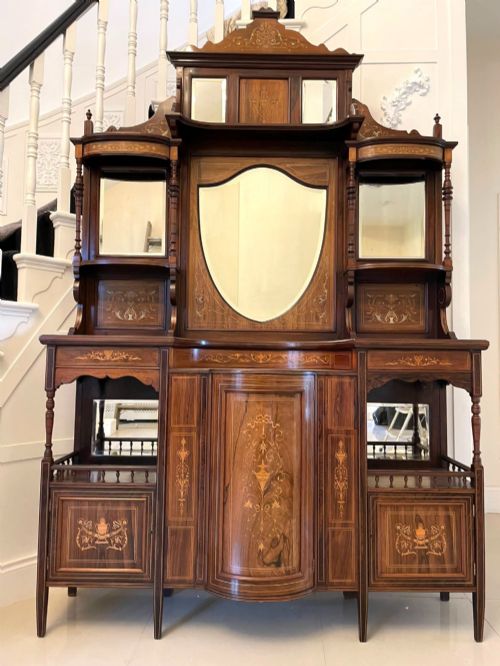
Surfaces received elaborate boxwood and floral marquetry inlays, complemented by cast ormolu mounts, brass details, and porcelain plaques.
Glass panels were set into arched or straight doors to enclose shelved interiors designed for the exhibition of ceramics and ornaments.
Some nineteenth century keys are so ornate they double as miniature sculptures.
Judging Quality
The hierarchy of these items rests on the precision of the marquetry, the richness of the burr walnut or rosewood grain, and the weight of the cast ormolu mounts.
Pieces from major workshops display superior cabinet work in the serpentine shaping of doors and the integration of porcelain plaques rather than standard flat panels.
Survival of original glass, polished finishes, and intricate boxwood stringing distinguishes exhibition examples from ordinary utility furniture.
Collinson & Lock·Edwards & Roberts·Gillows·Maison Gagneau
The Victorian Inlaid Display Sideboard Glossary
- Credenza
- A low cabinet featuring cupboards and glass doors, frequently mounted with ormolu and used for display in nineteenth century reception rooms.
- Marquetry
- Decorative patterns formed by fitting together thin slices of wood veneer into timber surfaces. This technique creates floral and geometric designs across cabinet doors.
- Ormolu
- Gilded bronze metalwork applied as mounts, feet, and decorative trims. It provides high contrast against dark burr walnut and ebonised wood.
- Pier Cabinet
- A narrow display cabinet designed specifically to fit the wall space between windows. These upright cases often contain glass shelving and mirror backs.
- Burr Walnut
- Timber taken from the gnarled growth of a walnut tree, yielding highly figured grain patterns. Cabinet makers prized this wood for main door panels.
Victorian Inlaid Display Sideboard: Frequently Asked Questions
What is a victorian inlaid display sideboard used for?
These cabinets served primarily in nineteenth century drawing rooms to display decorative ceramics, glassware, and prized ornaments behind glass doors.
Enclosed side cupboards provided additional storage space for household silver and linens while the top surface held lamps or decorative items.
Are these pieces made of solid walnut?
The structural carcass utilises secondary timbers while the visible exterior surfaces carry decorative veneers of burr walnut or rosewood.
Applying these thin slices allowed cabinet makers to showcase complex grain patterns and intricate boxwood marquetry across wide doors.
How do I spot an Aesthetic Movement piece?
Aesthetic Movement items often feature ebonised wood finishes paired with restrained, refined marquetry and Japanese inspired decorative motifs.
These designs moved away from heavy Victorian ornamentation towards simpler, planar surfaces and contrasting dark tones.