



Victorian House Bells
Victorian house bells are the mechanical brass, oak, and iron signals that summoned domestic staff, and homeowners buy them today for their rich historic resonance.
Victorian House Bells
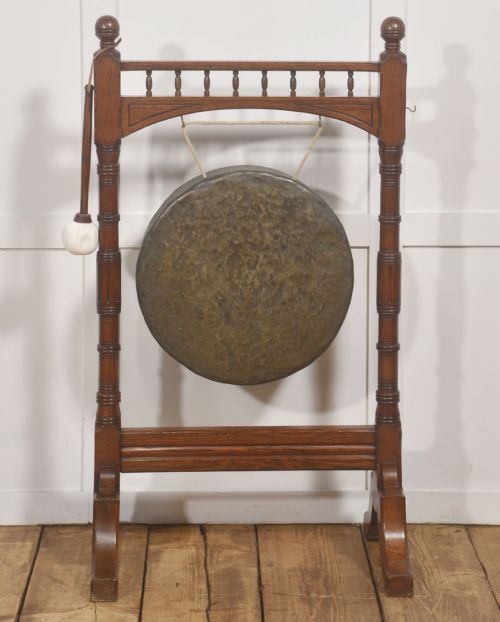
When you search for Victorian house bells, you encounter a specialised range of utilitarian devices that once orchestrated grand country house life. These include domestic communication apparatuses such as elaborate bell pulls, wall bells, counter bells, and substantial dinner gongs designed to gather households.
The objects listed here span several decades, originating from the Georgian era through to nineteen hundred, encompassing strict Victorian periods and rustic interpretations. You are most likely to meet sturdy oak dinner gongs and functional brass wall bells or name plates among these selections.
Forms vary from monumental carved oak framed gongs to smaller brass counter bells and long decorative straps. Each item reflects the stratified domestic arrangements of large British estates, where every room required a reliable method of summoning attention.
How they were made
Makers utilised robust structural materials such as oak, cast iron, and heavy brass to ensure these mechanisms withstood daily household strain. Woodwork on gongs and frames often displays deep carving, while metal components utilise durable brass and iron alloys.
Textile elements appear on longer pulls, incorporating hand-embroidered silk, wool, and glass beads stitched over sturdy rope foundations. These flexible components connected ornamental pulls in upstairs rooms to mechanical cranks and bells situated in servants' quarters below.
Victorian House Bells Retail Price Guide 2026
Typical asking prices for victorian house bells among the pieces listed under this phrase on Sellingantiques today, from the lower quarter to the upper quarter. They describe what is for sale here now, not the wider market.
Gunton Hall servants managed their daily duties with the help of six original named plates.
What varies in quality
The distinction between ordinary utility items and superior examples lies in the depth of material selection and the ambition of decorative carving. Finely worked oak frames and intricate hand embroidery on silk and bead bell pulls denote higher workshop standards.
Mechanical completeness and the preservation of original metal surfaces also dictate the standing of a piece within the range. Heavy cast components, clear-toned metal gongs, and intact operational linkages elevate the merit of surviving examples.
The Victorian House Bells Glossary
- Bell Pull
- A vertical strap, cord, or lever mounted in a living room and connected by wires to a bell in the service area. These often featured decorative embroidery or beadwork to complement interior furnishing schemes.
- Dinner Gong
- A suspended metal disc or tube struck with a mallet to announce meals in large country houses. They were frequently housed within substantial carved wooden frames made of oak.
- Servants Bell
- A mechanical wall-mounted bell operated remotely by wire pulls to indicate which room required attention. They often worked in banks with associated name plates to identify specific locations.
- Counter Bell
- A self-contained spring-loaded bell placed on a desk or shop counter for summoning staff or service. These typically employed polished brass domes and internal hammer mechanisms.
Victorian House Bells: Frequently Asked Questions
How did these bells work?
Domestic bell systems relied on a complex network of concealed wires, cranks, and bell cranks running through walls and ceilings. Pulling a lever in a distant parlour moved a pivoted hammer to strike a specific bell.
Simpler devices like counter bells and dinner gongs operated independently without wall-mounted linkages. A table bell used a direct internal spring mechanism, while a gong relied purely on a mallet strike against suspended metal.
Where were bell pulls placed?
Bell pulls were positioned beside fireplaces or near main entrances in formal drawing rooms, libraries, and bedrooms. These locations allowed residents to summon staff without leaving their seats.
The long straps hung vertically against the wall, attached to mechanical wire runs hidden behind plaster or floorboards. Their decorative beadwork and embroidery ensured they blended with high-status interior decoration.
How do I date a bell?
Dating relies on observing material changes, manufacturing techniques, and stylistic markers across the Georgian and Victorian eras. Earlier Georgian pieces often display simpler brass casting, while high Victorian items might incorporate Gothic Revival motifs or heavier oak framing.
Documented elements like accompanying name plates or specific wood treatments also help establish chronological context. Comparing the complexity of the mechanical linkages provides further clues to the period of production.
Can I install an antique bell?
Many wall bells and dinner gongs function perfectly well for decorative use or actual acoustic signaling in modern homes. However, traditional wire-pull systems require careful restoration and precise tension adjustment to operate properly.
Free-standing items like counter bells and dinner gongs require no installation and work immediately upon placement. Wall-mounted name plates and static elements serve primarily as historical displays.