





Victorian Horse Sculpture
A victorian horse sculpture captures equine strength in bronze, wood, or cast iron, bringing character and sculptural presence to any room.
Victorian Horse Sculpture
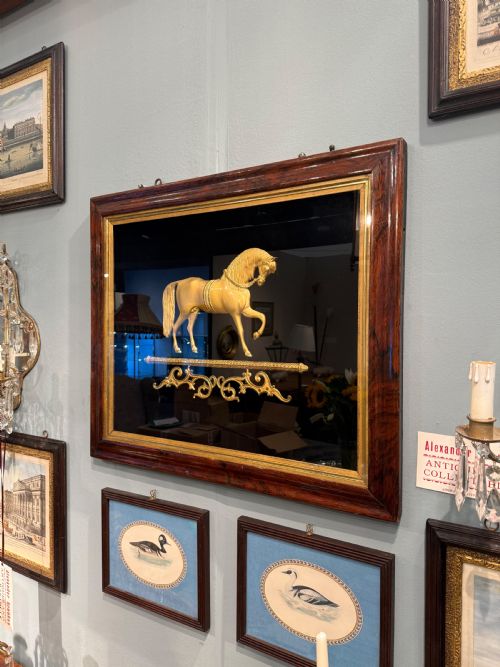
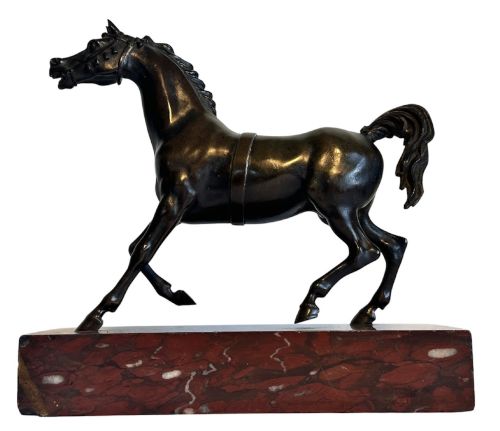
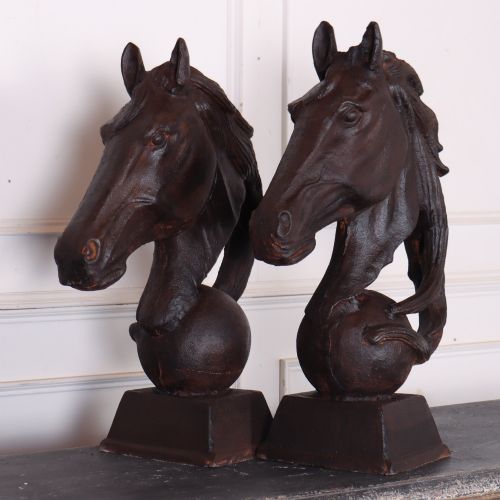
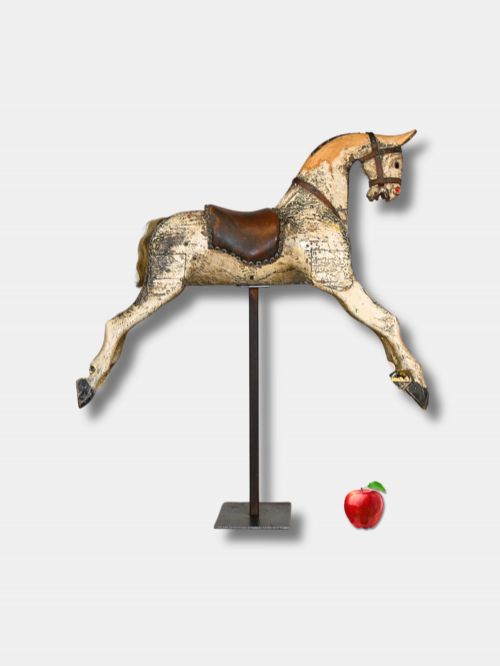
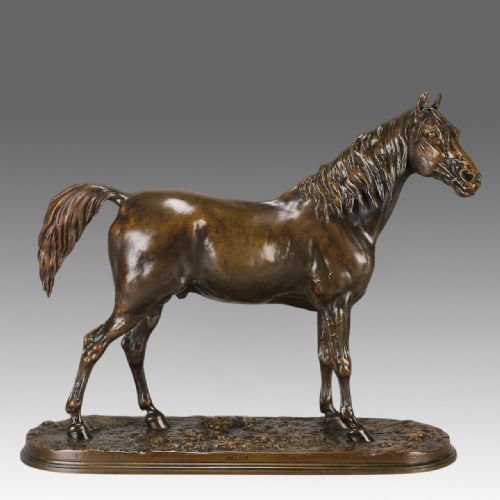
A victorian horse sculpture encompasses bronze animalier figures, carved wooden rocking toys, cast iron hitching posts, and brass doorstops from the nineteenth century. Buyers encounter realistic studies of stallions and hunters alongside naive folk art pieces and decorative items.
The most common examples on this page are bronze animalier studies and wooden rocking or pull-along horses dating from the mid to late nineteenth century. These pieces range from cabinet-sized foundry casts to substantial playroom toys and architectural ironwork.
How they were made
Metal sculptures utilise traditional bronze casting methods, often mounted on marble bases with patinated or gilt surfaces, while others employ durable cast iron for utilitarian items like hitching posts and doorstops. Wooden examples combine carved pine or oak bodies with applied horsehair, leather tack, and original painted finishes.
Makers shaped these materials to capture anatomical precision in the French animalier tradition or adopted a simpler folk art approach for toys and domestic hardware. Surface treatments vary from polished brass and gilt bronze to distressed historic paint on wooden toys.
Victorian Horse Sculpture Retail Price Guide 2026
Typical asking prices for victorian horse sculpture among the pieces listed under this phrase on Sellingantiques today, from the lower quarter to the upper quarter. They describe what is for sale here now, not the wider market.
A child's pull-along horse from the late 19th century shares space here with fierce bronze stallions and heavy iron hitching posts.
What varies in quality
The distinction between ordinary and exceptional pieces lies in the fidelity of the anatomical modelling and the crispness of the casting or carving. Master sculptors capture musculature, tension, and movement with acute precision, whereas simpler works rely on stylised forms.
Originality of surface finish and material integrity dictate the standing of a piece. Retaining untouched patination on bronzes or original paint on wooden toys elevates the integrity of the object significantly.
P J Mêne·John Willis Good·Pierre Jules·Franz Bergman·G J Lines
The Victorian Horse Sculpture Glossary
- Animalier
- A nineteenth-century artistic movement focused on the realistic depiction of animals, particularly horses, lions, and dogs. Practitioners mastered dynamic anatomy and texture.
- Patinated Bronze
- Bronze treated with chemicals or heat to produce a controlled surface colour and aged tone. This finish protects the metal and accentuates sculptural detail.
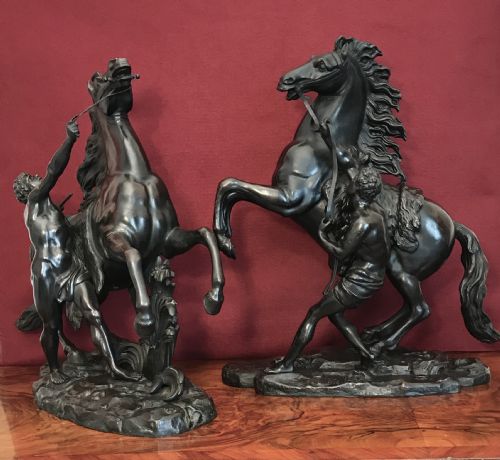
- Marly Horses
- Large sculptural groups depicting rearing horses restrained by handlers, originally created by Guillaume Coustou for the Château de Marly. Miniature and full-sized bronze copies became popular in the nineteenth century.
- Folk Art
- Objects created by self-taught or traditional makers outside academic traditions, often utilising local timber and straightforward paint finishes. These pieces display charm and directness.
- Hitching Post
- A sturdy post, frequently cast in iron with a horse head terminal, used historically to tie up horses. They survive as robust decorative garden and porch ornaments.
Victorian Horse Sculpture: Frequently Asked Questions
How do I date a bronze horse?
Dating relies on foundry marks, the style of the base, and the quality of the patination. Nineteenth-century examples often feature distinct patinas and signatures from established animalier sculptors.
Examine the casting seams and the wear on the underside to confirm period production methods.
Are wooden horses toys or art?
Wooden horses span both categories, including naive folk art toys, pull-along pieces, and large rocking horses on stands. Maker-attributed rocking horses function as decorative antiques as well as historic children's items.
Original paint surfaces and historic leather tack determine whether a wooden horse is viewed as folk sculpture or toy.
What is an animalier bronze?
An animalier bronze is a nineteenth-century sculpture focused specifically on accurate and dynamic animal subjects. These works were produced across Europe, with French and English workshops leading the movement.
Artists prioritised muscular tension and realistic posture over human subjects.
How should I clean antique bronze?
Bronze sculptures require only gentle dusting with a soft, dry cloth to preserve the historic patina. Avoid commercial metal polishes, which strip away the valuable aged surface finish.
Consult a professional restorer if the metal requires deeper conservation.