



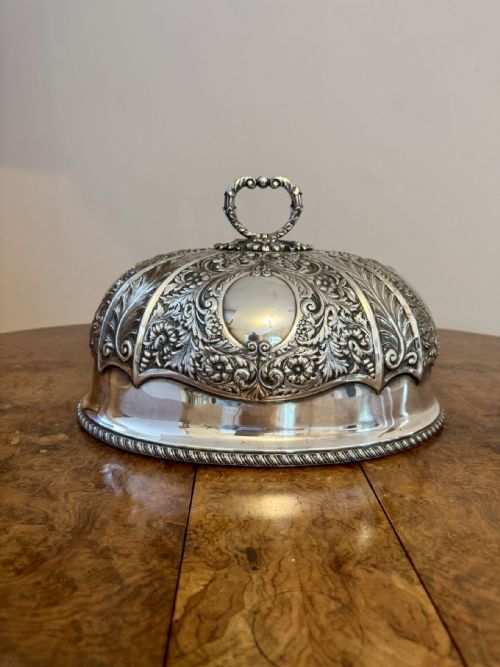


Victorian Hollowware
Victorian hollowware encompasses usable vessels of sterling silver and silver plate, designed to hold liquids, condiments and food at the table.
Victorian Hollowware
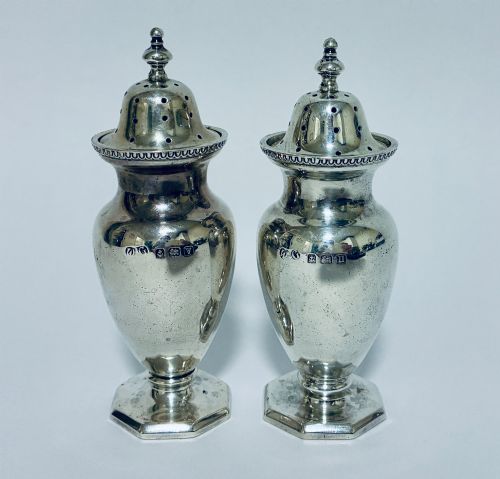
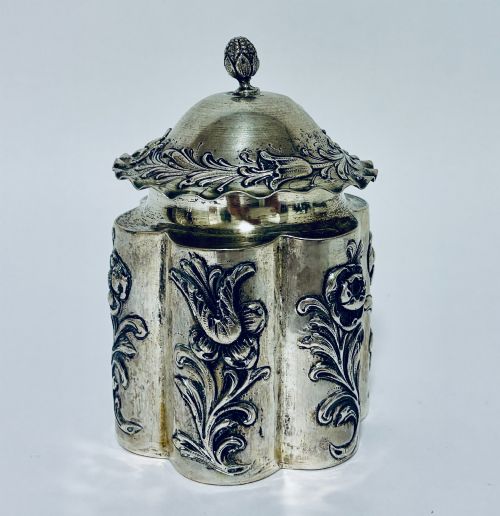
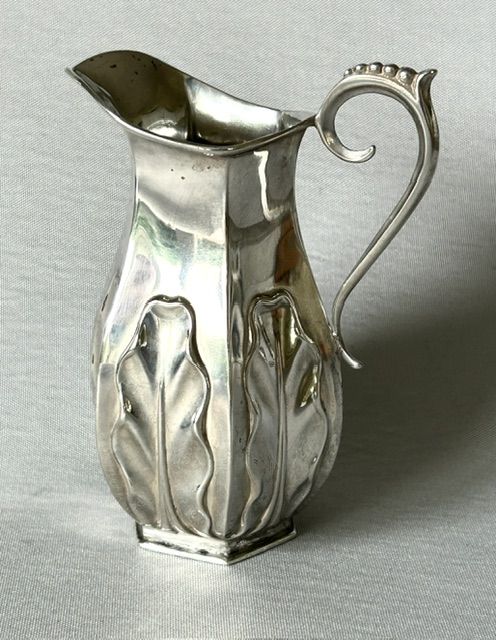
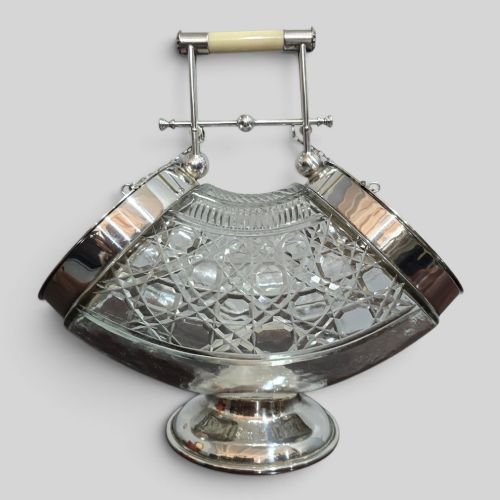
When seeking Victorian hollowware, you are looking at hollow domestic vessels intended for service, including cream jugs, mustard pots, sauce boats, tea caddies, mugs and serving dishes. These pieces originate predominantly from the nineteenth century, spanning periods from early Victorian to late Victorian, alongside Edwardian and later examples.
The most common forms you will encounter on this page include sterling silver and silver plate cream jugs, mustard pots, and mugs or tankards. Alongside smaller vessels, larger serveware such as entree dishes, wine coolers, flagons and tea sets appear regularly across the listings.
Originating largely from English workshops and silversmiths, these items reflect the dining and social habits of the period. Forms range from plain urn-shaped bodies to pierced designs and naturalistic motifs like acorn patterns.
Assessing quality in hollowware
Quality in these pieces rests upon the crispness of the chasing and hand-engraving, and the structural integrity of handles and hinged lids. Heavy gauge sterling silver or thick silver plate provides a substantial weight and durability that distinguishes finer vessels.
Maker marks and hallmarks contribute to the distinction of a piece, indicating recognised workshops such as Martin Hall, Atkin Brothers or Tiffany & Co. The precision of piercing and the naturalism of modelled details like foliage or acorns separate standard items from superior examples.
Victorian Hollowware Retail Price Guide 2026
Typical asking prices for victorian hollowware among the pieces listed under this phrase on Sellingantiques today, from the lower quarter to the upper quarter. They describe what is for sale here now, not the wider market.
Listings feature items from the early Victorian period through to Edwardian times and later than 1960.
Padley Parkin And Staniforth·Thomas Bradbury·Tiffany And Co·Martin Hall·Charles Stuart Harris·Atkin Brothers·Edward And John Barnard·Elkington
The Victorian Hollowware Glossary
- Hollowware
- Tableware items such as pots, jugs, bowls and dishes that are hollow in construction, as opposed to flatware like spoons and forks.
- Silver plate
- A base metal object coated with a thin layer of silver, often produced through Old Sheffield Plate methods or later electroplating.
- Argyle
- A type of gravy warmer or heated jug featuring an internal chamber for hot water to keep contents warm during service.
- Entree dish
- A covered serving dish used for presenting main courses or side dishes at the dining table.
- Claret jug
- A pouring vessel typically featuring a glass body mounted with silver or plated mounts, handles, and hinged lids.
Victorian Hollowware: Frequently Asked Questions
What is victorian hollowware used for?
These vessels were created for dining and beverage service, holding items like cream, mustard, gravy, wine and tea.
Today, collectors use them for display or continue to utilise them for table service during meals.
How do I clean sterling silver hollowware?
Sterling silver requires gentle washing with mild soapy water and drying with a soft cloth to maintain its finish.
Abrasion should be avoided to preserve any hand-engraving or maker marks.
How can I tell the age of victorian hollowware?
Hallmarks stamped onto silver items provide specific assay office symbols and date letters that record the year of manufacture.
Style indicators, such as Rococo Revival curves or naturalistic acorn motifs, also point to particular decades within the nineteenth century.