



Victorian Hearth Spaniels
Victorian hearth spaniels bring cheerful ceramic character to any mantelpiece, offering classic nineteenth-century charm for collectors of traditional figures.
Victorian Hearth Spaniels
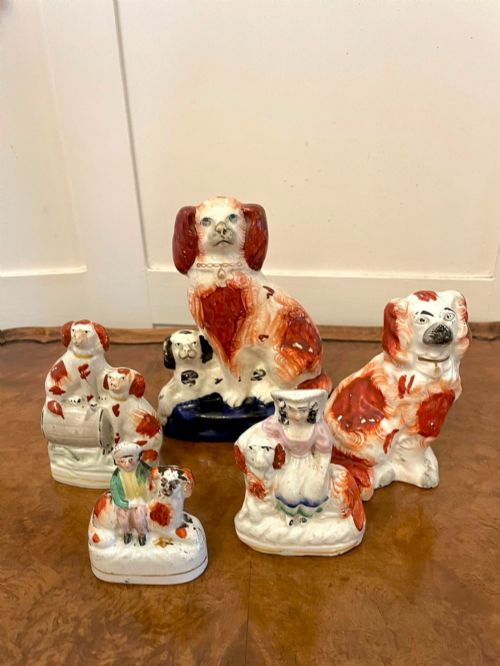
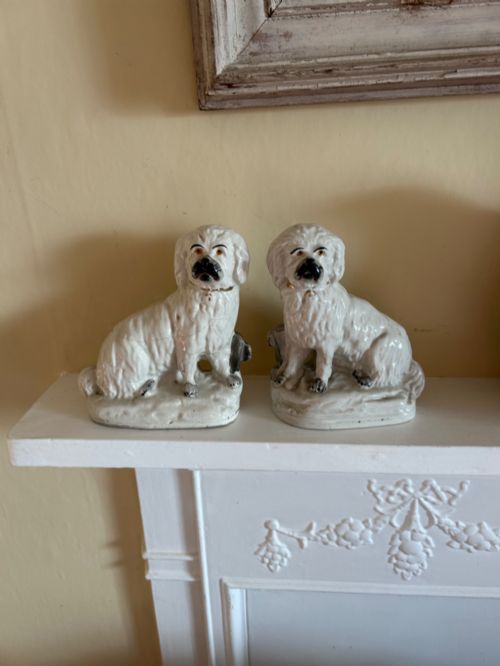
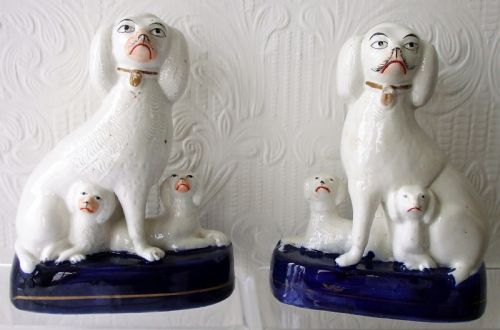
Victorian hearth spaniels are ceramic figures modelled as seated dogs, commonly displayed in pairs upon mantelpieces during the nineteenth century. These ornamental animals often appear as spaniels, though the selection also includes poodles with pups, Maltese terriers, and general Staffordshire dogs.
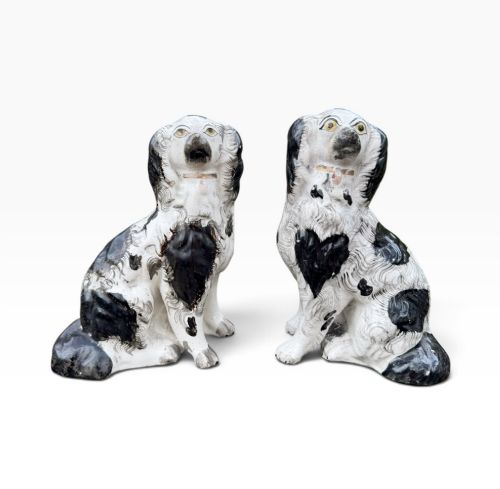
The pieces on this page span the Victorian era, with specific dates clustering around eighteen sixty and eighteen eighty, alongside broader nineteenth-century examples and Regency pieces. Buyers will frequently encounter matched pairs, alongside smaller collections numbering four or six figures.
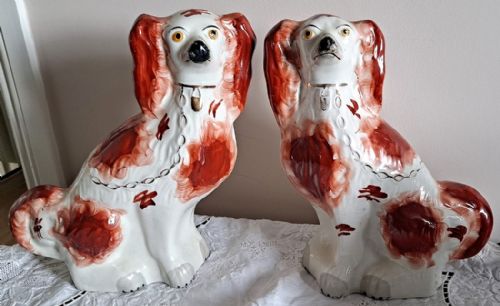
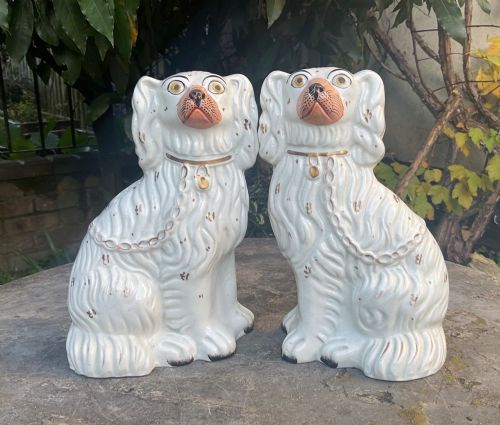
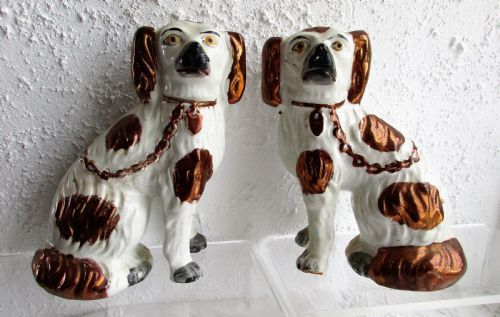
Most items take the form of decorative figurines and pottery objects modelled to sit sentinel on either side of a fireplace. Variations in the listings include white bodies, copper lustre finishes, and red and white coloration, sometimes featuring blue cushions and encrusted detail.
Judging quality in Staffordshire pottery
The presence of matched pairs and original details, such as gold leaf accents or textured encrusting on cushions, distinguishes the superior items from standard production pieces. Stronger modelling gives the animals distinct character, whereas lesser versions can appear rushed in execution.
Victorian Hearth Spaniels Retail Price Guide 2026
Typical asking prices for victorian hearth spaniels among the pieces listed under this phrase on Sellingantiques today, from the lower quarter to the upper quarter. They describe what is for sale here now, not the wider market.
Listings on this site feature earthenware and ceramic bodies finished with copper lustre, enamel, and gold leaf.
Beswick
The Victorian Hearth Spaniels Glossary
- Earthenware
- Porous pottery fired at lower temperatures than stoneware or porcelain. It serves as the primary ceramic body for nineteenth-century Staffordshire figures.
- Copper lustre
- A metallic glaze finish that creates a reflective, coppery sheen on the surface of the pottery. It was frequently used on mid-Victorian dog figures.
- Enamel
- Opaque coloured glass fused to the ceramic surface during decoration. Hand-painted enamels provide the red patches, eyes, and collars seen on these spaniels.
- Gilt
- A thin layer of gold leaf or gold paint applied to ceramic details. It is often found highlighting the lockets and chains of white Staffordshire dogs.
- Comforter spaniels
- A traditional term for Staffordshire pottery spaniels made to sit on hearths. They were named for the comforting presence they brought to nineteenth-century rooms.
Victorian Hearth Spaniels: Frequently Asked Questions
How were these ceramic dogs used?
Households placed the figures symmetrically on either end of the fireplace mantelpiece as decorative ornaments. They served as cheerful companions in the Victorian parlour.
Their primary purpose was domestic display rather than practical utility, reflecting the popular taste for animal subjects in nineteenth-century interiors.
How do I date a Staffordshire dog?
Dating relies on stylistic clues, ceramic bodies, and the type of glaze or lustre employed. Pieces from around eighteen sixty often feature distinct copper lustre or rich red and white enamel.
Broader nineteenth-century examples may show simpler white and gilt finishes or variations in the ceramic body and moulding technique.
How should I clean antique pottery dogs?
Dust the ceramic surfaces gently with a soft, dry brush to prevent the accumulation of dirt. Avoid using harsh chemical cleaners or submerging painted pieces in water, as this can damage enamel and gilt details.
Regular, careful maintenance preserves the fragile hand-painted finishes and metallic lustres applied during the Victorian period.