





Victorian Hassock
A victorian hassock brings honest nineteenth-century comfort to a fireside, offering a sturdy timber frame and deep upholstery for resting tired feet.
Victorian Hassock
A victorian hassock is essentially a low seat or footstool, appearing across nineteenth-century listings in various timber frames and upholstered finishes. Buyers searching for a victorian hassock will encounter low stools, footstools, and larger ottomans designed for domestic relaxation.
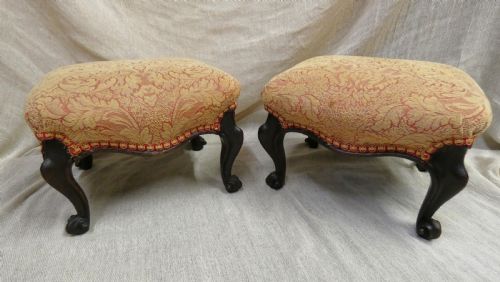
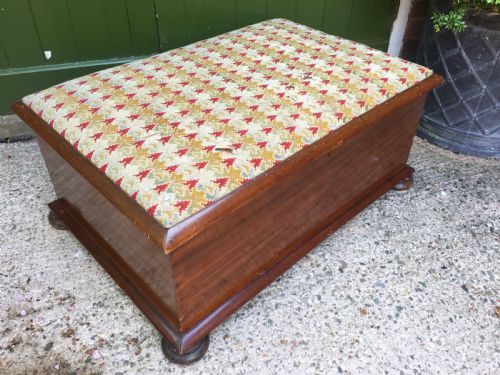
The pieces on this page span the Victorian era, the wider nineteenth century, and Regency periods, often taking circular, square, or larger ottoman forms. Woods like mahogany, walnut, and maple form the primary structures, occasionally accompanied by brass details.
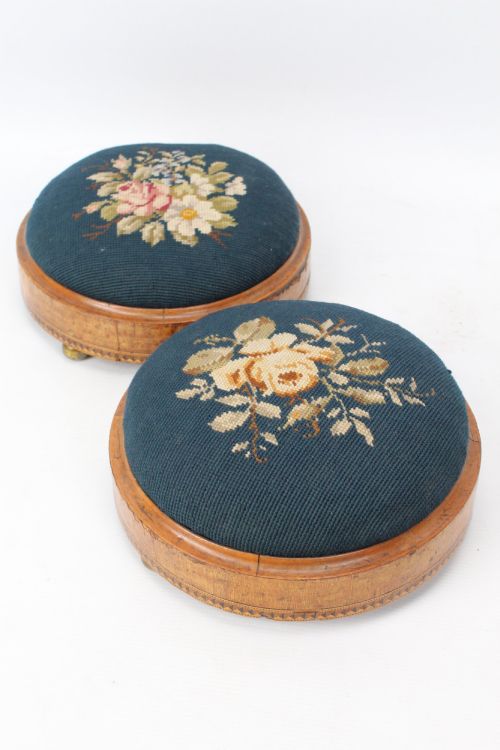
Makers and workshops of the period produced both single items and pairs, alongside matched suites such as three Gothic stools. These pieces range from simple mahogany frames to elaborate inlaid designs with needlepoint tops.
How they were made
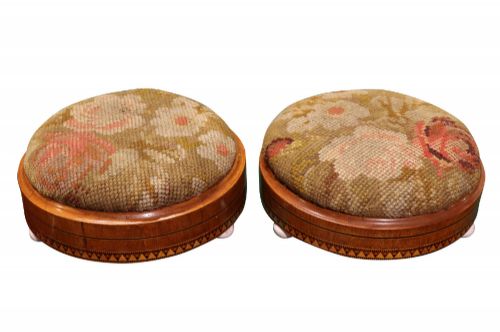
Makers constructed these frames using timbers such as mahogany, walnut, maple, and general timber, frequently shaping them through carving or turning. Woodwork often incorporated decorative techniques like Tunbridge ware inlay to enhance the visual appeal of the base.
Upholstery defines the upper surface, utilising materials like wool, silk, and fabric to create padded tops. Needlework styles including gros-point, geometric kilim tapestry, and needlepoint provide the patterned covers seen on many pieces.
Victorian Hassock Retail Price Guide 2026
Typical asking prices for victorian hassock among the pieces listed under this phrase on Sellingantiques today, from the lower quarter to the upper quarter. They describe what is for sale here now, not the wider market.
What varies in quality
Quality in these pieces rests upon the crispness of the timber frame carving, the selection of dense woods like walnut or mahogany, and the precision of any inlaid decoration. Superior examples display careful joinery and refined proportions that elevate them beyond basic utility.
The textile work significantly influences the character of a piece, distinguishing standard upholstered tops from intricate needlepoint, gros-point, or geometric kilim tapestry coverings. Original fabric and specialist techniques like Tunbridge ware further separate standard utilitarian items from finer examples.
Howard and Sons
The Victorian Hassock Glossary
- Tunbridge ware
- A form of decorative woodwork characterised by tiny mosaic tiles made of various natural coloured woods to create geometric patterns. This technique appears on the inlaid surfaces of specific nineteenth-century footstools.
- Gros-point
- A type of needlepoint embroidery worked on a coarse canvas using wool, producing a durable and textured surface. It frequently forms the original decorative top of nineteenth-century ottomans.
- Kilim tapestry
- A flatweave textile technique producing distinct geometric patterns. Such tapestries are utilised as upholstery on period footstools.
- Ottoman
- A low, upholstered seat or footstool typically without a back or arms, designed for domestic lounging. These larger forms share categories with standard footstools in nineteenth-century listings.
- Anglo-Indian
- A style reflecting British influence on traditional Indian craftsmanship, noted in listings through specific carved woodwork details. This style brings distinctive ornamental carving to nineteenth-century stool frames.
Victorian Hassock: Frequently Asked Questions
What is a Victorian hassock used for?
These pieces served primarily as footstools or low seats in nineteenth-century drawing rooms and parlours. They provided comfort by elevating the feet near coal fires.
Larger ottoman variants also functioned as casual seating or central resting places within domestic interiors. Their sturdy timber frames accommodated daily use across various rooms of the house.
How do I identify a Victorian footstool?
Identification relies on observing period timber selections such as mahogany and walnut, alongside traditional construction methods. Turned legs and specific woodgrains point directly to nineteenth-century workshop practices.
Upholstery styles also offer strong clues, particularly when traditional techniques like gros-point needlework or geometric kilim tapestries are present. Tunbridge ware inlays further confirm the nineteenth-century origin of the piece.
Are these stools sturdy enough for daily use?
Most pieces possess robust timber frames built from dense hardwoods like mahogany and walnut. This solid construction generally allows for regular placement and gentle sitting in modern homes.
Buyers should assess individual frames to ensure the internal structure remains stable. The underlying woodwork typically sustains everyday footrest duties without issue.
What styles are common among these stools?
Listings frequently feature Early Victorian designs alongside Queen Anne Revival, Rococo Revival, and Gothic Revival aesthetics. Anglo-Indian carved interpretations also appear among the selection.
These varied styles influence the woodwork details, ranging from simple turned mahogany legs to ornate carved frames. Each style reflects the prevailing taste of its specific decade within the nineteenth century.