

Victorian Hand Vase
These Victorian hand vase examples bring together porcelain and glass forms from the nineteenth century for collectors seeking period decorative items.
Victorian Hand Vase
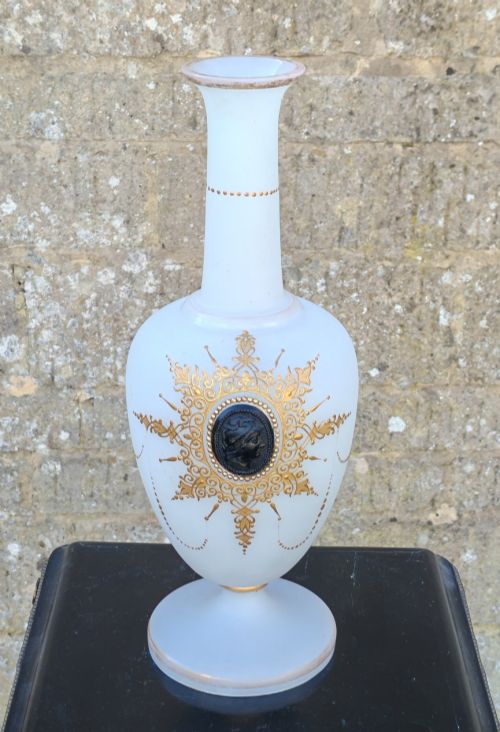
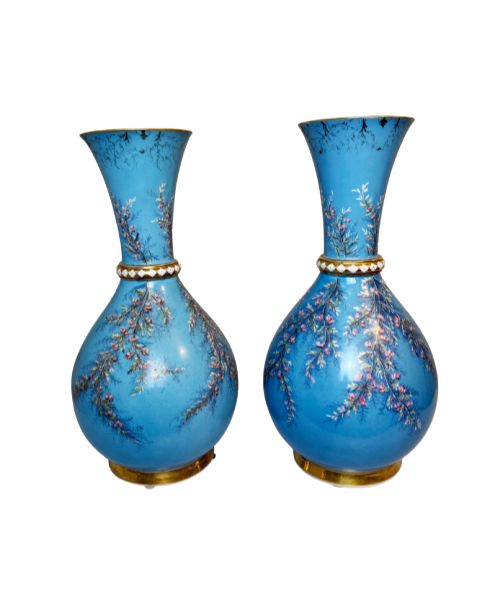
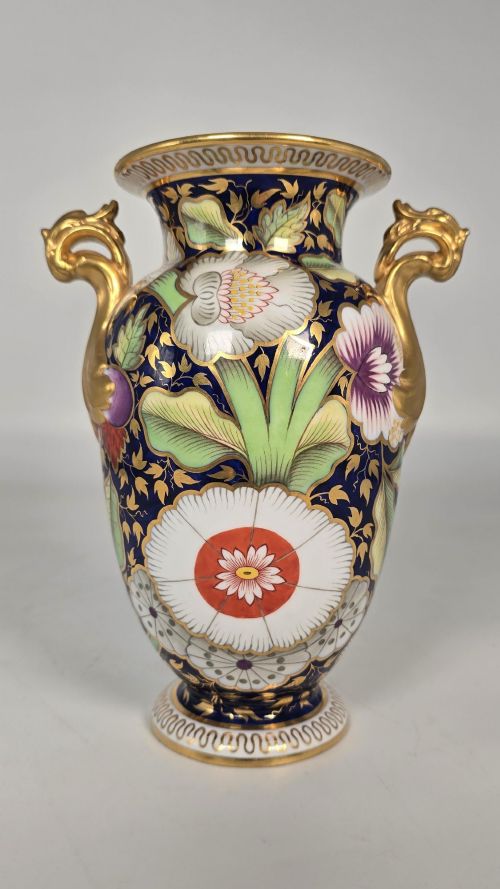
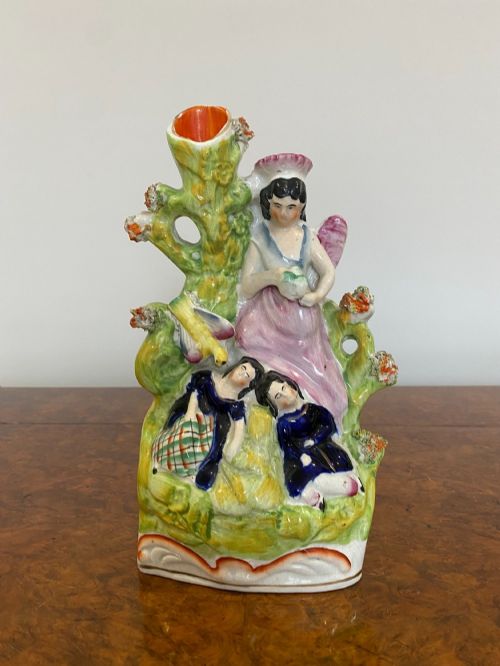
A Victorian hand vase encompasses a diverse group of nineteenth century ceramic and glass vessels, though the listings here show broader forms including mantel lustres, jardiniere, and potpourri pots alongside traditional vases. Buyers seeking a Victorian hand vase encounter pieces spanning the nineteenth century into the Edwardian period, originating from English potteries, continental European factories, and Japanese workshops.
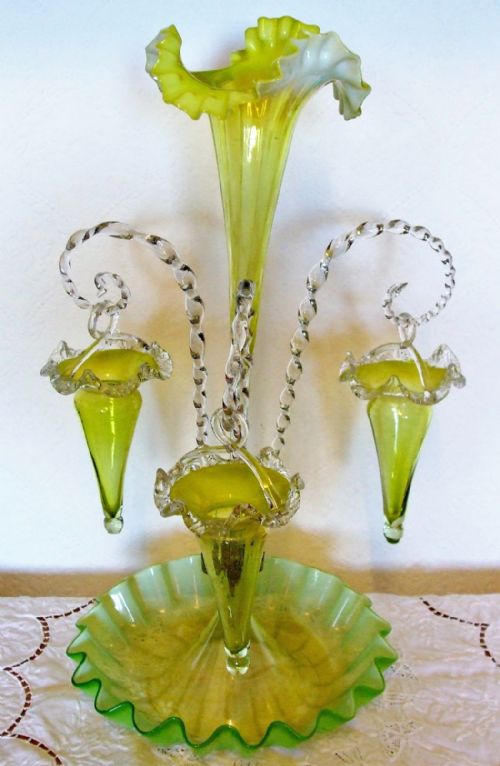
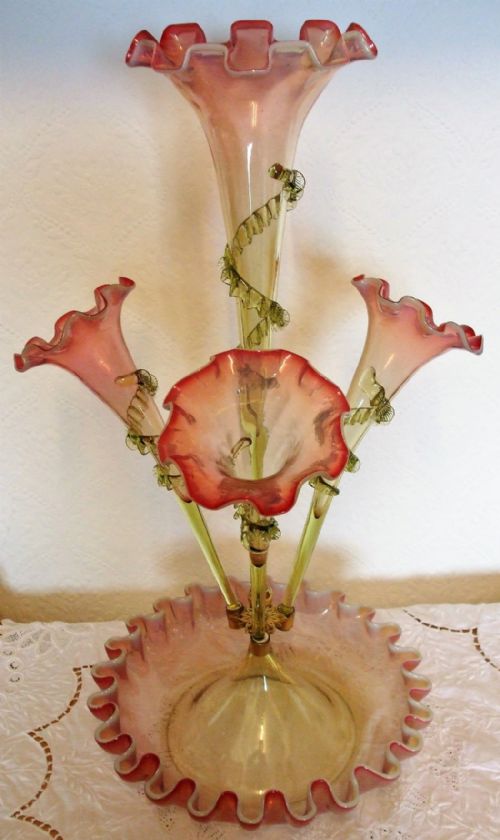
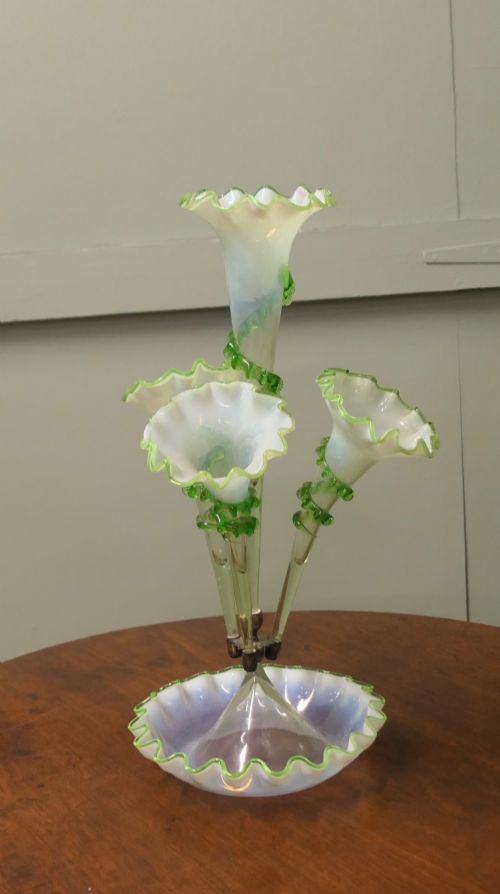
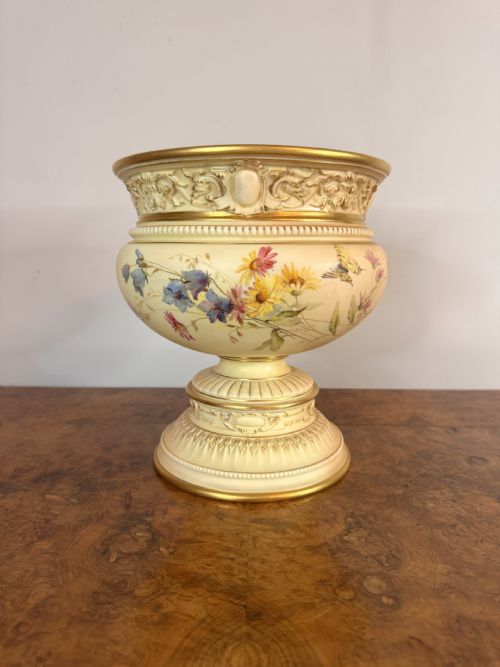
The objects take many shapes, from cabinet vases and spill vases to large centrepieces, urns, and multi-trumpet epergnes. While the search phrase brings up specific hand-shaped vessels in broader markets, the actual items recorded here reflect nineteenth century ceramic and glass production in styles ranging from Rococo Revival and Aesthetic Movement to Arts and Crafts.
How They Were Made
The pieces rely on traditional ceramic and glass manufacturing techniques, utilising porcelain, earthenware, and faience alongside blown and pressed glass. Potters and glassmakers shaped bodies through throwing, moulding, and hand-blowing, incorporating materials like enamel, gold leaf, and surface gilding.
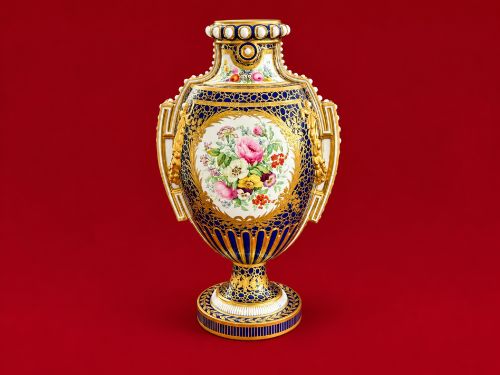
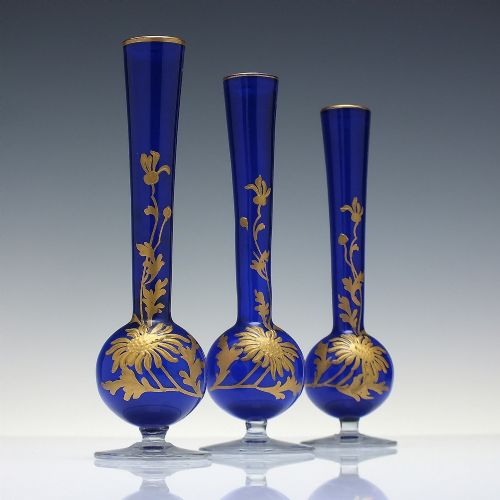
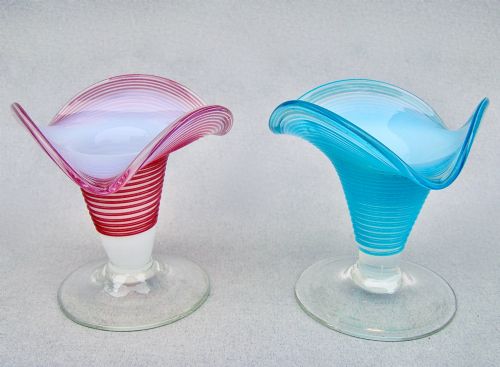
Decoration involved hand-painted figural vignettes, floral motifs, and transfer printing, often finished with detailed enamel work. Glass pieces frequently display characteristic colouration such as cranberry, ruby, pink, green, and uranium, sometimes paired with applied glass trails or crystal drops.
Victorian Hand Vase Retail Price Guide 2026
Typical asking prices for victorian hand vase among the pieces listed under this phrase on Sellingantiques today, from the lower quarter to the upper quarter. They describe what is for sale here now, not the wider market.
Black Forest mountain goats stand ready to survey your mantelpiece alongside delicate Victorian glass lustres.
What Varies in Quality
Quality separates objects by the precision of the hand-painting, the crispness of the moulding, and the depth of the glaze or glass colour. Finer examples display meticulous brushwork in figural and floral scenes, careful application of gilding, and well-balanced proportions.
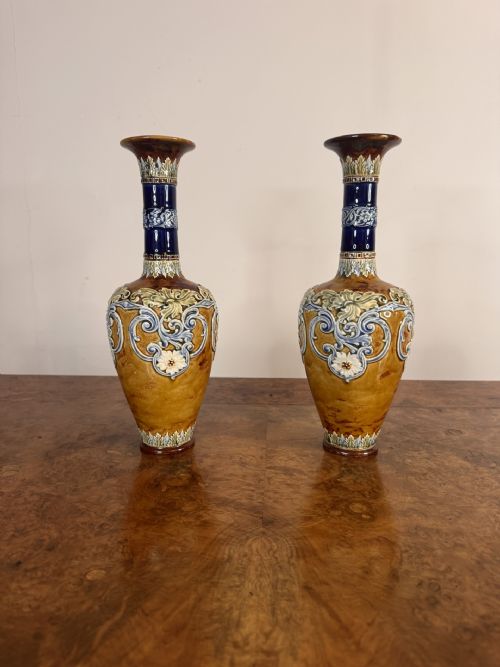
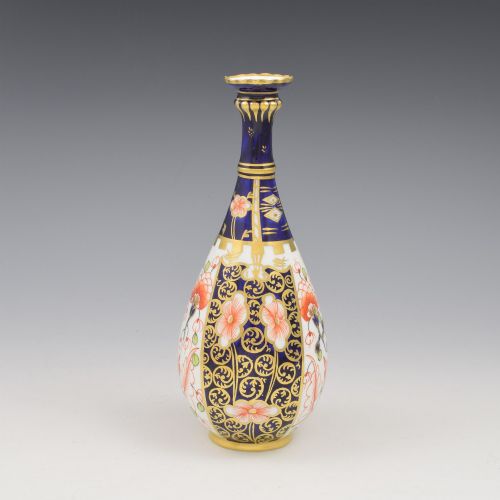
Maker attribution also influences distinction, with pieces bearing marks from established factories like Royal Worcester, Doulton Lambeth, Sevres, or Royal Crown Derby demonstrating higher standards of design and execution. The complexity of the form, such as multi-part construction or intricate piercing, further marks superior examples.
Doulton Lambeth·Royal Worcester·Royal Crown Derby·Jacob Petit·Cantagalli·Helena Wolfsohn·Royal Vienna
The Victorian Hand Vase Glossary
- Mantel lustre
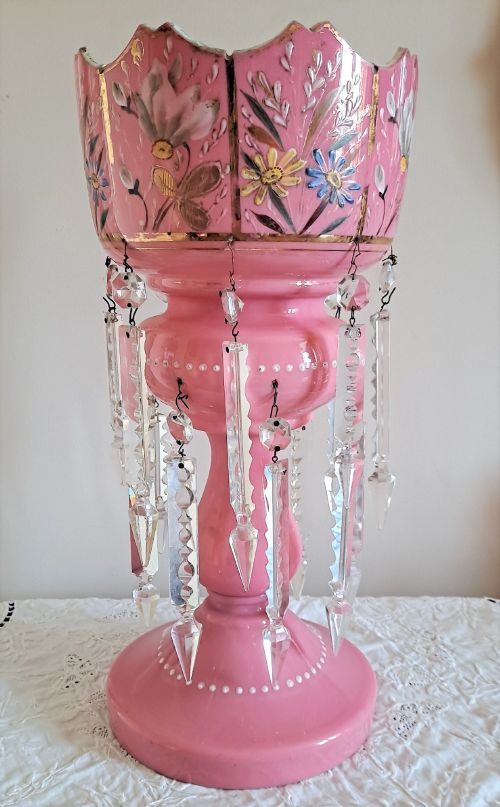
- A decorative table ornament featuring a central vase or stem hung with cut glass prisms or spear-shaped pendants. These items reflected candlelight in nineteenth century rooms.
- Potpourri
- A jar, urn, or lidded vessel pierced to release the scent of dried flowers and spices held within. Such containers were common decorative fixtures in period interiors.
- Faience
- Tin-glazed earthenware decorated with opaque coloured glazes, often associated with nineteenth century art pottery studios. This technique allowed for painterly surface designs.
- Epergne
- A large table centrepiece featuring a central trumpet vase surrounded by smaller detachable auxiliary vases. They were typically utilised for holding flowers or fruit during formal dining.
- Wrythen
- A decorative spiral pattern moulded into the body of glassware during production. This twisting effect catches light across the surface of the vessel.
Victorian Hand Vase: Frequently Asked Questions
How were mantel lustres used in period homes?
Mantel lustres were placed upon fireplace mantelpieces primarily for decorative effect during the nineteenth century. The hanging glass prisms were designed to catch and reflect the light from nearby candles or lamps.
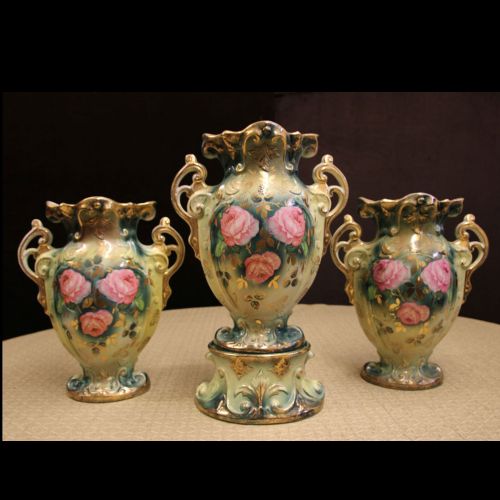
They often formed part of a matched garniture set alongside coordinating side vases or centrepieces.
What periods do these decorative pieces represent?
The listings span the nineteenth and early twentieth centuries, encompassing the Victorian and Edwardian eras. Pieces reflect design movements prevalent during these decades, including Rococo Revival, Arts and Crafts, and the Aesthetic Movement.
Some items also demonstrate influences from the Japanese Meiji period.
How do you identify potpourri pots and jars?
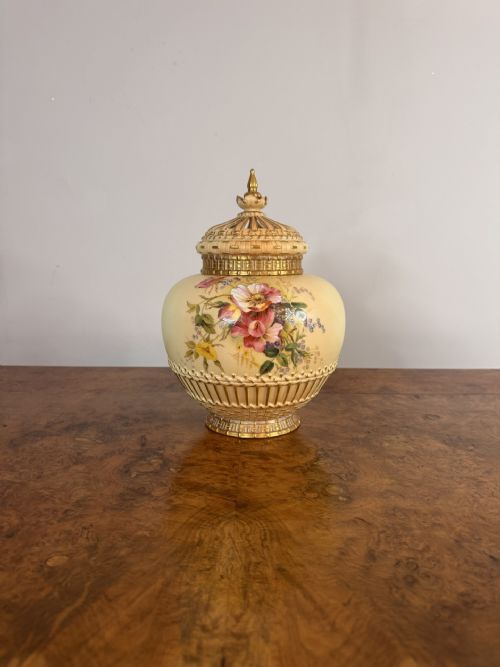
Potpourri pots and jars are distinguished by pierced or perforated lids designed to allow scent to diffuse from dried botanicals kept inside. They frequently take the form of lidded urns or cabinet vases.
Many examples feature hand-painted floral motifs or elaborate gilding suited for display in principal rooms.