



Victorian Hallway Desk
When you need a victorian hallway desk, you are looking for a practical surface shaped by nineteenth-century craft for a narrow thoroughfare.
Victorian Hallway Desk
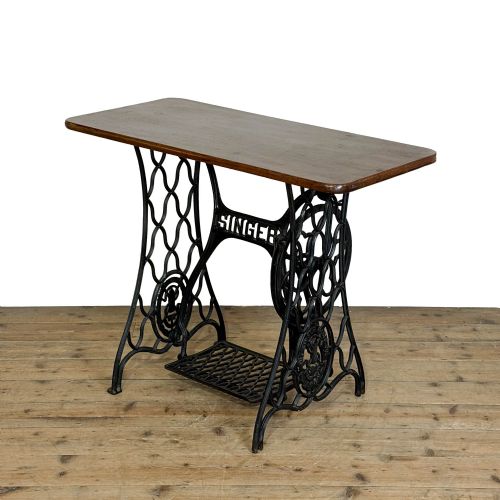
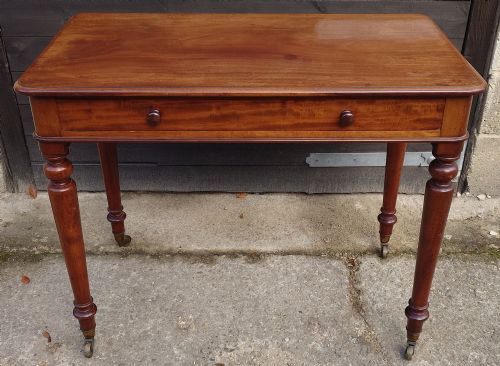
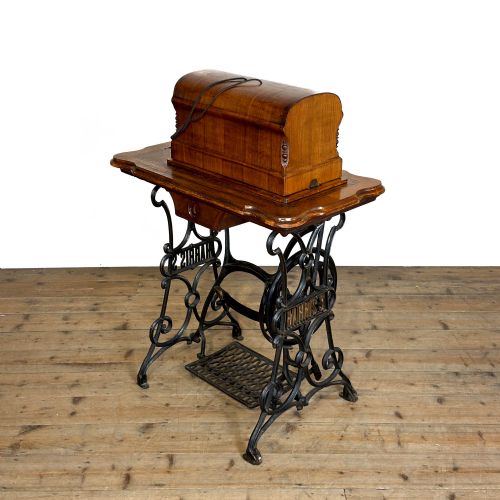
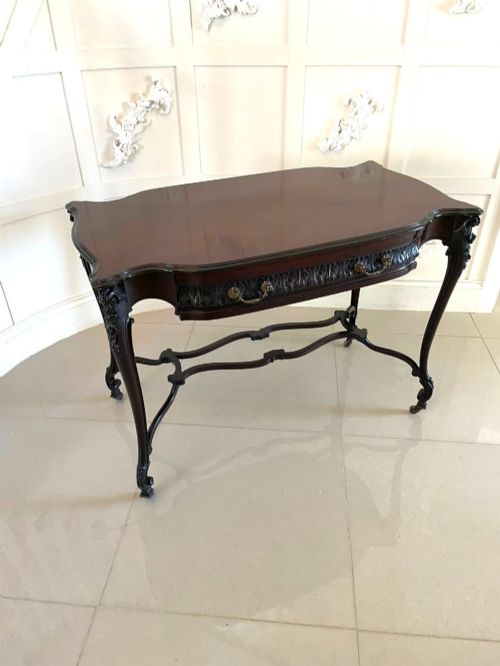
A victorian hallway desk often appears in the form of a side table, console table, or compact writing table designed to fit modest spaces near an entrance. The selection spans the nineteenth century, drawing on periods from the mid-Victorian decade up to nineteen hundred, alongside revivals and regional variations.
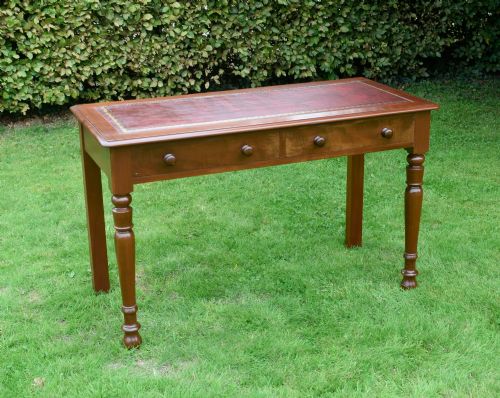
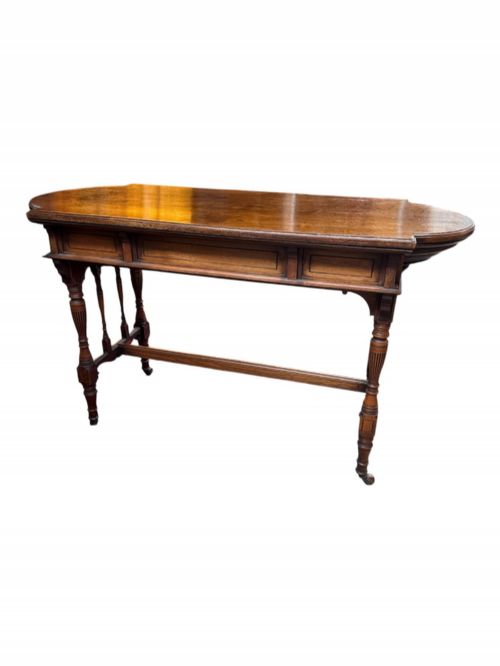
Makers adapted familiar domestic forms for the passage, producing single-drawer side pieces and narrow writing desks in timbers like mahogany, oak, and walnut. These furnishings bridge the gap between purely decorative console surfaces and working desks used for correspondence.
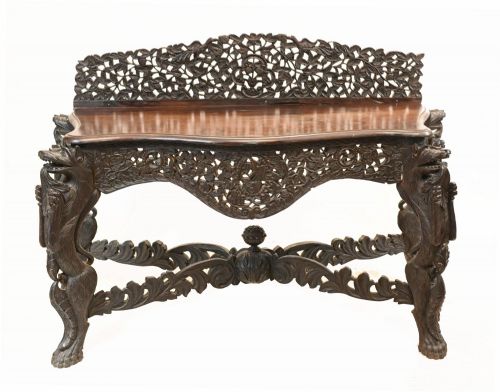
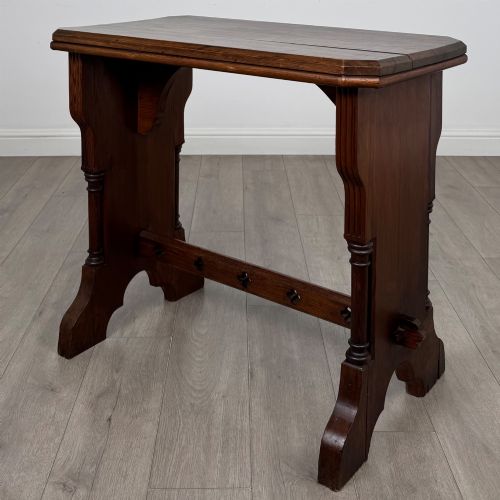
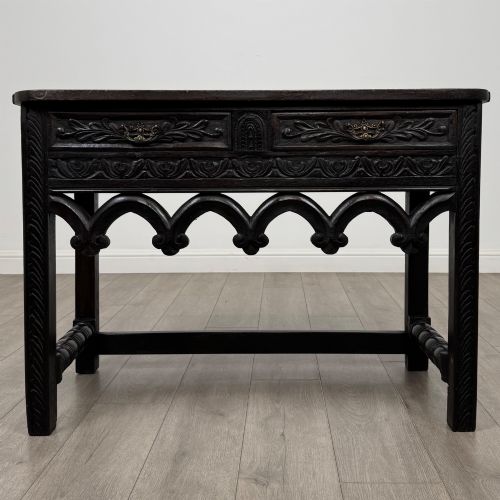
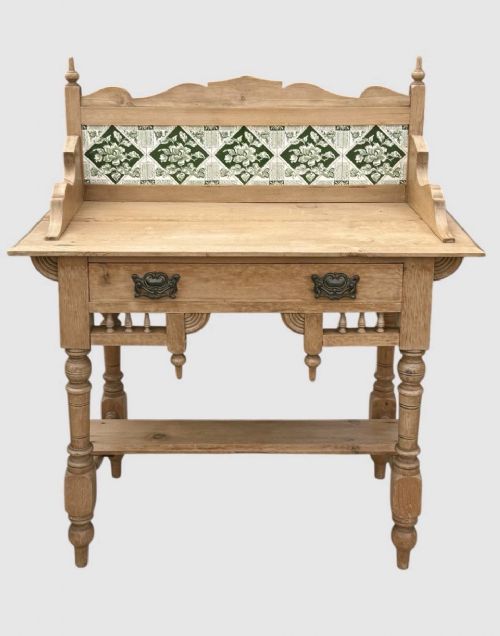
Buyers meet objects that range from austere pine washstands and country oak tables to richly carved Gothic Revival and Anglo-Burmese pieces. The common thread is a shallow profile intended to serve a hallway without blocking movement.
How they were made
Cabinetmakers relied heavily on dense hardwoods such as mahogany, oak, and walnut, often selecting figured veneers or solid planks for the primary surfaces. Secondary timbers like pine appear in drawer linings and interior framing.
Construction techniques combined traditional joinery with decorative carving, turning, and banding. Brass handles and leather writing inserts provide functional contrast to the wooden structures, while ceramic components appear on related wash stands.
Victorian Hallway Desk Retail Price Guide 2026
Typical asking prices for victorian hallway desk among the pieces listed under this phrase on Sellingantiques today, from the lower quarter to the upper quarter. They describe what is for sale here now, not the wider market.
Periods represented span the Victorian era, the nineteenth century, and early twentieth-century revival styles.
What varies in quality
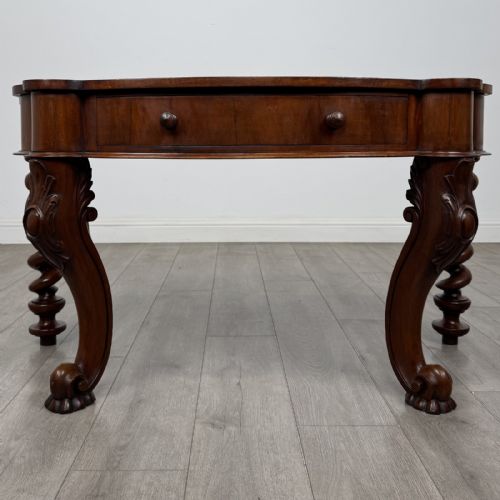
The degree of refinement in the timber figure and the crispness of the carved ornamentation set the finer examples apart from utilitarian workshop output. Finer pieces display carefully matched veneers, such as burr walnut or banded satinwood, alongside sophisticated turning like barley twist legs.
Structural integrity depends on the original joinery and the preservation of secondary woods over time. Tables retaining their original brass hardware, fitted drawer interiors, and uncompromised structural frames represent the higher tier of surviving items.
Holland & Sons·Heal & Son
The Victorian Hallway Desk Glossary
- Console table
- A table designed to be fixed against a wall or left freestanding in a hallway, often featuring a shallow depth.
- Barley twist
- A type of column turning resembling a spiral rope, frequently seen on nineteenth-century leg supports.
- Satinwood
- A pale, hard timber used for banding and fine furniture veneers due to its lustrous golden appearance.
- Gothic Revival
- A nineteenth-century style drawing on medieval architectural motifs, featuring pointed arches, tracery, and heavy carved oak.
- Stretcher table
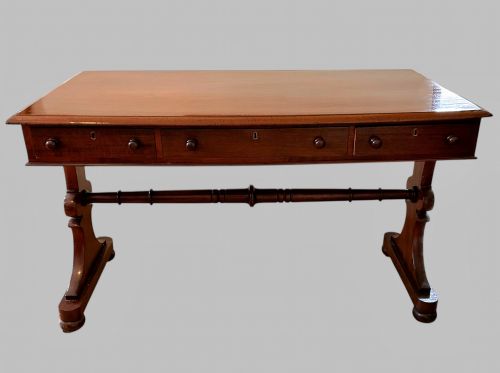
- A table with horizontal wooden rails connecting the legs near the base to provide additional stability.
Victorian Hallway Desk: Frequently Asked Questions
What is a victorian hallway desk used for?
These tables provide a convenient surface in an entryway for placing correspondence, keys, and small items upon entering the house.
Many examples include one or more drawers to keep writing materials and household clutter out of sight in a passage.
How do I fit a desk in a narrow hallway?
Selecting a piece with a shallow profile, such as a side table or console table, ensures the furniture does not obstruct foot traffic.
Measuring the available clearance between the wall and doorways helps determine whether a single-drawer or drop-leaf surface works best.
How can I tell an 1850 desk from a later one?
Mid-nineteenth-century pieces often feature solid mahogany or early walnut construction with straightforward proportions and minimal applied ornament.
Later Victorian and turn-of-the-century examples may incorporate revival styles, heavier carving, or different secondary timbers.
What woods were used for these desks?
Mahogany, oak, and walnut dominate the selection, utilised either as solid planks or as figured veneers over stable carcases.
Secondary materials like pine appear in internal drawer construction, while ash, satinwood, and pitch pine feature in specific regional or stylistic variants.