





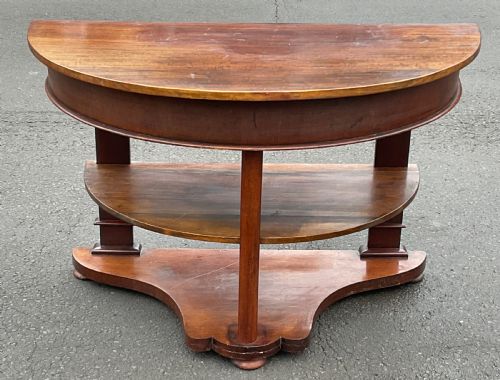

Victorian Half Moon Table
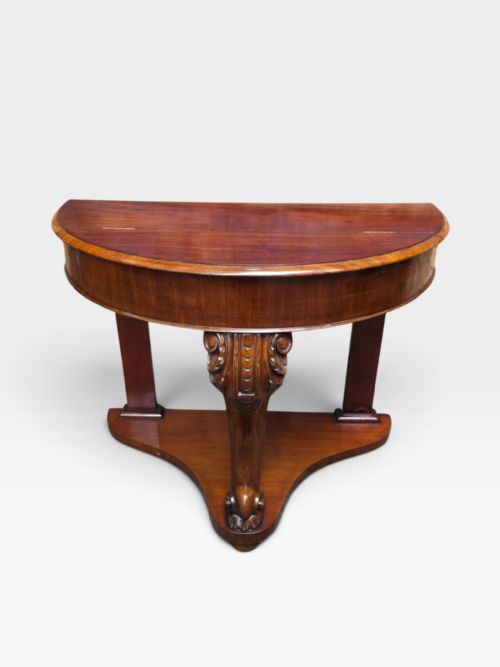
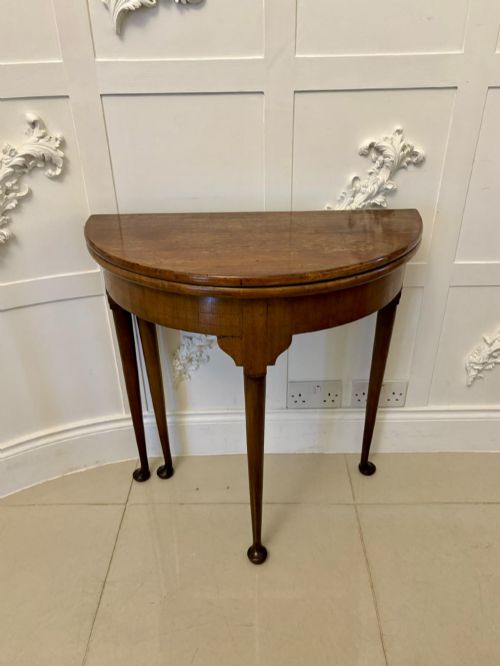
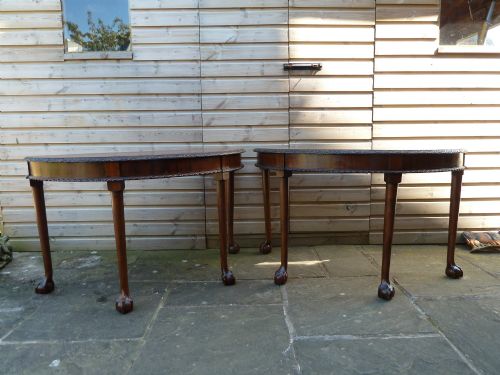
A victorian half moon table is a demilune console or card table designed to sit flush against a wall.
Victorian Half Moon Table
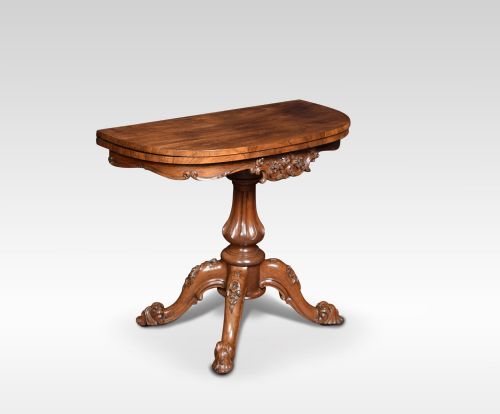
When searching for a victorian half moon table, buyers encounter semicircular console, card, tea and display tables originating from the nineteenth century.
The selections span simple mahogany hall furniture alongside walnut and satinwood pieces featuring folding tops and inlaid details.
Common formats include console tables designed for hallways, folding card tables, and occasional furniture utilising woods like maple, rosewood and burr walnut.
How They Were Made
Cabinet makers utilised solid timbers and wood veneers such as mahogany, walnut, satinwood and rosewood over supportive carcase structures.
Surface decoration frequently incorporated marquetry inlay, polished marble tops, brass fittings and hand carving.
Among the offerings are tables carved in the form of seated hounds.
What Varies in Quality
The standard of timber selection and veneer matching defines the visual weight of the piece, with burr walnut and satinwood sitting at the upper end.
Joinery precision in folding mechanisms and the crispness of carved woodwork separate standard utility furniture from finer decorative examples.
The Victorian Half Moon Table Glossary
- Demilune
- Half-moon shape used to describe console tables and pier tables designed to fit flat against a wall. This profile saves floor space in narrow hallways and parlours.
- Console table
- A table supported by wall brackets or front legs, intended to stand against a wall. These often served decorative purposes in entrance halls.
- Card table
- A folding table with a hinged top that opens to reveal a baize-lined playing surface. They became essential domestic furniture for evening entertainment.
- Marquetry
- Decorative veneer work forming pictures or geometric patterns using various woods. Craftsmen cut thin slices of contrasting timber to create elaborate surface designs.
- Pier table
- A table designed to stand against the wall between two windows, often placed beneath a mirror. They matched the architectural proportions of the room.
Victorian Half Moon Table: Frequently Asked Questions
How do I use a half moon table?
These tables fit neatly against walls in hallways, living rooms and dining spaces where floor space is limited.
Folding versions can also open up to serve as card or tea tables when hosting guests.
Were these tables used for cards?
Many demilune tables feature folding tops specifically designed for card games and social gatherings.
When closed, they function as standard console or pier tables against the wall.
What woods were used?
Cabinet makers built these tables using primary timbers such as mahogany, walnut, maple and satinwood.
Finer examples incorporate burr walnut veneers, rosewood and decorative marquetry inlay.
How do I date a Victorian table?
Dating relies on stylistic clues, construction methods and the specific timber varieties popular during different decades.
Mid-century pieces often display heavier mahogany forms, while later variants utilise satinwood and lighter revival styles.