
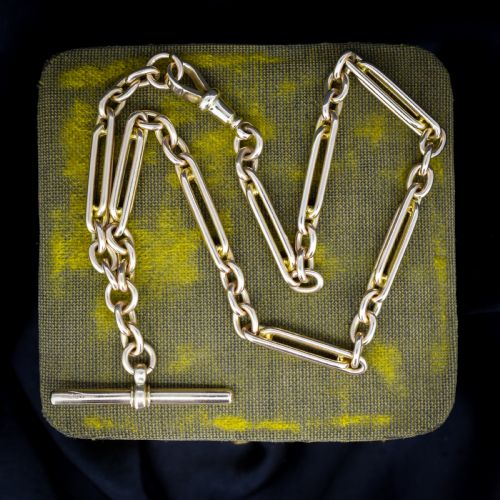
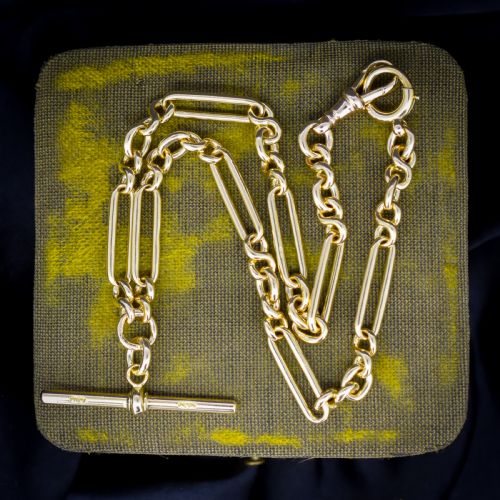
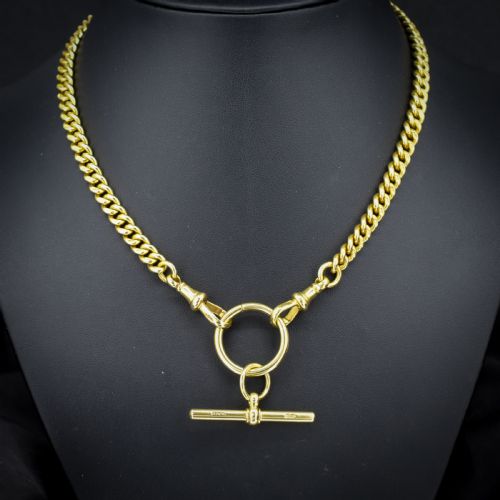
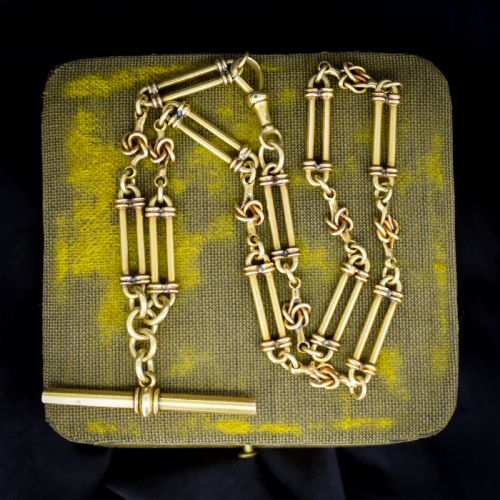
Victorian Gold Link Chain
When you handle a victorian gold link chain, you hold a functional piece of nineteenth-century engineering transformed into personal ornamentation.
Victorian Gold Link Chain
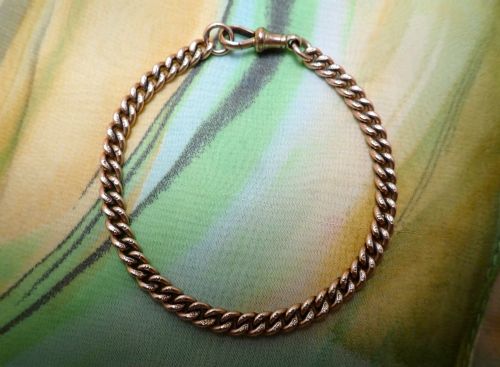
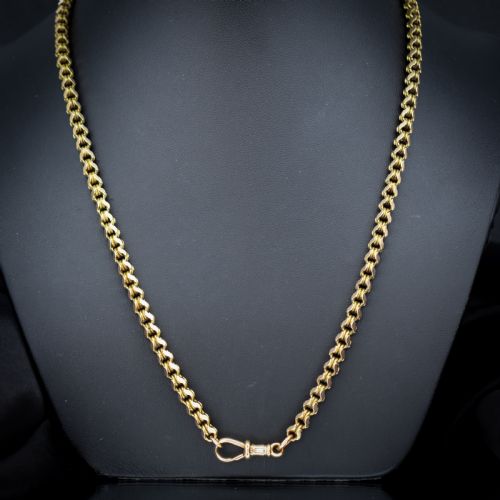
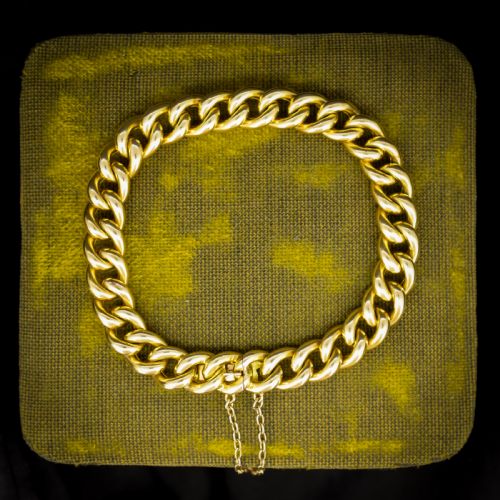
A victorian gold link chain encompasses both neck chains and utilitarian pocket watch attachments designed for daily wear during the nineteenth and early twentieth centuries. The most common varieties found in these records are curb link bracelets, long guard chains, and albert watch chains originally secured to waistcoats.
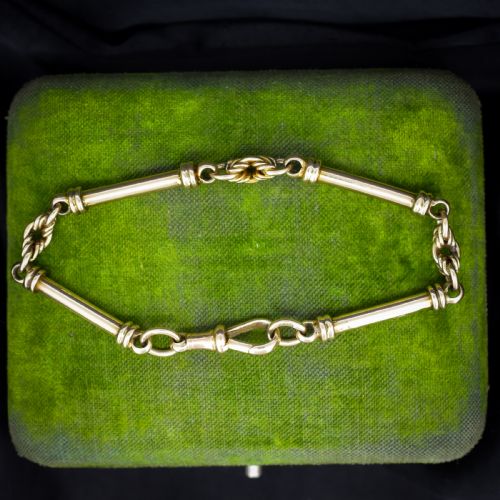
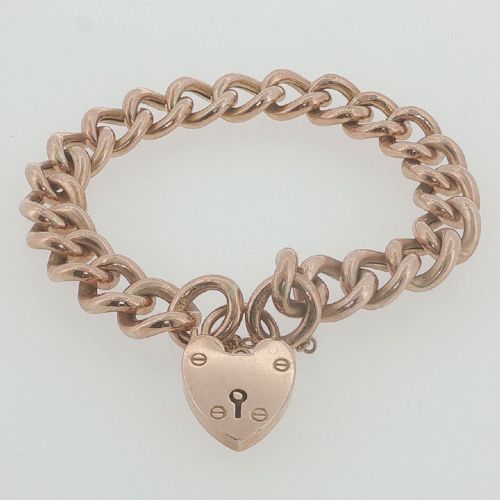
Makers produced these items across the Victorian, Edwardian, and Art Deco periods, extending into the nineteen-twenties using diverse links such as trombone, paper, fetter, and fancy patterns. Many of these pieces now function as necklaces or standalone bracelets thanks to secure dog clips, t-bars, and heart padlocks.
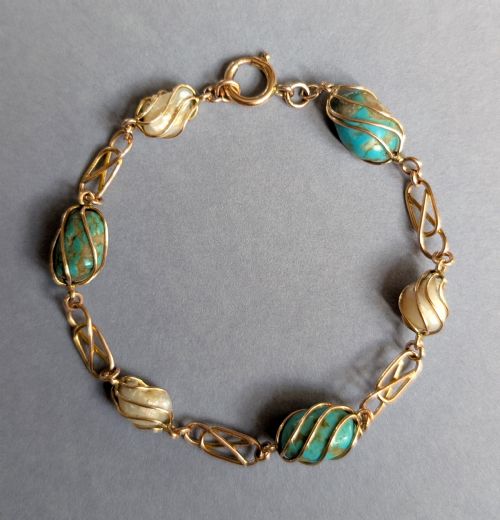
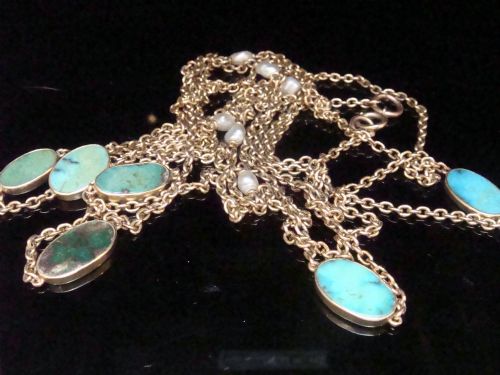
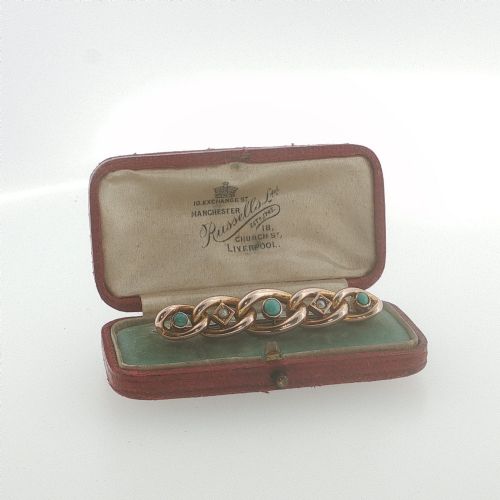
The objects reflect the shifting domestic habits of their era, shifting from purely timekeeping accessories to decorative neckwear. Collectors frequently encounter pieces incorporating decorative stones like turquoise and natural pearls alongside the standard gold links.
How They Were Made
Smiths constructed these items using gold alloys of varying purities, predominantly nine carat, fifteen carat, and eighteen carat yellow and rose gold, alongside rolled gold variants. Metalworkers formed individual links by hand or machine before assembling them into substantial curb, cable, or fancy formations.
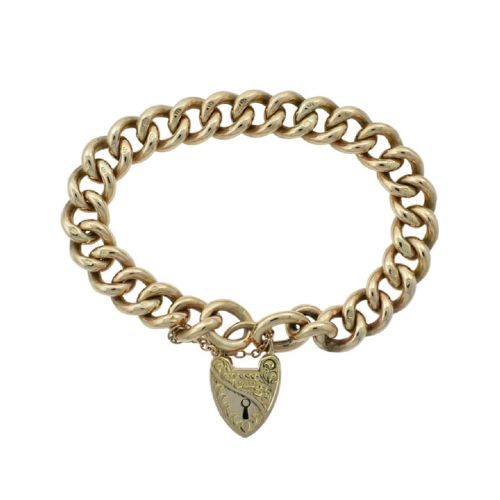
Artisans applied surface decoration directly to the metal, producing half-engraved patterns on individual curb links or faceted finishes to catch the light. Secure fastening relied on specialised mechanisms including dog clips, spring bolt rings, barrel clasps, and engraved heart padlocks.
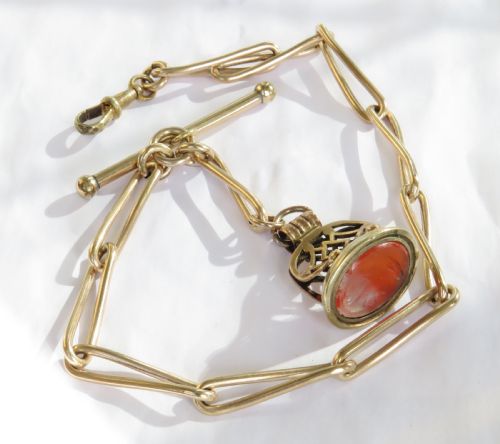
Victorian pocket watch chains sometimes hide tiny intaglio fobs carved with historical scenes, ready to dangle silently against a waistcoat.
What Varies in Quality
The overall weight and gauge of the gold links dictate the structural substance of each chain, separating lighter everyday wear from heavier presentation pieces. Higher quality items maintain consistent link thickness and structural integrity throughout extended lengths, even on exceptionally long guard chains.
The complexity of the link assembly and the inclusion of original functional elements like dog clips, t-bars, or stamped padlocks influence the piece. Superior examples often feature crisp hand-engraving on the links and well-preserved hallmarks that confirm the gold standard.
The Victorian Gold Link Chain Glossary
- Albert Chain
- A pocket watch chain designed to be worn across a waistcoat, featuring a t-bar at one end and a swivel clasp at the other. These frequently convert into modern necklaces.
- Dog Clip
- A small, spring-loaded snap hook used to secure watch chains or charms to a loop or ring. They provide reliable fastening on antique bracelets and necklaces.
- Trombone Link
- A rectangular metal link shaped like a trombone, often alternated with smaller round or oval links in watch chains. This specific geometry creates a distinctive rhythmic pattern along the length.
- Longuard Chain
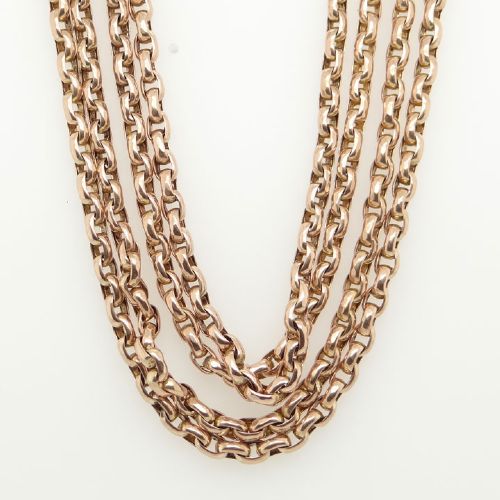
- An exceptionally long necklace chain, traditionally worn doubled over or suspended with a watch or locket. These pieces often measure over thirty inches in length.
- Heart Padlock
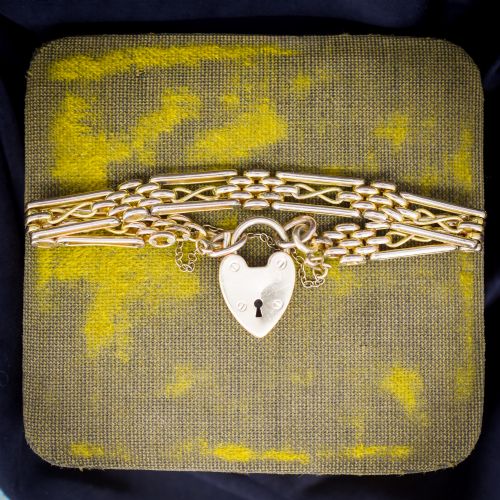
- A small, heart-shaped clasp commonly found on gate bracelets and curb link chains of the period. They often feature engraved surface details and function as the primary closure.
Victorian Gold Link Chain: Frequently Asked Questions
How do I wear a pocket watch chain as a necklace?
Many watch chains feature a dog clip and a t-bar at opposite ends. You can attach the dog clip directly to any intermediate link or spring ring to adjust the overall length around the neck.
The remaining t-bar acts as a decorative toggle drop or tucks securely through a neighbouring link to hold the configuration in place.
What is the difference between an albert chain and a guard chain?
Albert chains were originally shorter lengths meant to span a gentleman's waistcoat pocket, typically incorporating a t-bar for secure anchoring. Guard chains were manufactured to much greater lengths, often exceeding thirty inches, allowing them to hang freely or double around the neck.
Both forms now function primarily as necklaces or wrap bracelets within modern collections.
What does rolled gold mean on these pieces?
Rolled gold refers to a manufacturing technique where a thin sheet of solid gold is mechanically bonded to a base metal core, usually brass or copper. This provided the appearance and wear resistance of solid gold at a more accessible cost during the nineteenth and early twentieth centuries.
Pieces utilising this method maintain the same structural link designs as their solid counterparts.
Why do some chains have a heart padlock?
Heart padlocks served as functional clasps on gate bracelets and certain heavy link chains, often securing the ends together over the wrist. They were frequently decorated with hand engraving or set with small pearls and turquoise stones.
Many of these padlocks open via a small hidden spring mechanism rather than a traditional key.