


Victorian Gold Diamond Band
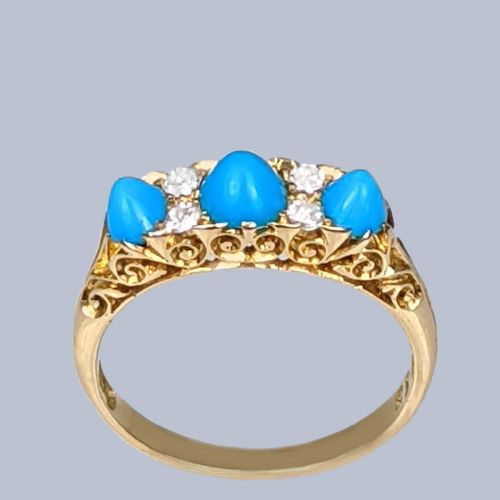
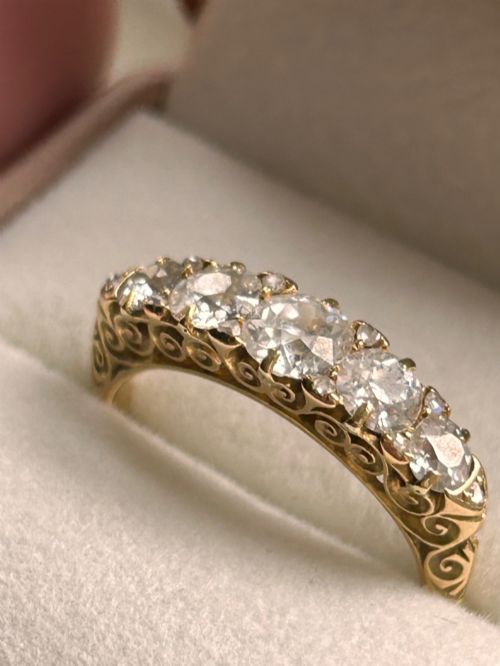
When you search for a victorian gold diamond band, you enter a world of nineteenth-century finger rings crafted in yellow gold, often punctuated by old-cut diamonds alongside rubies, sapphires, and turquoise.
Victorian Gold Diamond Band
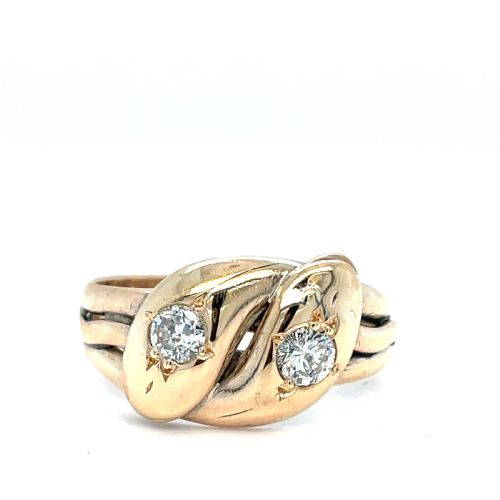
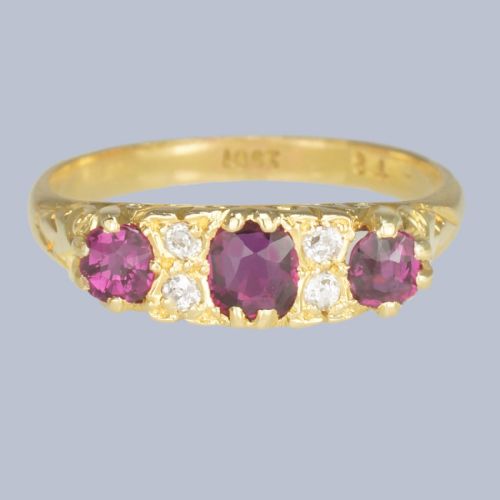
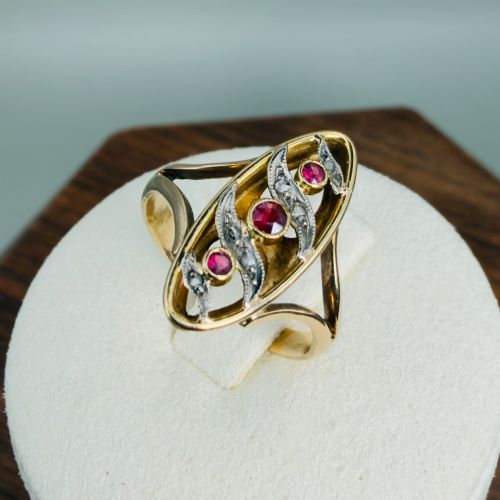
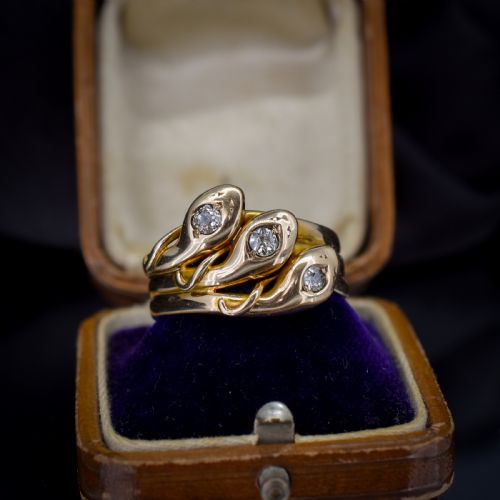
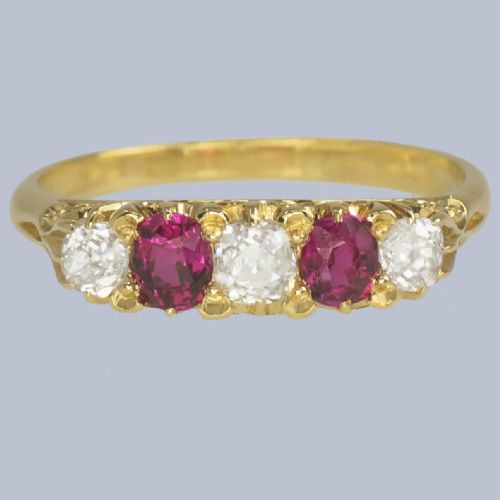
A victorian gold diamond band typically takes the form of a gypsy setting, a multi-stone half hoop, or a symbolic serpent, designed to sit low and flush against the hand. The pieces you encounter most often on this page date from the nineteenth century into the early twentieth century, spanning late Victorian and Edwardian periods.
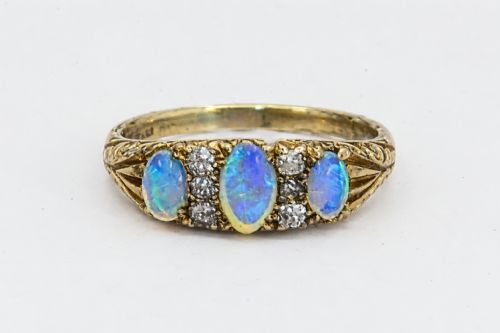
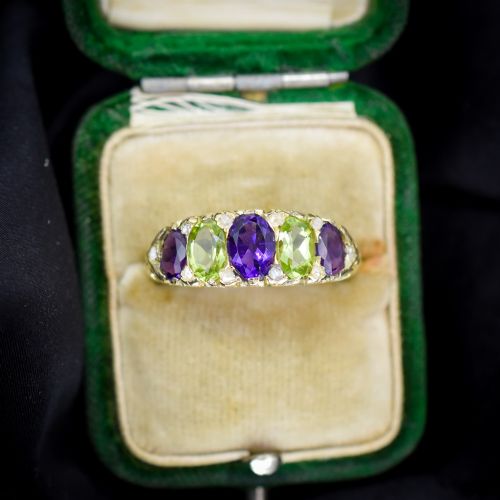
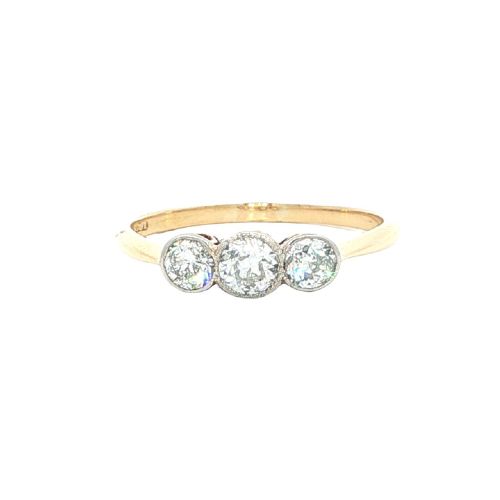
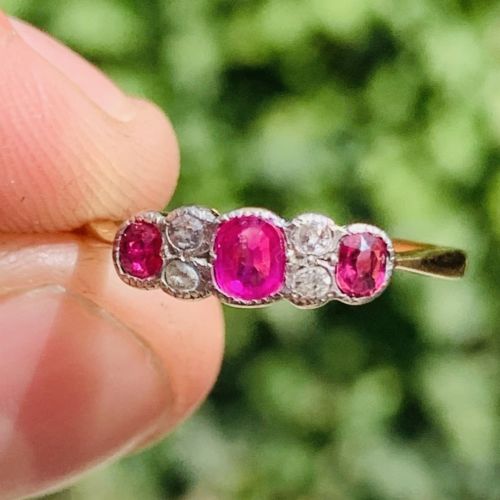
Many examples incorporate colourful gemstones such as rubies, sapphires, opals, and turquoise alongside the central diamonds, arranged in trilogy, starburst, or boat configurations. These finger rings served as tokens of affection, engagement, or personal adornment, reflecting the sentimental design vocabulary of the era.
Materials and construction
Goldsmiths utilised 18ct yellow gold, 15ct gold, and occasionally 9ct gold to forge sturdy band rings that could support flush or star-set gemstones. The metal was frequently cast or hand-hammered into wide profiles, buckle shapes, or intertwined serpent bodies that wrap around the finger.
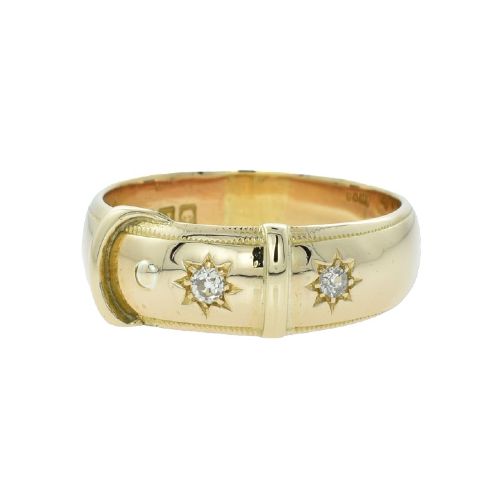
Stones are predominantly old-cut or old mine-cut diamonds, valued for their deep facets and cushion-like outlines, often hand-set alongside calibrated rubies, sapphires, or natural turquoise cabochons. Metalwork detail includes starburst engravings radiating outwards from gypsy-set diamonds.
Listings feature yellow gold, rose gold, and platinum-accented bands spanning the Victorian, Edwardian, and Art Deco periods.
Distinctions in craftsmanship
The distinction between standard output and finer work lies in the crispness of the hand-engraving, particularly within starburst motifs and snake scales, alongside the symmetry of the chosen gemstones. Substantial weight in the gold band often indicates superior durability and high-status original commissioning.
The alignment and bezel work around old-cut diamonds demonstrate the maker's precision, where flush settings require exact metal-to-stone margins. Pieces retaining well-matched coloured stones and clear hallmarks carry greater integrity.
The Victorian Gold Diamond Band Glossary
- Gypsy setting
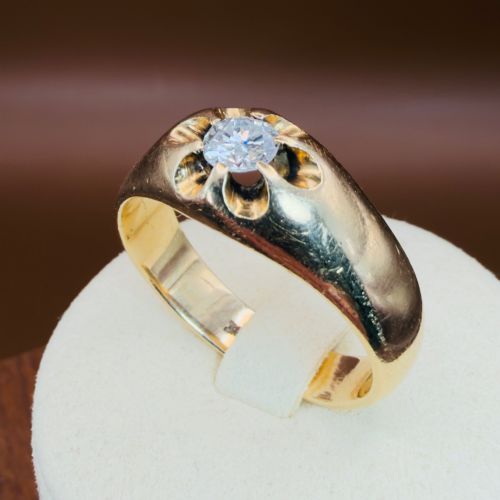
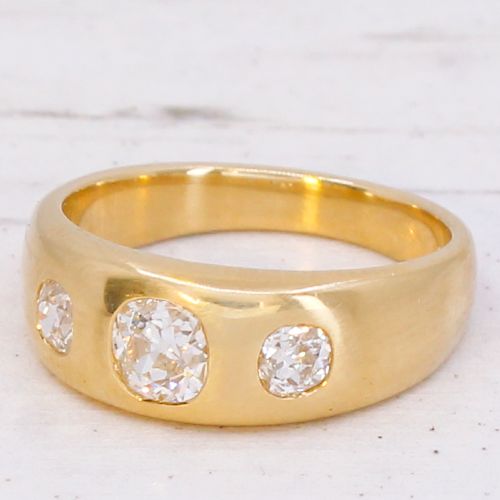
- A mounting style where the gemstone is flush-set directly into the metal band, with tapered edges that sink smoothly into the ring shank.
- Old-cut diamond
- A hand-faceted diamond cut before the advent of modern machinery, typically featuring a smaller table, higher crown, and open culet.
- Trilogy ring
- A finger ring featuring three principal stones set in a row, traditionally representing the past, present, and future.
- Navette
- A boat-shaped gemstone arrangement or ring face that tapers to sharp points at either end, popular during the nineteenth century.
- Serpent band
- A ring formed as one or more intertwined snakes, symbolising eternity and wisdom in Victorian sentimental jewellery.
Victorian Gold Diamond Band: Frequently Asked Questions
How do I wear an antique band daily?
These nineteenth-century rings were built for everyday wear with flush stone settings that resist catching on clothing. However, thinner bands and softer stones like opal or turquoise require care against hard impacts.
Consider removing the ring during heavy manual tasks or swimming to protect the antique gold shank and claw or gypsy settings from undue wear.
What is a gypsy set diamond?
A gypsy setting embeds the diamond directly into the thick gold band so that the surface of the stone sits level with or slightly below the metal. This technique creates a smooth, snag-free profile.
Jewellers often surrounded these flush stones with hand-engraved starburst patterns to catch the light and visually expand the diamond's presence.
How can I tell a Victorian ring from later periods?
Victorian pieces frequently display distinct hallmarks, heavier gold weights such as 15ct or 18ct, and characteristic motifs like buckle designs, intertwined serpents, and hand-cut old mine diamonds. Maker marks and assay office symbols can often confirm specific English towns and dates.
Later Edwardian and twentieth-century variations tend toward lighter constructions, platinum accents, or brighter machine-finished stone settings.
What do snake rings symbolise?
Serpent rings represent eternal love, wisdom, and rebirth, becoming immensely popular during the Victorian era after Prince Albert presented Queen Victoria with a snake engagement ring.
These bands often feature ruby or diamond eyes and undulating coiled bodies that wrap securely around the wearer's finger.