
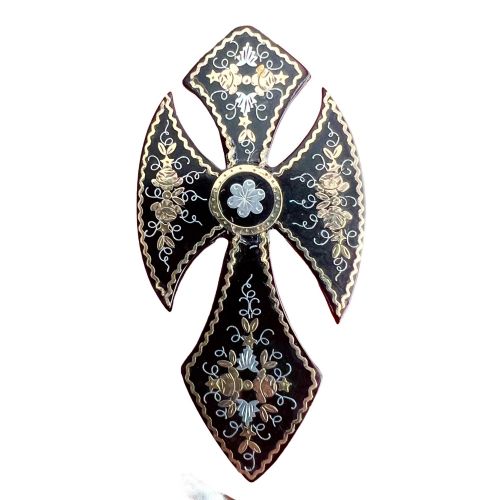


Victorian Gold Cross Pendant
These Victorian gold cross pendant pieces are devotional and decorative ornaments in gold, enamel, and stone, prized for their intricate nineteenth-century craftsmanship.
Victorian Gold Cross Pendant
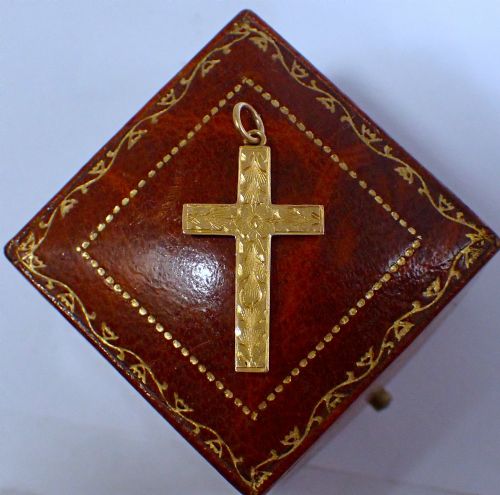
A victorian gold cross pendant represents a devotional form that survived through the nineteenth century primarily as a personal adornment, merging religious symbolism with sentimental jewellery design. Buyers searching for a victorian gold cross pendant encounter various iterations, from plain engraved 9ct yellow gold to substantial pieces set with pearls, turquoise, agate, and diamonds.
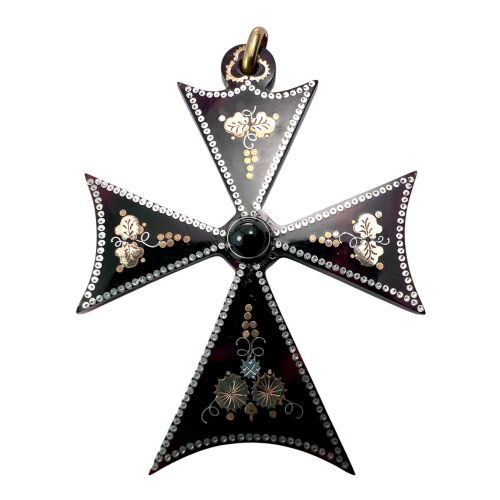
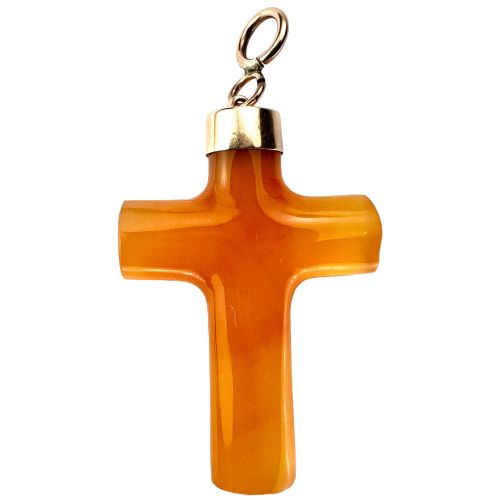
Alongside standard gold iterations, the selection encompasses pieces incorporating silver inlay, tortoiseshell pique work, and vibrant blue enamel. Occasional variants include chalcedony, amethyst, and onyx centrepieces set within yellow or rose gold frames.
Materials and construction
Goldsmiths of the period utilised varying purities of gold, predominantly 9ct, 15ct, and 18ct, alongside rolled gold and silver overlays. Stones such as turquoise, pearls, diamonds, and carved agates were flush-set or mounted in collet settings upon the gold base.
Surface decoration frequently involved hand engraving, dark blue enamel work, and pique inlay techniques using tortoiseshell and silver. Pieces were fabricated to function flexibly, often incorporating dual fittings to serve as both brooches and pendants.
Some Victorian crosses double as lockets, concealing tiny secret compartments once used to hold locks of hair or miniature portraits.
Evaluating quality
Quality rests upon the depth and crispness of the hand engraving and the security of the stone settings. Pieces featuring intact blue enamel work and well-matched natural pearls or turquoise cabochons stand apart from simpler designs.
The choice of gold carat and the inclusion of gemstones like diamonds or amethyst elevate a piece above standard engraved metal iterations. Superior examples display careful integration of silver inlay or pique work alongside substantial metal weight.
The Victorian Gold Cross Pendant Glossary
- Pendant
- A hanging ornament suspended from a chain, ribbon, or collar. In this category, pendants take the form of crosses and crucifixes.
- Pique
- A technique involving the inlay of tiny gold or silver points and patterns into tortoiseshell or ivory. This method creates geometric or floral surface designs.
- Cabochon
- A gemstone shaped and polished with a smooth, rounded surface rather than faceted edges. Turquoise and agate are frequently cut in this manner.
- Albert Chain
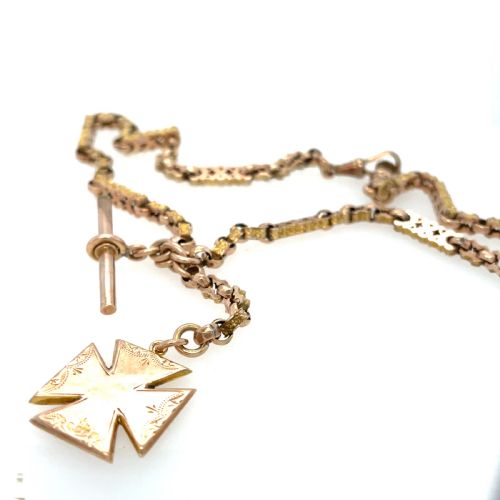
- A pocket watch chain designed to be worn across a waistcoat or attached to a buttonhole. They often incorporate T-bars and fobs alongside charms.
- Rolled Gold
- A material made by fusing a thin sheet of gold to a base metal core under heat and pressure. It offers the appearance of solid gold at a different cost.
Victorian Gold Cross Pendant: Frequently Asked Questions
How do I wear a Victorian cross pendant?
These pendants suspend easily from modern or antique chains, or can be worn pinned to garments if fitted with a brooch mechanism. Many historical pieces were manufactured with dual fittings for this exact versatility.
Pairing a gold cross with a compatible chain allows it to sit near the collarbone as a daily personal ornament.
What gold purities should I expect?
Victorian crosses typically appear in 9ct, 15ct, and 18ct yellow or rose gold, alongside rolled gold variations. British hallmarking conventions of the era often help confirm the specific metal purity.
Lower carat golds offer a harder alloy suitable for daily wear, while higher purities present a richer yellow tone.
Were these pieces purely religious?
While crosses and crucifixes originated from devotional practices, by the Victorian era they served largely as fashionable ornaments and sentimental tokens. Memorial and gift-giving customs meant people wore them to display personal taste alongside faith.
Incorporate one into a collection as an example of nineteenth-century decorative metalwork.
How do I care for enamel and pearls?
Enamel and pearls require gentle handling because they are softer than gemstones and vulnerable to harsh chemicals and ultrasonic cleaning. Wipe them gently with a soft, dry cloth after wearing to preserve the surface.
Store each piece separately in a lined box to prevent scratching against other jewellery.