

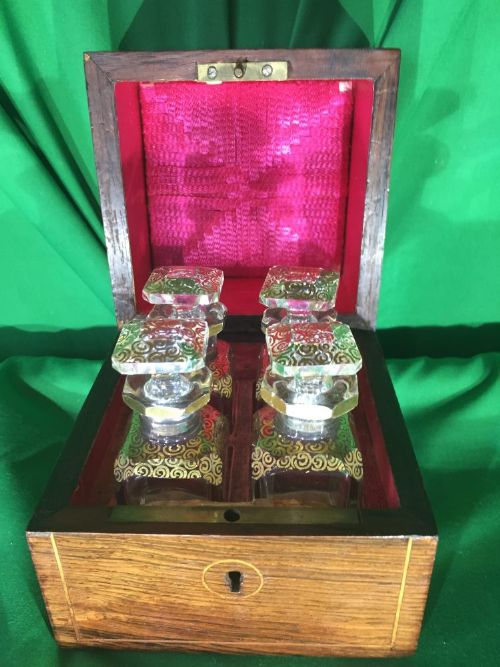


Victorian Glass Perfume Box
A victorian glass perfume box is a fitted cabinet housing scent bottles, offering a glimpse into nineteenth-century dressing habits.
Victorian Glass Perfume Box
A victorian glass perfume box typically takes the form of a hinged casket or vanity box designed to hold multiple scent bottles securely. The listings on this page include formats ranging from rosewood and walnut cased sets to embossed leather dome-topped caskets.
Most examples date from the nineteenth century, spanning periods from 1860 through to the Edwardian era. Alongside fitted scent bottle caskets, buyers frequently encounter related vanity boxes, dressing cases, and jewellery boxes featuring cut glass containers.
The interiors are generally partitioned to cushion delicate glass vessels, often lined in silk or velvet. These containers range from sets of four cologne bottles to intricate combinations incorporating jewellery storage.
Materials and construction
The exterior cases utilise timber foundations such as rosewood, burr walnut, and coromandel, chosen for their rich grain and durability. Metal mounts in brass or ormolu frequently reinforce the corners, hinges, and lockplates.
Internal layouts employ padded silk and velvet linings tailored to fit individual glass vessels precisely. The glass components themselves involve heavy-cut glass techniques, creating faceted surfaces that catch the light within their fitted compartments.
Victorian Glass Perfume Box Retail Price Guide 2026
Typical asking prices for victorian glass perfume box among the pieces listed under this phrase on Sellingantiques today, from the lower quarter to the upper quarter. They describe what is for sale here now, not the wider market.
Some travel sets include tiny secret drawers that require pressing a hidden wooden spring to release.
Distinctions in quality
Quality rests upon the harmony between the exterior housing and the internal glass fittings. Superior pieces display dense hardwoods like coromandel or burr walnut paired with matching, undamaged cut glass bottles.
The refinement of the metal mounts, such as ormolu detailing and tight hinge alignment, separates standard vanity boxes from exceptional caskets. Original silk and velvet linings that remain intact contribute significantly to the integrity of the piece.
The Victorian Glass Perfume Box Glossary
- Ormolu
- Gilt bronze mounts applied to the exterior of wooden caskets for decorative accent and structural reinforcement.
- Coromandel
- A dense, dark exotic timber with contrasting striations used for luxury nineteenth-century boxes.
- Casket
- A small decorative box or chest designed for holding valuables, perfume bottles, or trinkets.
- Vanity box
- A fitted portable case housing personal grooming items, mirrors, and scent bottles.
- Cut glass
- Glass shaped and patterned by abrasive wheel cutting to produce sharp, reflective facets.
Victorian Glass Perfume Box: Frequently Asked Questions
What fits inside a scent casket?
These boxes contain fitted compartments specifically shaped to hold glass perfume bottles, cologne flasks, and occasionally small patch boxes. The interiors are structured to keep fragile vessels secure during travel.
Many examples also incorporate lower drawers or hidden sections for jewellery, transforming the vanity box into a multi-purpose dressing accessory.
How do I date a perfume box?
Dating relies on timber choices, mount styles, and construction techniques characteristic of the nineteenth century. Woods like coromandel and burr walnut appear alongside specific brass hardware designs.
Archival comparisons and stylistic markers such as Napoleon III influences or Victorian proportions help narrow the period of manufacture.
Are the glass bottles usually original?
Many surviving caskets retain their original matched sets of cut glass bottles, shaped precisely to fit the internal velvet or silk partitions. Replacements do occur, making the snug fit of the glass within the lining an important indicator of originality.
How should I clean the velvet interior?
Historic silk and velvet linings require minimal intervention, generally limited to very gentle dry brushing of dust. Moisture can damage fragile nineteenth-century fabrics and corrode the underlying wooden structure.
Professional textile conservation advice should be sought if deeper cleaning is required for delicate interior fabrics.