




Victorian Glass Flacon
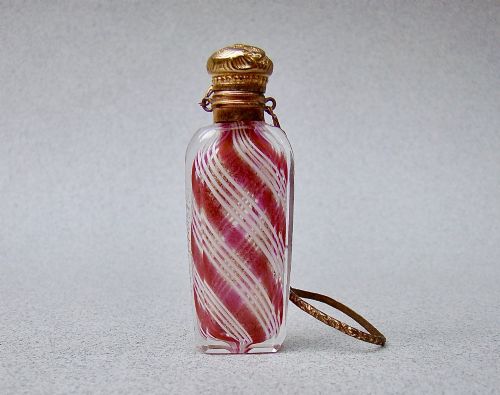
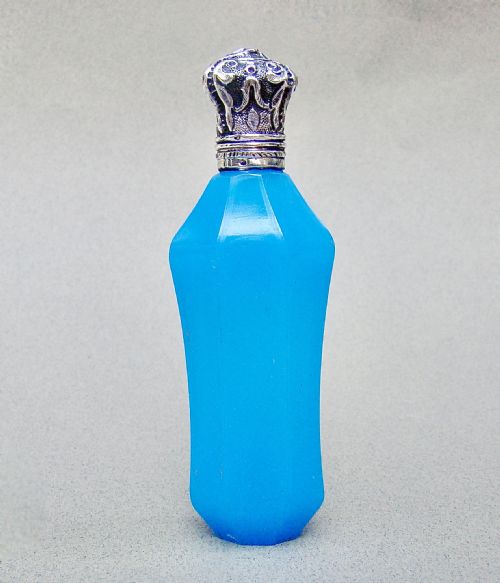
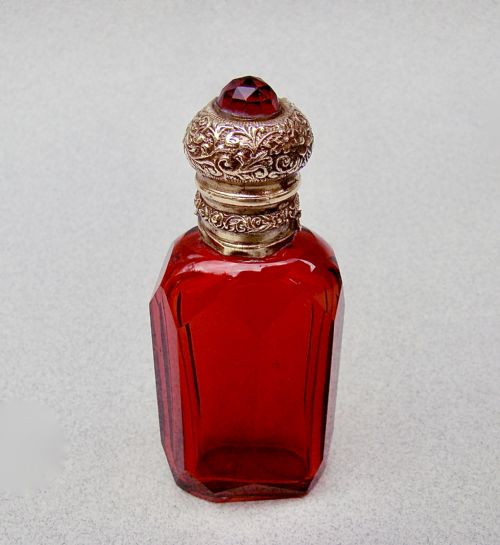
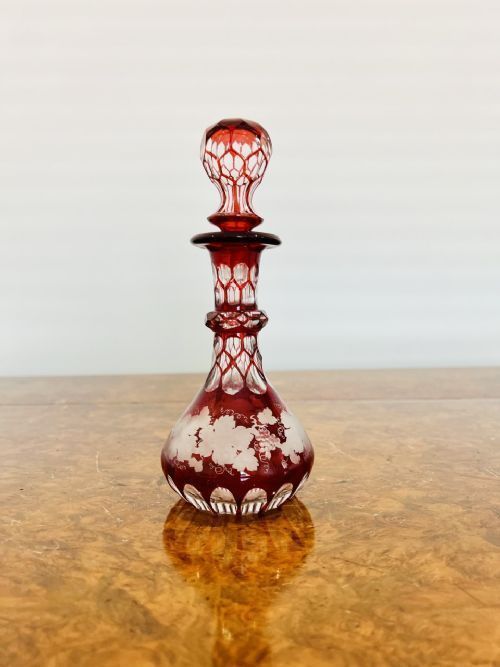
These Victorian glass flacons are portable vessels for scent, combining tinted or cut glass with precious mounts for daily dressing-table use.
Victorian Glass Flacon
When you search for a victorian glass flacon, you encounter portable vessels designed to hold perfume or cologne upon a dressing table. The selections here span the nineteenth century, including English and French examples dating from the middle decades onward.
Most pieces combine blown or moulded glass bodies with fitted metal collars, stoppers, or outer cases. You will frequently meet ruby, cranberry, and blue overlay glass alongside clear cut lead crystal.
Makers housed these small bottles in fitted leather or velvet travelling cases, while others survive as pairs or single tabletop decanters with silver or ormolu mounts.
Materials and construction
Glassmakers utilised techniques such as cased or overlay glass, where a clear or coloured body receives a contrasting exterior layer before being cut back to reveal the tone beneath. Others relied on straightforward mould-blowing or heavy lead crystal blanks subsequently finished on a cutting wheel.
Silversmiths and metalworkers added collars, screw caps, and hinged lids in sterling silver, silver-gilt, and ormolu. These metal mounts were often chased, engraved, or cast to secure the internal glass stopper and protect the delicate neck.
Victorian Glass Flacon Retail Price Guide 2026
Typical asking prices for victorian glass flacon among the pieces listed under this phrase on Sellingantiques today, from the lower quarter to the upper quarter. They describe what is for sale here now, not the wider market.
Victorian ladies carried these tiny glass flacons in velvet reticules to revive themselves from the suffocating tightness of laced corsets.
Distinctions in quality
Quality rests upon the crispness of the glass cutting and the depth of colour in ruby, cranberry, or blue overlay layers. Superior examples display sharp facets, heavy lead crystal weight, and well-proportioned silhouettes without distortion.
The standard of the metalwork also defines the piece, distinguishing heavy chased sterling silver or gilt mounts from simpler plated collars. Complete sets retaining original stoppers and matching fitted leather or velvet cases command greater interest.
The Victorian Glass Flacon Glossary
- Flacon
- A small stoppered bottle designed for perfume or smelling salts. These vessels were essential accessories for nineteenth-century dressing tables and reticules.
- Overlay glass
- A glass vessel formed of two or more distinct layers of different colours. The outer layer is partially cut away to create contrasting patterns.
- Ormolu
- Finely ground high-carat gold applied to a bronze base using a mercury amalgamation process. It provides a rich, durable metallic finish on nineteenth-century mounts.
- Cranberry glass
- A transparent pinkish-red glass coloured by the addition of gold chloride during melting. It was widely utilised for Victorian tableware and scent bottles.
- Cut lead crystal
- Glass containing a high proportion of lead oxide, making it softer to cut and producing high optical refraction. Facets catch the light brilliantly.
Victorian Glass Flacon: Frequently Asked Questions
How do I clean a glass scent bottle?
Fill the vessel with warm soapy water and use a soft bottle brush to remove internal residue. Avoid harsh abrasives that might scratch the delicate glass surface or damage metal collars.
Dry the bottle thoroughly upside down before replacing the stopper. Take care to keep moisture away from any fitted leather or velvet cases.
Are original stoppers important?
Original stoppers greatly contribute to the integrity and usability of a nineteenth-century scent bottle. Finding a matching replacement can prove difficult due to hand-ground necks.
Examine the stopper closely to ensure the ground-glass dabber matches the interior bore of the bottle neck.
How do I tell English from French bottles?
French pieces from the nineteenth century frequently employ vibrant coloured or opaline glass paired with ornate ormolu or heavy silver-gilt mounts. English examples often favour cut lead crystal fitted with sterling silver collars bearing hallmarks.
Examining the metalwork and glass coloration usually reveals the distinct manufacturing traditions of each country.
What is overlay glass?
Overlay glass consists of a base layer of glass covered by one or more distinct coloured layers. Artisans cut through the outer layer on a wheel to expose the contrasting colour beneath.
This technique creates striking geometric or floral patterns across the body of the scent bottle.
Did these bottles travel?
Many nineteenth-century scent bottles were manufactured specifically for travel within fitted leather or velvet cases. These protective boxes kept the delicate glass and silver mounts secure inside luggage.
Single tabletop decanters remained on the dressing table, while smaller miniature versions fitted neatly into reticules.