



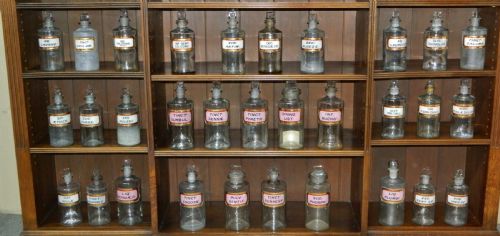


Victorian Glass Apothecary Bottle
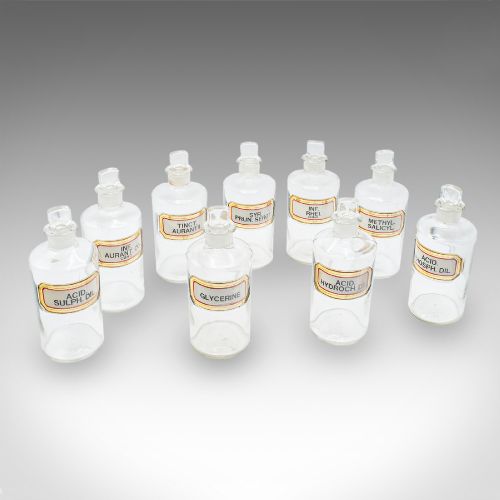
These Victorian glass apothecary bottle examples bring utilitarian history into the modern home through coloured glass and original labels.
Victorian Glass Apothecary Bottle
A victorian glass apothecary bottle serves as a tangible link to nineteenth-century pharmacy and medicine, frequently discovered in sets or as individual containers. The pieces on this page span the nineteenth century and the turn of the twentieth century, originating from British and French workshops.
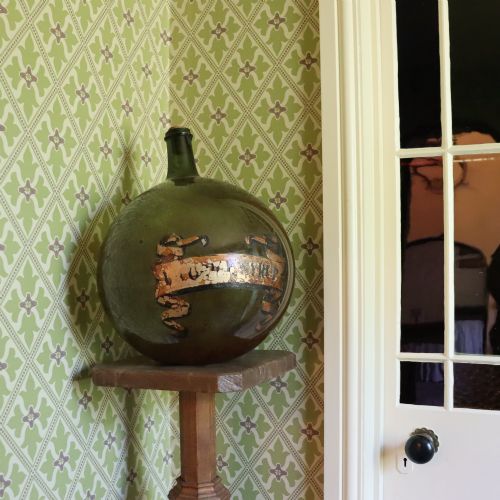
Forms vary from small chemist drug bottles to large display jars with lollipop stoppers and substantial carboys. Buyers also encounter fitted mahogany boxes and miniature campaign chests complete with internal glass vessels.
Materials and construction
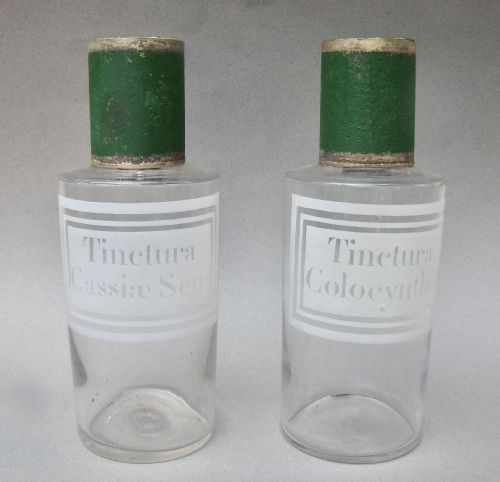
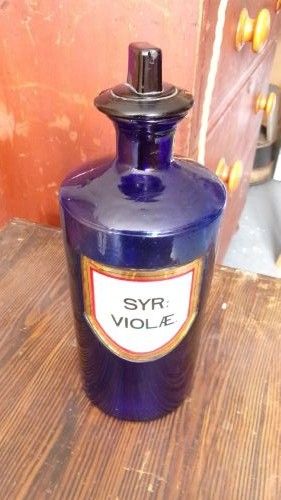
Makers utilised heavy blown glass in distinctive colours including Bristol blue, turquoise, uranium green, and standard deep green. Surface decoration often includes etched designs and paper labels enhanced with gold leaf or paint.
Enclosed storage pieces employ mahogany timber with brass fittings and internal dividers designed to secure fragile glass vessels during transit or daily use.
Victorian Glass Apothecary Bottle Retail Price Guide 2026
Typical asking prices for victorian glass apothecary bottle among the pieces listed under this phrase on Sellingantiques today, from the lower quarter to the upper quarter. They describe what is for sale here now, not the wider market.
Some nineteenth-century apothecary jars glow an unexpected neon green in the dark because their glass contains trace amounts of uranium.
Assessing quality and character
Quality rests upon the preservation of original stoppers, intact paper labels, and the clarity of the blown glass. Matching sets and complete fitted box collections command greater interest than solitary containers lacking their companions.
The sophistication of the glass colour, such as deep cobalt or vibrant turquoise, alongside undamaged etched surfaces, distinguishes standard utility ware from display-grade pharmacy pieces.
The Victorian Glass Apothecary Bottle Glossary
- Carboy
- A large globular glass bottle used in laboratories and pharmacies for holding liquids. These vessels often feature heavy blown construction and substantial capacity.
- Lollipop stopper
- A flat, circular glass closure shaped like a confectionery lollipop, designed to seal chemist bottles securely. They are specific to nineteenth-century pharmaceutical glassware.
- Uranium glass
- Glass coloured with uranium oxide that glows vibrant green under ultraviolet light. It appears in small nineteenth-century apothecary jars.
- Campaign box
- A portable wooden chest fitted with brass hardware, designed for travel. These boxes house fitted compartments for small glass medicine bottles.
- Bristol blue
- A deep cobalt-blue glass historically produced in the Bristol region. Apothecary bottles in this colour were used to protect light-sensitive contents.
Victorian Glass Apothecary Bottle: Frequently Asked Questions
What did apothecary bottles hold?
These glass vessels contained dried drugs, chemical powders, liquid medicines, and herbal extracts used by nineteenth-century chemists and doctors.
Different sizes held everything from bulk shop supplies to individual patient doses.
How do I clean old glass bottles?
Wash them gently with warm water and mild soap, avoiding harsh abrasive brushes that might damage aged interior residue or exterior etchings.
Paper labels must be kept completely dry to prevent disintegration.
Are stoppers usually original?
Many bottles retain their matching blown glass stoppers, though replacements are common due to breakage over decades of handling.
Inspect the ground glass neck and stopper fitting to confirm they match in wear and manufacture.
How should I display apothecary bottles?
Place coloured glass bottles near natural light sources to highlight the rich tones of Bristol blue or turquoise metal oxides.
Keep wooden apothecary boxes away from direct sunlight to protect the mahogany finish and delicate paper labels.