

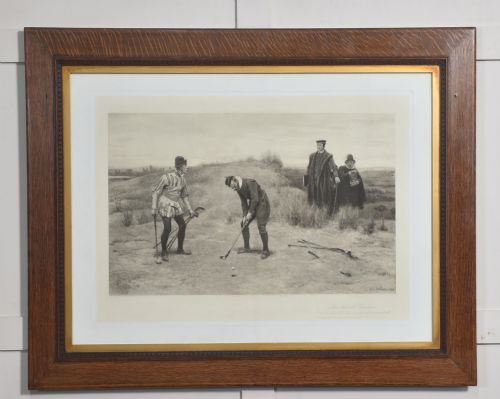


Victorian Genre Scene Print
These Victorian genre scene print works capture domestic narratives and everyday life through nineteenth-century engravings, lithographs, and chrystoleums framed for display.
Victorian Genre Scene Print
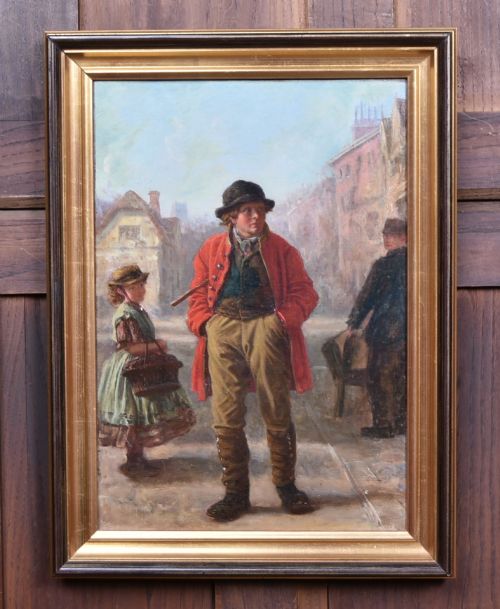
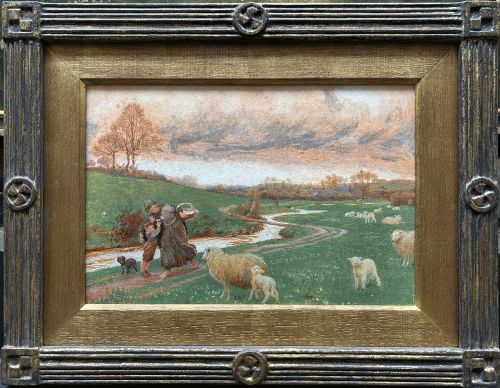
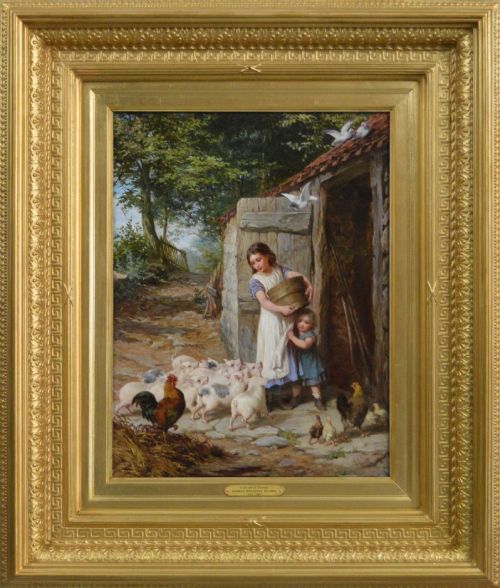
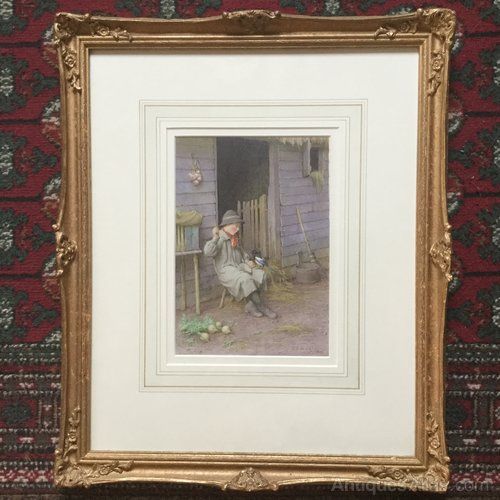
A victorian genre scene print presents narrative moments from everyday life, ranging from idyllic childhood scenes to courtships and continental views. These works capture nineteenth-century social values and domestic pastimes through popular artistic mediums of the era.
The selections available here span framed engravings, mezzotints, and lithographs alongside distinctive chrystoleums. These pieces frequently arrive in period giltwood or gesso frames that complement the scale of the artwork.
Makers and artists represented across these listings include George Augustus Holmes, Frederick Walker, J. C. Dollman, Charles Edward Wilson, Thomas G Appleton, Edward Stodart, and Schweninger. Works range from mid-nineteenth century productions to pieces dated around eighteen seventy, eighteen ninety-six, and nineteen hundred.
Materials and techniques
The underlying imagery relies on paper substrates printed via engraving, lithography, or mezzotint techniques. These methods allowed popular narrative paintings to be reproduced in multiple impressions for domestic interiors.
Chrystoleums involve a specialised process where a coloured print is applied to convex glass, rendered transparent with oil paints, and backed to create a layered, luminous depth. This technique produces a distinct porcelain-like finish unique to nineteenth-century decorative arts.
Frames utilise wood finished with gold leaf, gesso, and giltwood. These protective surrounds often feature moulded ornamentation suited to Victorian display standards.
Victorian Genre Scene Print Retail Price Guide 2026
Typical asking prices for victorian genre scene print among the pieces listed under this phrase on Sellingantiques today, from the lower quarter to the upper quarter. They describe what is for sale here now, not the wider market.
Listings combine paper prints, glass chrystoleums, and oil paintings housed within giltwood and gesso frames from the nineteenth century.
Factors of quality
The crispness of the impression dictates the visual strength of printed works like mezzotints and engravings. Early impressions retain finer details in the lines and tones, whereas later pulls can appear soft.
The preservation of glass and painted layers distinguishes superior chrystoleums. Intact convex glass combined with careful hand-colouring maintains the illusion of depth without disruption from fading or flaking.
The originality and condition of the frame contribute significantly to the piece. Period giltwood and gesso frames that retain their original gilding enhance the historical integrity of the artwork.
George Augustus Holmes·Frederick Walker·J. C. Dollman·Charles Edward Wilson·Thomas G Appleton·Edward Stodart·Schweninger
The Victorian Genre Scene Print Glossary
- Chrystoleum
- A nineteenth-century technique involving a hand-coloured print mounted face down on convex glass, made translucent with oil, and painted behind. This process creates a dimensional, luminous image.
- Mezzotint
- A printmaking process where the copper plate is roughened to produce dark tones, allowing for subtle gradations of light and shade. It was widely utilised for reproducing oil paintings.
- Engraving
- A technique where an artist cuts lines directly into a metal plate using a burin to hold ink for printing. It produces sharp, precise lines well suited for narrative detail.
- Lithograph
- A planographic printing method based on the repulsion of oil and water, enabling the faithful reproduction of tonal drawings and paintings. It became prominent during the nineteenth century.
- Giltwood
- Wood carved and coated with gold leaf or metallic powder to imitate solid gold. It forms the primary decorative surface for many Victorian picture frames.
Victorian Genre Scene Print: Frequently Asked Questions
What is a chrystoleum?
A chrystoleum is a convex glass picture created by adhering a paper print face down, removing the paper backing, and hand-painting the remaining transparent layer with oils.
This intricate Victorian method gives the image a luminous, dimensional quality that resembles an oil painting under curved glass.
How were these prints framed?
These works are typically housed in period wooden frames finished with gesso, gold leaf, or giltwood mouldings. The ornate surrounds reflect Victorian interior tastes.
The weight and composition of these frames help protect the delicate paper or glass components within.
What subjects do genre scenes show?
Genre scenes depict moments from everyday life, including domestic interactions, rural childhoods, courtships, and continental street views. They offer a window into nineteenth-century social values.
Artists often used these narrative compositions to tell moral or sentimental stories that resonated with Victorian households.
How do I care for a chrystoleum?
Chrystoleums require stable indoor environments away from direct sunlight to prevent the underlying oils and colours from fading. Dust the glass gently with a dry, soft cloth.
Avoid moisture or liquid cleaners entirely, as dampness can seep beneath the glass and damage the fragile painted layers.