

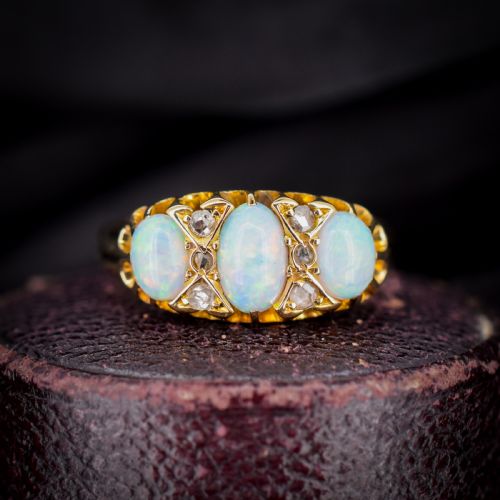
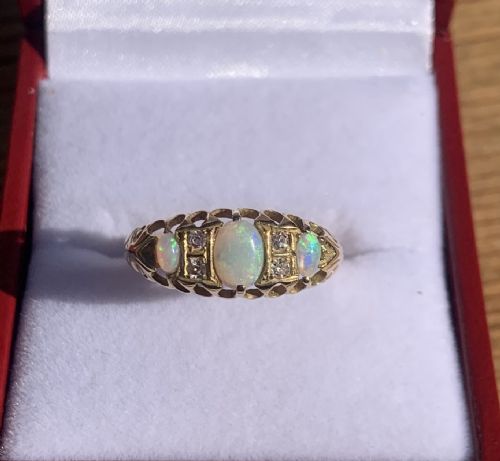


Victorian Gemstone Trilogy Ring
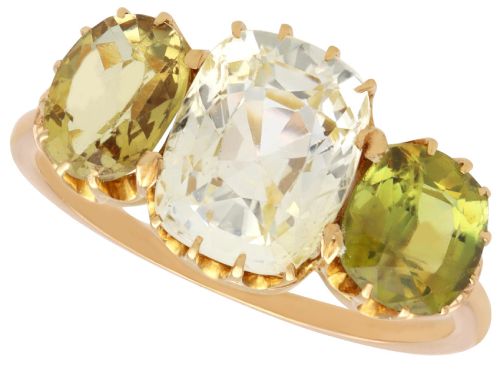
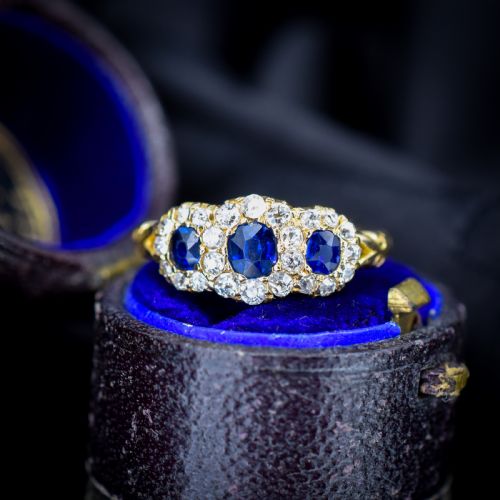
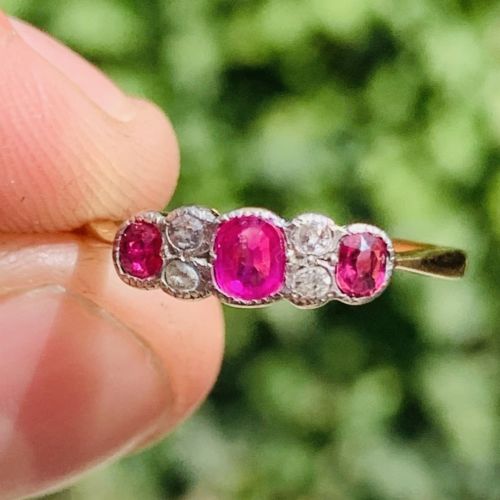
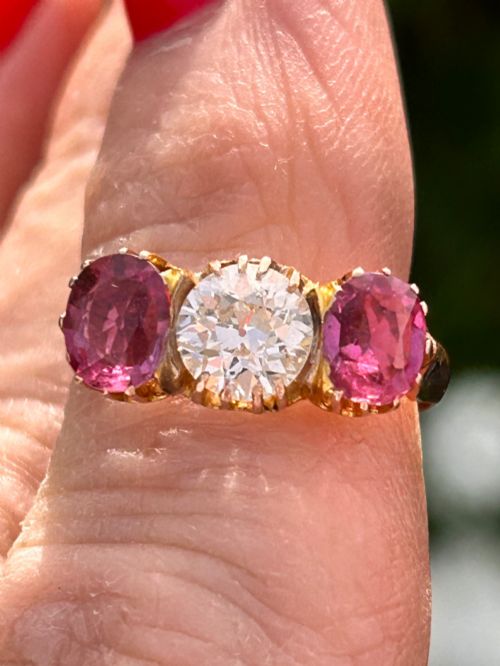
These Victorian gemstone trilogy rings bring together three stones in gold mountings, offering a distinct nineteenth-century design that balances symbolism and presence on the hand.
Victorian Gemstone Trilogy Ring
The most common combinations pair diamonds with rubies, sapphires or opals, mounted principally in yellow gold or platinum. Variants range from traditional claw settings to starburst gypsy designs and carved half hoop arrangements.
Makers of this era worked within defined stylistic parameters, yet individual pieces show notable variation in stone weight, shoulder detail and the specific shade of the central gems.
Materials and construction
Goldsmiths utilised eighteen carat yellow gold and nine carat gold for the bands and mounts, frequently combining gold with platinum in later nineteenth-century pieces to secure old cut diamonds. Stones were hand-set into claw, flush gypsy or cluster configurations designed to maximise light entry.
Gemstones such as rubies, blue sapphires, yellow sapphires, chrysoberyl and natural opals were selected for colour saturation and cut by hand, resulting in subtle irregularities characteristic of the period.
Listings span the nineteenth century to the twentieth, featuring eighteen carat yellow gold, nine carat gold, platinum, diamonds, rubies, sapphires and opals.
Distinctions in craftsmanship
Quality in a victorian gemstone trilogy ring rests upon the proportional balance of the three stones and the integrity of the setting work. Heavier carat weights in the central gems and crispness in the carved shank details elevate the standing of a piece.
The condition of the principal stones, particularly the absence of surface wear on softer materials like opals, distinguishes superior survivals from those showing heavy age.
The Victorian Gemstone Trilogy Ring Glossary
- Trilogy ring
- A ring set with three distinct stones in a horizontal row. This configuration is sometimes called a three-stone ring.
- Old cut diamond
- A diamond cut by hand during the nineteenth century, featuring a small table, high crown and open culet. These stones display a softer candlelit sparkle compared to modern brilliant cuts.
- Gypsy ring
- A style where stones are flush-set directly into the thick metal band. This mounting technique provides a smooth profile.
- Half hoop ring
- A band featuring a row of stones spanning the upper half of the hoop. They often incorporate carved scrollwork along the gallery.
- Chrysoberyl
- A mineral species prized for its clarity and yellowish-green colour. It appears alongside sapphires and rubies in nineteenth-century multi-stone settings.
Victorian Gemstone Trilogy Ring: Frequently Asked Questions
How do I date a Victorian ring?
Dating relies on a combination of hallmarks, metal purity standards, gemstone cuts and setting styles. Old cut diamonds and hand-carved gold shanks point towards nineteenth-century production.
Assay office marks and registration numbers stamped inside the band provide more precise chronological markers.
Can I wear an opal ring daily?
Opals possess a lower hardness rating than diamonds or sapphires, requiring greater care during regular wear. Protective settings and removal during manual tasks help preserve the stone.
Checking the security of the claws periodically ensures the opal remains firmly anchored in the gold mount.
What is an old cut diamond?
An old cut diamond is shaped by hand rather than by precision machinery. These stones possess smaller tables and deeper pavilions than modern brilliant cuts.
They catch ambient light in a distinct manner, casting broader flashes suited to antique gold settings.