



Victorian Gemstone Band Ring
A victorian gemstone band ring brings together coloured stones and high carat gold in forms shaped by the nineteenth century.
Victorian Gemstone Band Ring
A victorian gemstone band ring is typically a slender hoop set with precious or semi-precious stones, designed to sit flush or close to the finger. These pieces emerge chiefly from the nineteenth century into the early twentieth, encompassing periods from the 1880s onward.
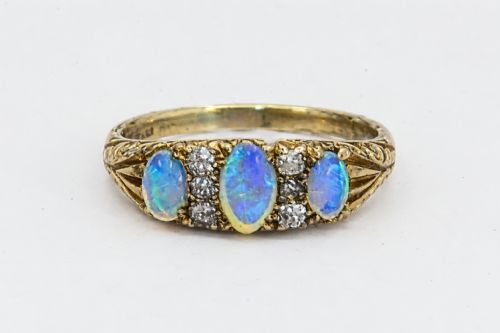
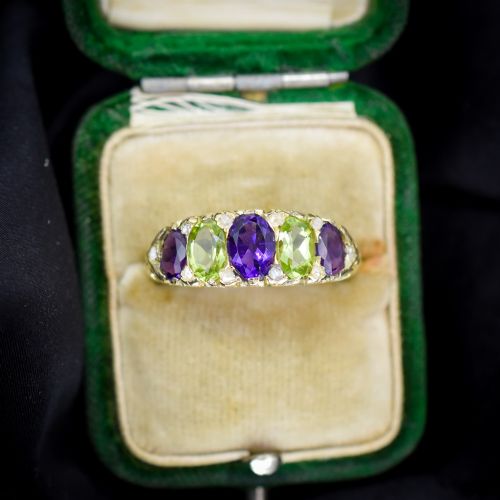
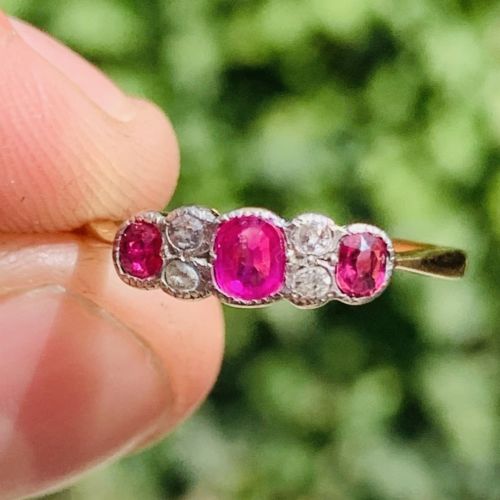
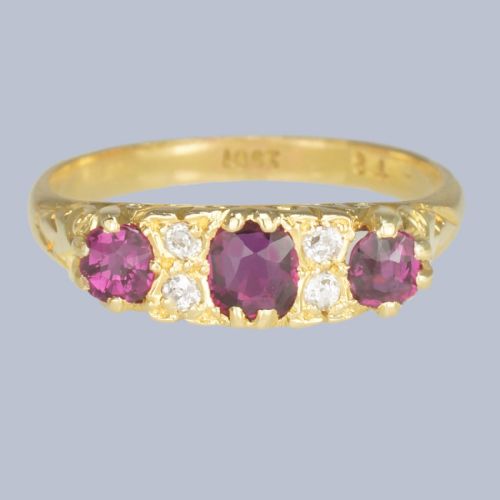
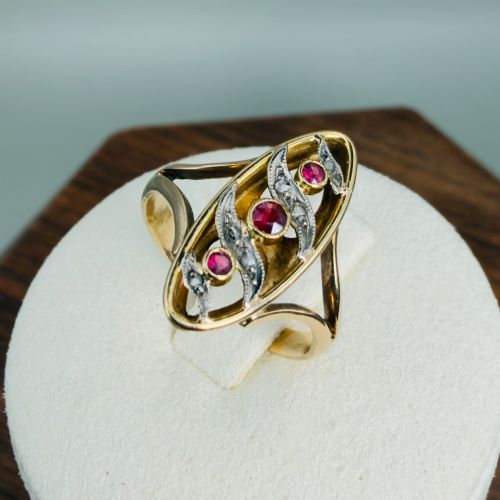
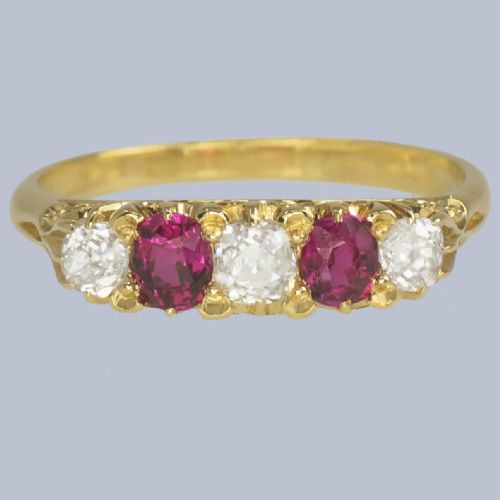
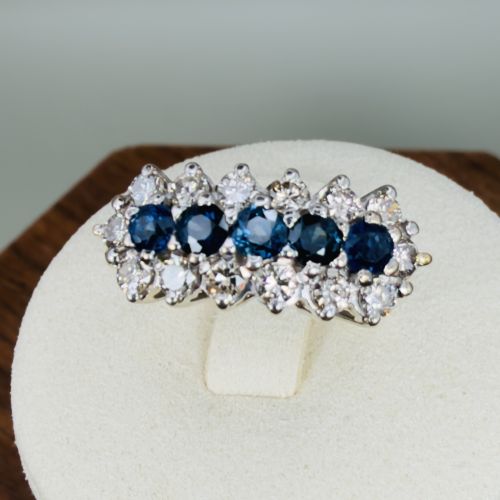
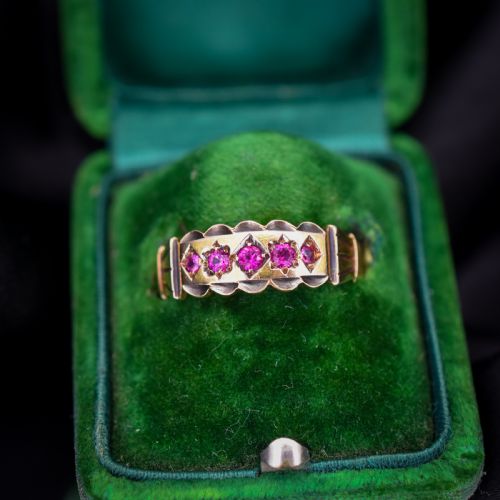
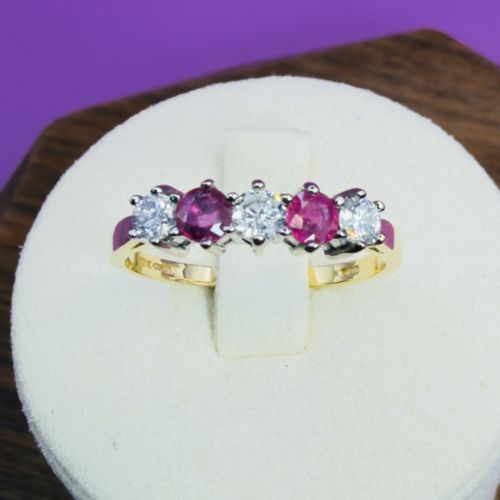
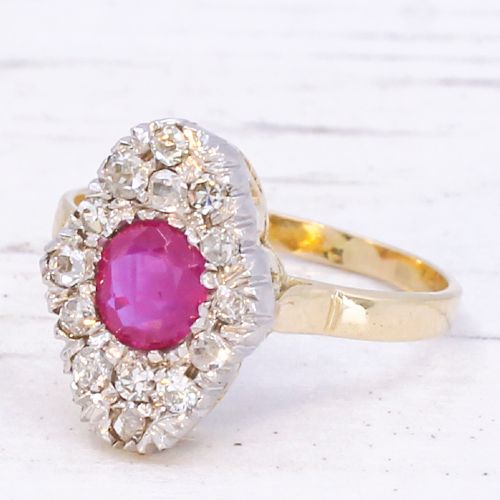
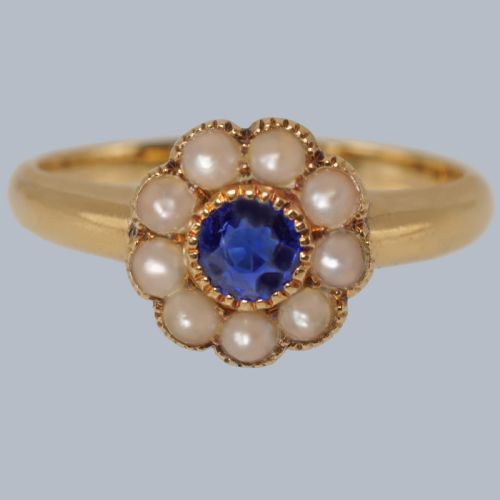
The forms found in this selection range from simple five-stone rows and gypsy settings to starbursts, navettes, and boat shapes. Many incorporate combinations of diamonds alongside rubies, sapphires, turquoise, pearls, or opals.
Most examples hail from the Victorian and Edwardian eras, though related styles extend into the twentieth century. Buyers encounter everything from delicate double rows to substantial gold bands carrying provincial assay office marks.
Materials and construction
Goldsmiths worked predominantly in 18ct yellow gold, alongside 15ct, 12ct, and 9ct variations, often pairing high carat gold with platinum settings for diamonds. Stones were hand-cut, utilising old mine cuts and old European cuts that display distinctive broad facets.
Gemstones such as rubies, sapphires, turquoise, and opals were secured using traditional claw, flush, or starburst settings hammered directly into the metal. Many rings carry British hallmarks indicating assay offices in cities like Birmingham, Chester, and London.
Gemstones recorded in the inventory include Burmese rubies, sapphires, demantoid garnets, opals, and split pearls.
Evaluating quality
Quality rests in the proportional balance of the stones and the crispness of the metalwork, where hand-engraved starbursts and secure setting work distinguish finer examples from standard production. The selection and matching of the gemstones, particularly in multi-stone layouts, dictate the visual harmony.
Subtleties in the weight and thickness of the gold band, alongside clear hallmarks proving date and origin, separate standard workshop output from exceptional pieces produced by skilled makers.
The Victorian Gemstone Band Ring Glossary
- Boat ring
- A ring featuring a navette or boat-shaped setting that curves gently across the finger, typical of late nineteenth-century designs.
- Gypsy ring
- A style where stones are flush-set directly into a heavy tapered gold band, popular during the late Victorian period.
- Old cut diamond
- A hand-faceted diamond cut before modern machinery, characterised by a smaller table, higher crown, and open culet.
- Navette
- A marquise or boat-shaped cluster form resembling the hull of a little ship, often elongated along the finger.
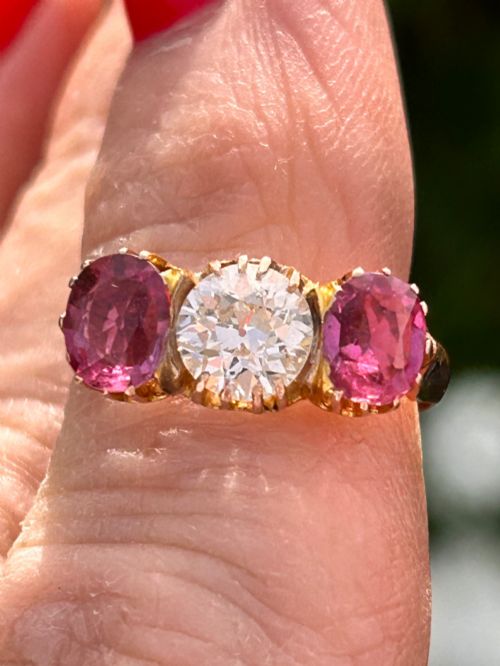
- Trilogy ring
- A three-stone ring traditionally symbolising the past, present, and future, frequently pairing diamonds with rubies or sapphires.
Victorian Gemstone Band Ring: Frequently Asked Questions
How were these rings worn originally?
Victorians wore these bands as everyday jewellery, friendship tokens, or engagement rings, often stacking them alongside wedding bands. Their low profile made them practical for daily wear.
Multi-stone gemstone rings were frequently chosen to incorporate meaningful stones, birthstones, or sentimental combinations like pearls and turquoise.
How do I care for antique gemstone rings?
These antique rings require gentle handling due to the age of the settings and softer gems like opals, turquoises, or pearls. Professional cleaning and regular checks of the claws help secure the stones.
Avoid harsh ultrasonic cleaners or chemical dips, particularly with organic gems and turquoise that can absorb liquids and discolour.
How can I tell the period of a ring?
Dating relies on hallmarks, gold carat standards, and structural styles such as boat settings or gypsy mounts. British hallmarks often supply specific assay office marks and date letters.
Stylistic shifts, from heavy late Victorian gold work to lighter Edwardian platinum-topped designs, provide further clues to the exact decade of manufacture.