



Victorian Gaming Pieces
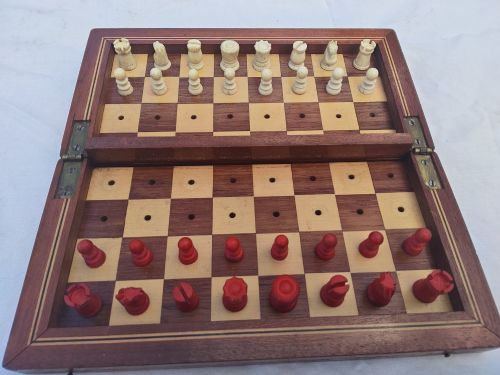
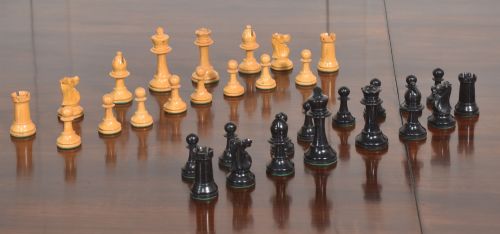
These victorian gaming pieces bring domestic parlour life into focus, offering everything from chess sets to compendiums for the collector.
Victorian Gaming Pieces
Victorian gaming pieces encompass chess sets, dominoes, and games counters produced during the nineteenth and early twentieth centuries. These objects served as the centrepiece of parlour entertainment in middle-class and elite British homes.
The most common forms on this page are chess sets adhering to the Staunton pattern, alongside travelling sets and games compendiums. Materials range from bone and felt to heavier woods such as boxwood, ebony, and rosewood.
Examples cross from the Victorian era into the Edwardian period, capturing a shift in manufacturing and design standards. Pieces frequently exhibit traditional patterns associated with prominent makers of the period.
Materials and construction
Turned boxwood and ebonised wood form the foundation of many sets, providing the contrasting light and dark sides essential for play. Ebony and rosewood also appear frequently for the darker pieces, paired with lighter boxwood or bone.
Victorian Gaming Pieces Retail Price Guide 2026
Typical asking prices for victorian gaming pieces among the pieces listed under this phrase on Sellingantiques today, from the lower quarter to the upper quarter. They describe what is for sale here now, not the wider market.
Listings feature boxwood, ebony, mahogany, bone, and brass across nineteenth-century and Edwardian chess sets and compendiums.
Assessing quality and craftsmanship
Quality rests in the precision of the turning and the consistency of the pattern across every piece in a set. Finer examples display crisp detail in the carving of knights and kings, alongside balanced proportions and uniform weighting.
Maker attribution elevates a set, particularly pieces bearing stamps or labels from established firms. The integrity of the materials, from unblemished boxwood to finely matched ebony, dictates the standing of an antique set.
Jaques·F H Ayres·British Chess Company
The Victorian Gaming Pieces Glossary
- Staunton pattern
- The standard design for chess pieces introduced in the mid-nineteenth century, defined by architectural forms and a crowned rook.
- Games compendium
- A boxed collection of multiple parlour games and boards, housed in mahogany or rosewood cases with brass fittings.
- Whittington pattern
- A specific nineteenth-century chess set design variant, often associated with bone and mahogany travelling sets.
- Ebonised wood
- Timber treated with a dark finish to imitate ebony, commonly utilised for the darker side in chess sets.
- Games counters
- Flat bone or wooden discs used for keeping score or playing backgammon, occasionally produced in oversized formats.
Victorian Gaming Pieces: Frequently Asked Questions
How do I date a chess set?
Dating relies on stylistic shifts, material choices, and any maker marks present on the box or pieces. Staunton designs generally point to the mid-nineteenth century onwards.
Compares against known production periods of makers like Jaques or Ayres help narrow the window of origin.
What is a games compendium?
A compendium is a multi-game box housing boards, dice, counters, and chess pieces within a fitted wooden case. They provided portable entertainment for Victorian households.
Materials usually include mahogany or rosewood with brass hinges and locks.
Why are some sets weighted?
Weighting inside the base of chess pieces improves balance and prevents them from tipping during active play. Lead inserts are typically added beneath a felt pad.
Unweighted sets tend to be older or designed for travelling purposes.
Are bone sets durable?
Bone pieces withstand regular handling but remain vulnerable to sharp impacts and excessive moisture. Natural ageing often produces a warm patina over the surface.
Storage in dry conditions preserves the original ivory-like tone.