




Victorian Gaming Accessories
Victorian gaming accessories bring the rich craft of nineteenth-century leisure into modern rooms through beautifully made boxes, boards, and scoreboards.
Victorian Gaming Accessories
Victorian gaming accessories encompass a diverse range of objects designed for nineteenth-century parlour games, card play, and billiard rooms. When searching for victorian gaming accessories, buyers encounter everything from portable card boxes to substantial wall-mounted scoreboards.
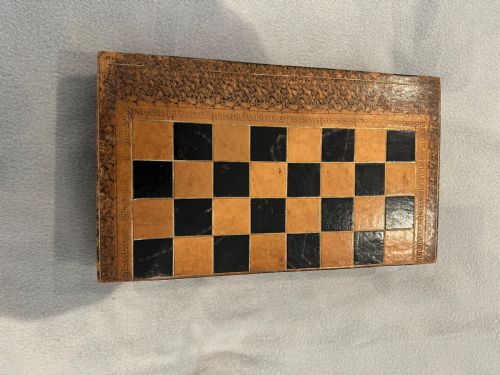
The selection on this page spans the Victorian, Georgian, and Edwardian periods, reflecting the enduring social pastimes of these eras. Forms include leather-bound faux book boards, mahogany cribbage boxes, and porcelain whist counters housed in original leather cases.
Materials range from polished mahogany and oak to sterling silver and brass, showing how domestic entertainment was equipped with durable and decorative items. These pieces bridge the gap between functional equipment and fine parlour furnishings.
How they were made
Maker craftsmanship relies heavily on traditional cabinet woods such as mahogany and oak, often shaped into fitted boxes, scoreboards, and folding boards. Joinery and housing are executed with the precision expected of nineteenth-century furniture makers.
Metal components introduce brass, sterling silver, and silver plate for hinges, markers, and dedicated cases like shooting peg boxes. Leather binding and tooling provide durable outer surfaces for items designed to mimic books or protect delicate counters.
Victorian Gaming Accessories Retail Price Guide 2026
Typical asking prices for victorian gaming accessories among the pieces listed under this phrase on Sellingantiques today, from the lower quarter to the upper quarter. They describe what is for sale here now, not the wider market.
Some game boards were cleverly disguised as leather-bound books so they could sit quietly on a parlour shelf among real literature.
What varies in quality
Quality depends upon the integrity of the materials and the sophistication of the construction, distinguishing standard utility items from elite parlour pieces. Finely figured timbers like mahogany and substantial oak framing indicate superior workshop origins.
Original elements such as matching porcelain counters, intact leather boxes, and maker signatures elevate the standing of an accessory. The precision of sliding markers on scoreboards and the tightness of box joints demonstrate the maker's original skill.
Orme and Sons Manchester·Thurston and Co of London·Burroughes and Watts
The Victorian Gaming Accessories Glossary
- Cribbage box
- A specialised container designed to hold playing cards and cribbage pegs. These are typically fashioned from timbers such as mahogany.
- Scoreboard
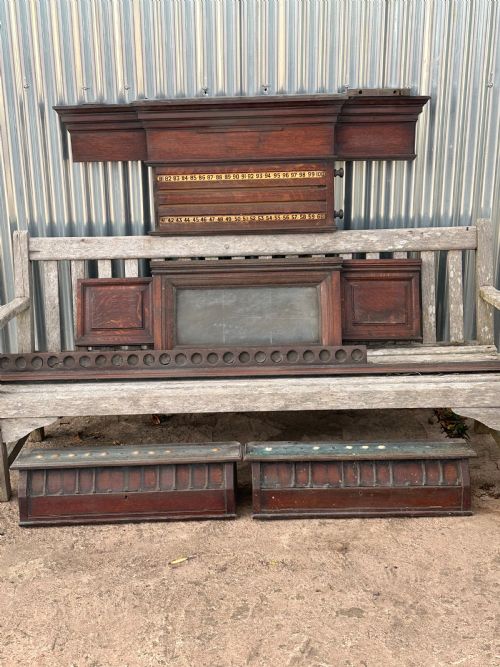
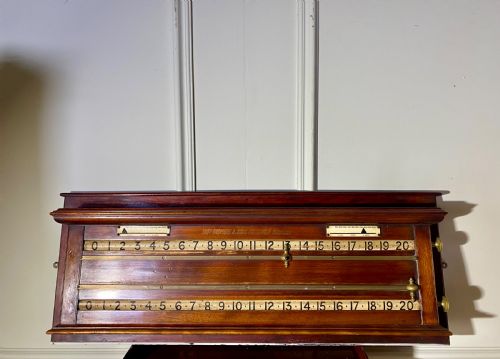
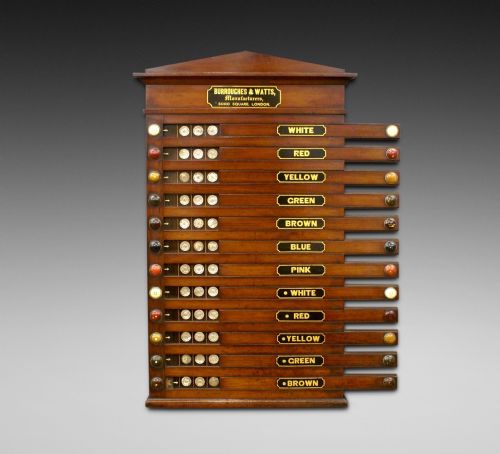
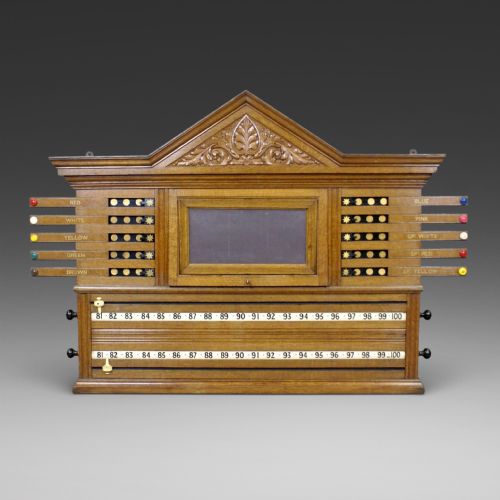
- A wall-mounted or freestanding panel with sliding markers used to tally points in cue sports. Examples from this tradition often feature oak or mahogany construction.
- Faux book board
- A folding board constructed to resemble a leather-bound volume when closed. This design allowed games equipment to blend discreetly into a Victorian library shelf.
Victorian Gaming Accessories: Frequently Asked Questions
What items count as gaming accessories?
These pieces include items used for parlour pastimes, card games, and billiard rooms, ranging from small card boxes to large scoreboards.
They represent the social entertainment habits of the nineteenth century and combine practical utility with decorative cabinet work.
How were scoreboards used?
Scoreboards were mounted on walls or used in billiard rooms to track points during snooker, billiards, and life pool matches.
Players moved brass or wooden markers along numbered tracks to record the score as the game progressed.
How do I care for wooden game pieces?
Keep wooden boxes and scoreboards away from direct sunlight and sudden temperature shifts to protect the timber and leather bindings.
Regular dusting with a dry cloth is generally sufficient to maintain the finish of mahogany and oak surfaces.
Are these items from the Victorian period?
The listings span the Victorian era alongside related Georgian and Edwardian pieces, reflecting continuous styles in domestic entertainment.
Dates are supported by materials and construction methods typical of the nineteenth century.