



Victorian Game Pieces
Victorian game pieces are the tactile instruments of nineteenth-century parlour entertainment, offering collectors fine craftsmanship in boxwood, bone and ebony.
Victorian Game Pieces
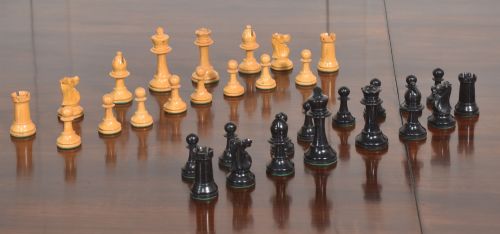
Victorian game pieces encompass chess sets, dominoes, draughts, games counters and compendiums originating from the nineteenth century and the Edwardian era. A buyer exploring this category meets chess sets most frequently, often rendered in boxwood and ebony alongside bone and rosewood.
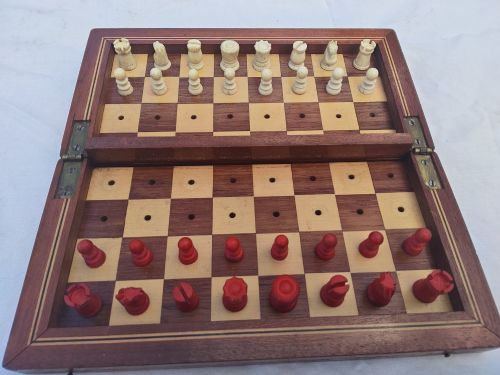
The objects span formal Staunton patterns and regional variations such as Whittington, St George and Calvert designs. Miniature formats and travelling sets also appear, reflecting the period's appetite for portable leisure.
Compositions range from single sets of counters to multifaceted games compendiums housing various pastimes in fitted wooden boxes. The overarching chronology covers the nineteenth century, late Victorian period and around nineteen hundred.
Materials and construction
Turned wood forms the backbone of these objects, utilising dense timbers like boxwood, ebony, mahogany and rosewood. Ebonised wood and weighted components provide the necessary heft and contrast for practical play.
Bone serves as a primary medium for dominoes and specific chess sets, shaped through carving and turning techniques. Felt lining frequently appears on the underside of pieces to protect boards during use.
Victorian Game Pieces Retail Price Guide 2026
Typical asking prices for victorian game pieces among the pieces listed under this phrase on Sellingantiques today, from the lower quarter to the upper quarter. They describe what is for sale here now, not the wider market.
Oversized backgammon counters from nineteen hundred provide an amusingly chunky grip for frantic parlour board sessions.
Judging quality
Distinctions in quality rest on the precision of the turning and the crispness of carved details, particularly in knights' heads on chess sets and the uniformity of counter edges. Maker attribution significantly elevates a piece, with workshops like Jaques, F. H. Ayres and the British Chess Company demonstrating superior execution.
Material selection and grading also dictate value, where evenly grained boxwood paired with deep black ebony or rich rosewood outclasses lesser timbers. The presence of original fitted boxes, weighted bases and complete, matching sets preserves the integrity of the ensemble.
Jaques·British Chess Company·F. H. Ayres·Whitty·Calvert
The Victorian Game Pieces Glossary
- Staunton
- A standardised chess set design introduced in the mid-nineteenth century, characterised by highly recognizable, architectural piece shapes. It remains the standard pattern for tournament play today.
- Compendium
- A boxed collection of multiple games and pastimes housed together in a fitted case. These often include chess, draughts, backgammon and cards.
- Ebonised
- Wood treated with a dark stain or finish to imitate ebony. This technique allowed makers to achieve high-contrast sets using more accessible timber.
- Whittington Pattern
- A distinct regional nineteenth-century chess set style with specific stylistic proportions for pieces like rooks and pawns. Collectors prize these for their historical design variations.
- Calvert Pattern
- An early nineteenth-century chess set style associated with makers producing distinctive, well-turned bone and wood pieces. They feature characteristic proportions particularly visible on the king and queen.
Victorian Game Pieces: Frequently Asked Questions
What are Victorian game pieces?
Victorian game pieces are tactile implements used for board games during the nineteenth century, including chess sets, dominoes and draughts.
They encompass functional playing sets and comprehensive compendiums fashioned from boxwood, bone and ebony.
How were chess sets weighted?
Makers inserted lead weights into the bases of wooden chess pieces during manufacture to improve stability during play.
This weighting provides a satisfying heft that distinguishes finer nineteenth-century sets from lighter, unweighted alternatives.
How do I identify a Staunton set?
Staunton chess sets feature standardised, highly recognizable piece designs with architectural forms like rooks shaped as castles and kings wearing coronets.
This pattern became the universal standard for chess following its introduction in the mid-nineteenth century.
What is a games compendium?
A games compendium is a fitted wooden box containing the equipment for multiple parlour pastimes, such as chess, draughts and backgammon.
These portable chests reflect the nineteenth-century passion for indoor entertainment and travelling leisure.
How should I care for antique wood pieces?
Keep wooden chess sets and games pieces away from direct sunlight and dramatic humidity shifts to prevent timber splitting.
Handle them gently on clean surfaces, avoiding harsh modern cleaning chemicals that strip original polishes.