




Victorian Gallery Wine Table
A victorian gallery wine table brings refined portability and rich timbers into a room, offering a compact surface suited for drinks or display.
Victorian Gallery Wine Table
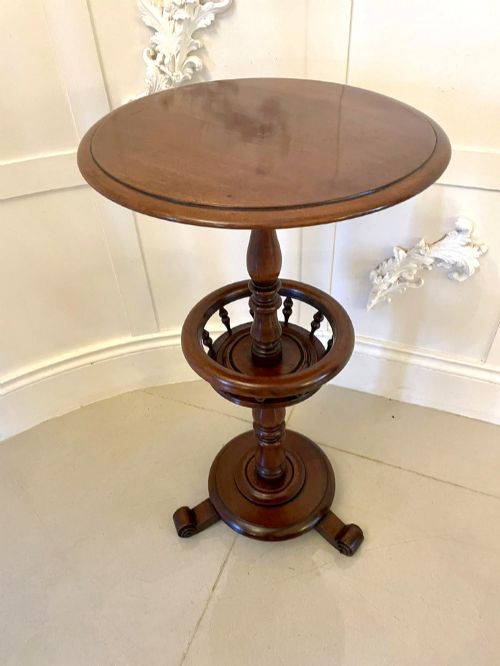
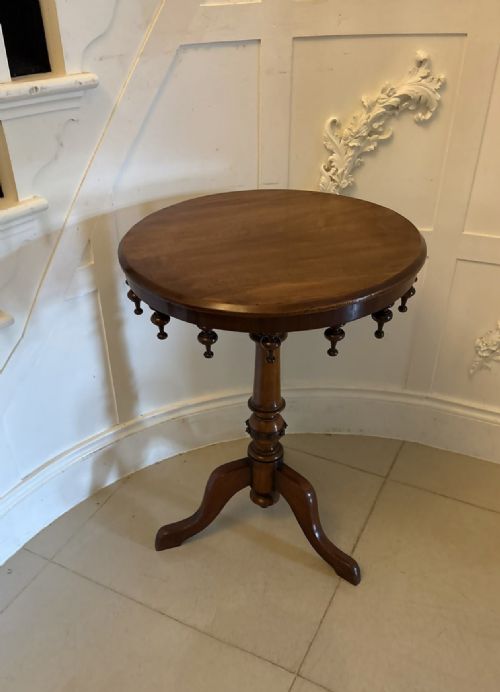
A victorian gallery wine table is a compact occasional piece designed for holding beverages or small items, typically featuring a raised rim or gallery around the edge of the top. These pieces emerge predominantly from the Victorian era and the broader nineteenth century, alongside a few early twentieth-century revival examples.
Originating as practical items for period interiors, these tables function today as versatile side or occasional tables. They bridge the gap between utility and decorative elegance, fitting easily beside seating or in corners where space is at a premium.
How they were made
Cabinet makers utilised dense, durable hardwoods such as mahogany, rosewood, and walnut to construct the main bodies and tops of these tables. These timbers were selected for both their structural stability and their deep, rich grain patterns.
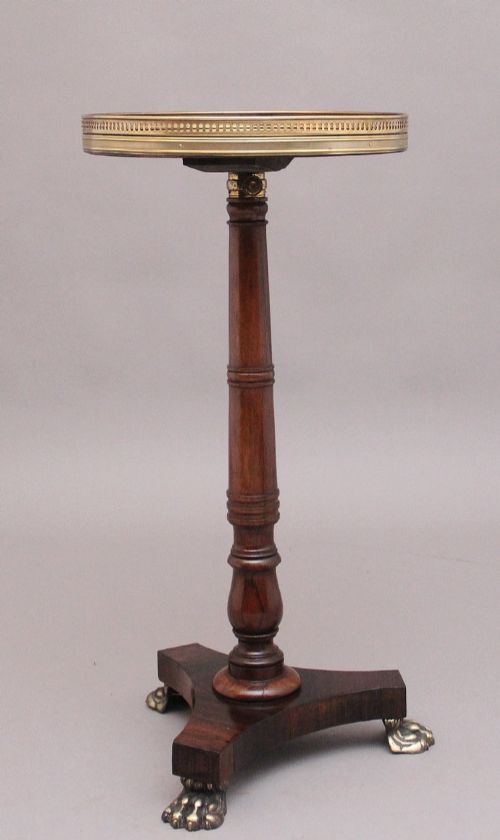
Decorative embellishments often involved sophisticated techniques like marquetry, satinwood highlights, and wood inlay to create striking surface patterns. Metal elements, particularly brass, were incorporated for mechanical components such as telescopic mechanisms or structural supports.
Victorian Gallery Wine Table Retail Price Guide 2026
Typical asking prices for victorian gallery wine table among the pieces listed under this phrase on Sellingantiques today, from the lower quarter to the upper quarter. They describe what is for sale here now, not the wider market.
Some tables include clever mechanisms for holding drinks or adjusting height, proving that nineteenth-century hosts loved gadgets as much as we do.
What varies in quality
The refinement of the timber selection and the precision of the surface decoration distinguish the finer examples from simpler workshops. Tables featuring elaborate marquetry, satinwood details, or specialised mechanisms like revolving tops and brass fittings display a higher degree of craftsmanship.
Structural integrity and the crispness of the turned or carved wooden components dictate the overall standard of the piece. Superior examples maintain balanced proportions and secure joints that withstand daily use while preserving their decorative appeal.
The Victorian Gallery Wine Table Glossary
- Gallery
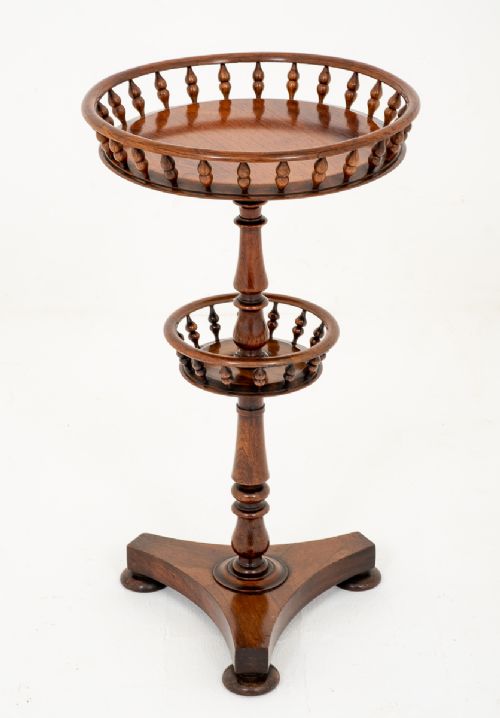
- A raised wooden or brass rim encircling the edge of a table top designed to prevent items from sliding off. This feature is characteristic of many wine and lamp tables.
- Marquetry
- The art of applying pieces of veneer to a structure to form decorative patterns and pictures. It appears on the surfaces of more ornate occasional tables.
- Satinwood
- A durable, yellowish-wood timber used extensively for inlay and contrasting details in fine nineteenth-century cabinet making. It provides a bright visual accent against darker woods like mahogany.
- Telescopic occasional table
- A table equipped with an adjustable mechanism allowing the height of the top to be raised or lowered. This engineering adds practical versatility to the piece.
- Bobbin
- A turned furniture detail shaped like a string of bobbins or spools, found on the structural legs or supports of specific Victorian tables.
Victorian Gallery Wine Table: Frequently Asked Questions
What is a gallery wine table used for?
These tables were originally designed to hold wine bottles, decanters, or glasses near seating areas, with the raised gallery preventing glassware from sliding off.
Today, they function brilliantly as compact lamp tables, bedside stands, or decorative side tables in smaller spaces.
How do I identify a Victorian wine table?
Look for characteristic nineteenth-century timber choices such as rosewood, mahogany, and walnut, often paired with traditional construction methods and period forms.
The presence of a raised wooden or brass gallery and turning styles typical of the era help confirm the period.
Are these tables sturdy enough for daily use?
Yes, constructed from dense hardwoods like mahogany and rosewood, these tables were built for practical domestic utility.
While they serve well for lamps and drinks, their antique nature means they benefit from thoughtful placement away from excessive moisture or extreme temperature changes.
What is the difference between a lamp table and a wine table?
While both terms describe compact occasional tables from the period, wine tables traditionally feature raised edges or galleries to secure bottles and glasses.
Lamp tables often share the same small footprint but may have flat tops better suited for lighting fixtures.