

Victorian French Sofa
A victorian french sofa brings continental curves and nineteenth-century upholstery together for a formal sitting room.
Victorian French Sofa
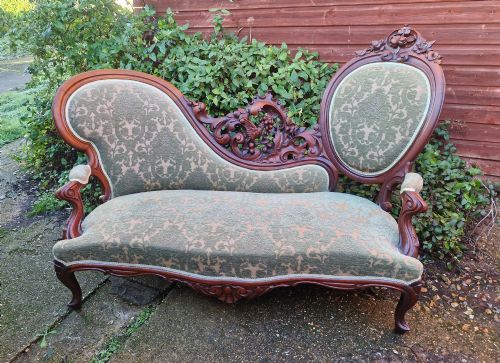
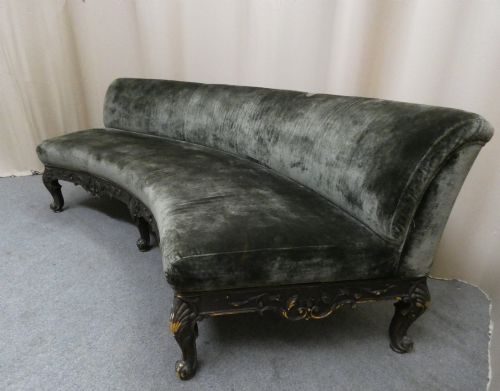
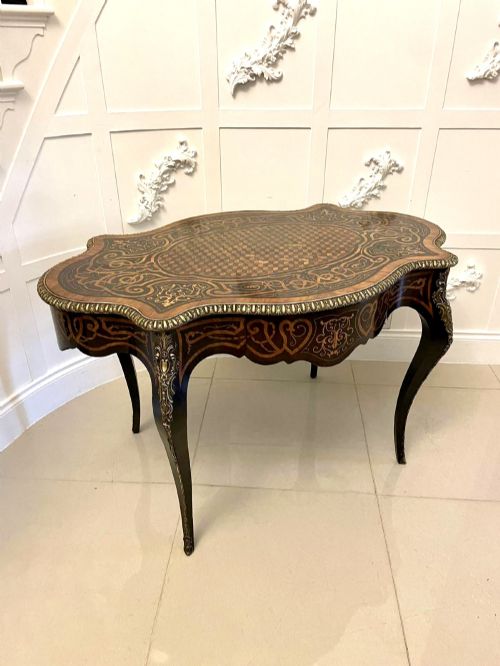
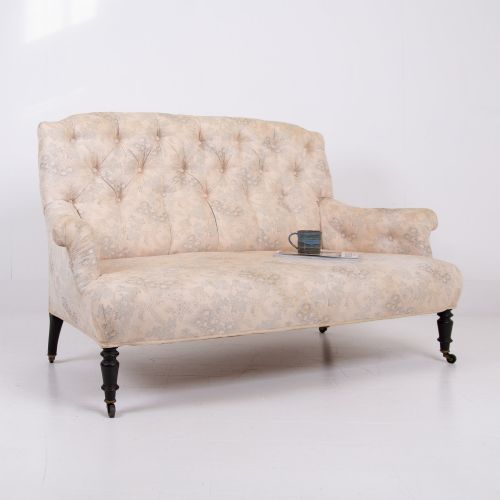
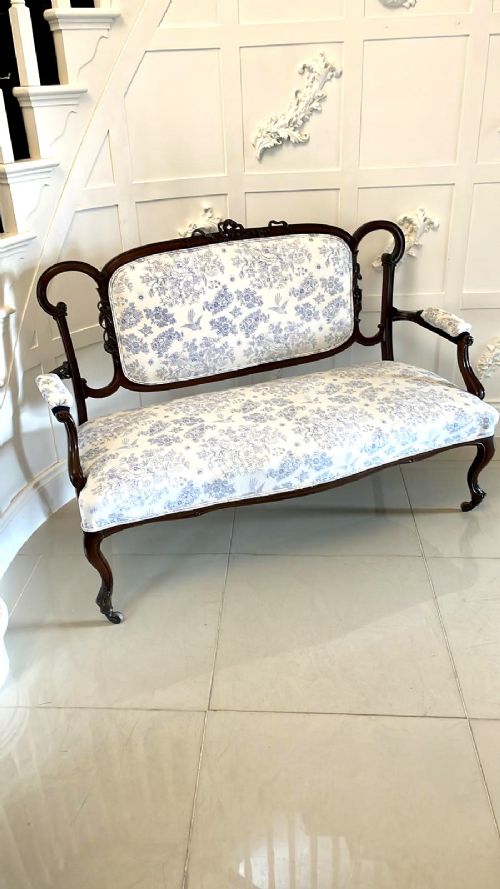
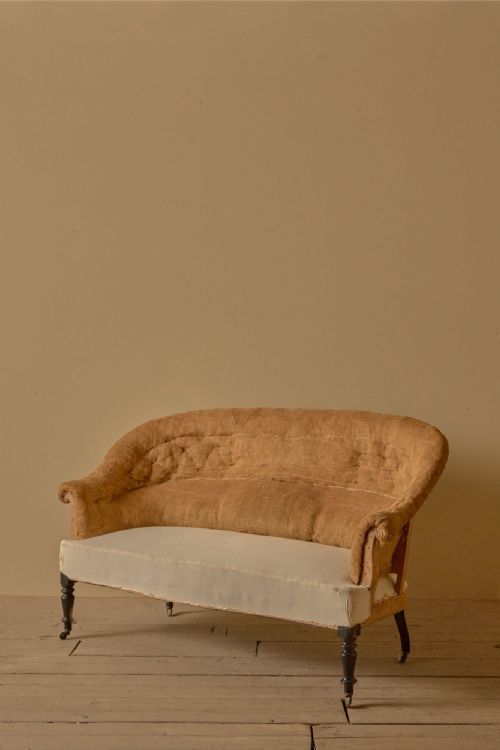
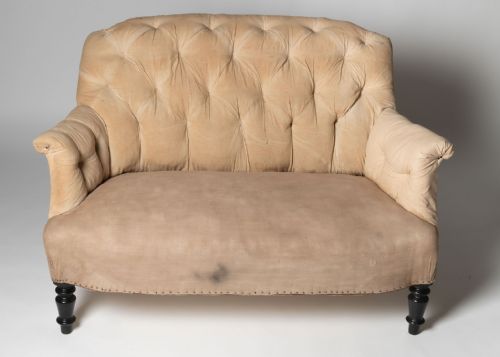
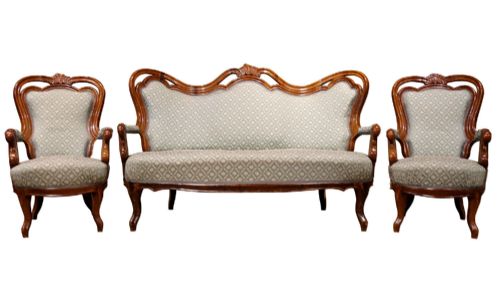
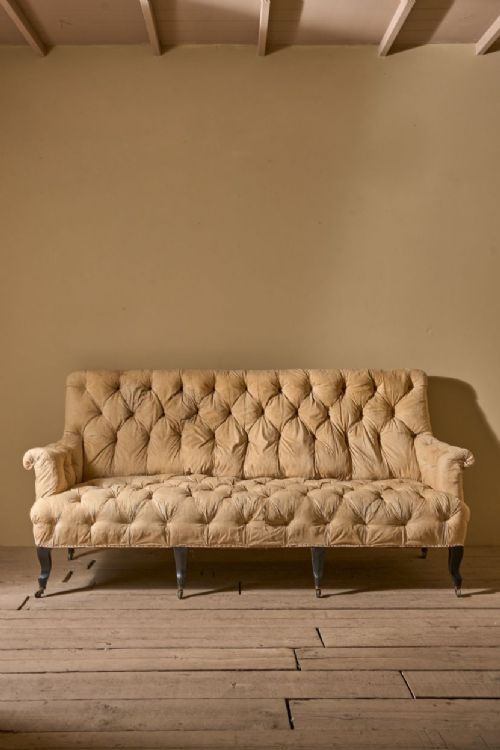
When you search for a victorian french sofa, you are looking at nineteenth-century seating that combines British Victorian frames with French revival styles such as Napoleon III, Rococo, and Louis XV. The pieces on this page span the mid to late nineteenth century, appearing as curved-back settees, buttoned daybeds, and salon suites.
You will most frequently encounter walnut frames upholstered in velvet, alongside occasional mahogany and ebonised wood structures. These seating forms often accompany matching salon suites or stand independently as reception furniture.
Materials and construction
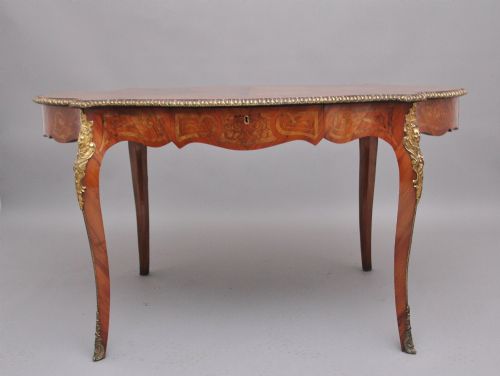
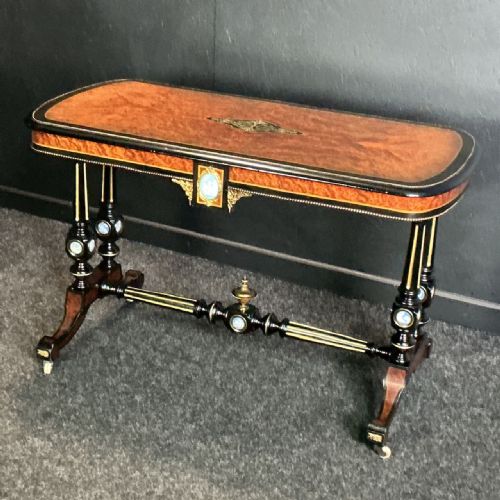
Makers built these frames using walnut, mahogany, and ebonised wood, frequently incorporating inlaid panels and decorative ormolu mounts. Structural stability relied on dense hardwoods that supported elaborate carved details along the crest rails and cabriole legs.
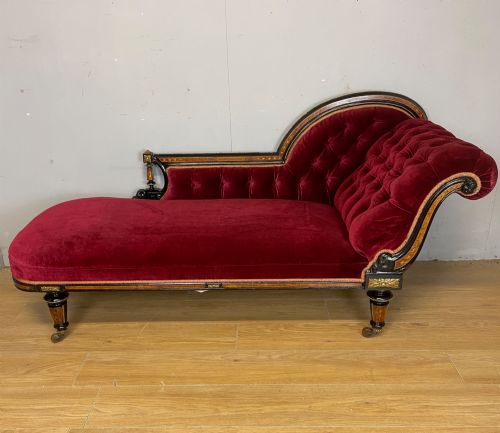
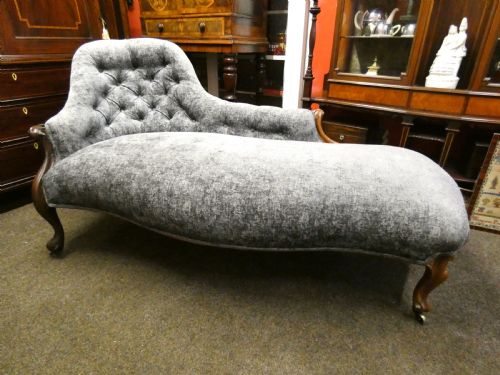
Upholstery techniques defined the comfort and profile of each seat, utilising deep buttoning, tassel trims, and fabrics such as velvet and patterned textiles. Internal padding and webbing secured the distinctive curved backs and double-end designs.
Victorian French Sofa Retail Price Guide 2026
Typical asking prices for victorian french sofa among the pieces listed under this phrase on Sellingantiques today, from the lower quarter to the upper quarter. They describe what is for sale here now, not the wider market.
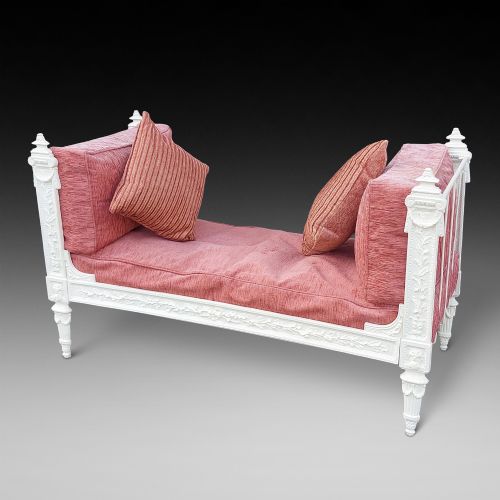
Some nineteenth-century sofas arrived with raspberry pink velvet ready to host a quiet afternoon nap.
Judging quality in nineteenth-century seating
Quality rests upon the crispness of the wood carving and the integrity of the timber frame, distinguishing robust walnut structures from simpler builds. Finer examples display meticulous marquetry, parquetry, and integrated ormolu decoration rather than plain wooden surfaces.
The standard of upholstery work further separates pieces, noting the precision of buttoning and the choice of textile covering. Original gilt finishes and cohesive salon suites demonstrate higher workshop standards than isolated or altered items.
Edward And Roberts·Holland Son
The Victorian French Sofa Glossary
- Napoleon III
- A nineteenth-century French design style noted for eclecticism, dark woods, and button-tufted upholstery. It draws heavily on earlier rococo and neoclassical motifs.
- Ormolu
- Gilded bronze ornamentation applied to furniture frames and mounts. It adds metallic contrast to walnut and ebonised wood surfaces.
- Marquetry
- Decorative woodwork where pieces of veneer form intricate pictorial patterns on the table or cabinet top. It requires skilled cutting and fitting of diverse timber types.
- Chaise Longue
- An elongated upholstered chair designed for reclining, featuring a single armrest or backrest extension. These pieces appear frequently in nineteenth-century bedroom and salon settings.
- Canape
- An antique French sofa characterised by an exposed wooden frame and upholstered back and seat. This form sits comfortably within formal nineteenth-century reception rooms.
Victorian French Sofa: Frequently Asked Questions
What is a victorian french sofa?
A victorian french sofa is a nineteenth-century seating piece that combines British framing traditions with French revival aesthetics. These items reflect stylistic influences from Napoleon III and Rococo revival periods.
They serve as formal reception furniture, bringing curved wooden frames and plush upholstery into nineteenth-century interiors.
How do I identify a napoleon iii sofa?
Napoleon III sofas feature distinctive curved backs, often with deep buttoning and elaborate walnut or ebonised frames. They date from the nineteenth century and lean towards ornate French styling.
Look for integrated ormolu mounts and exposed carved woodwork that distinguish them from standard Victorian seating.
Where should I place a settee?
Settees and small sofas suit formal drawing rooms, large bedrooms, or spacious hallways where their decorative frames remain visible. Freestanding placement allows the carved walnut or mahogany back to be seen from all angles.
Pairing them with matching salon chairs creates a cohesive nineteenth-century seating arrangement.
How do I care for velvet upholstery?
Velvet upholstery on nineteenth-century seating requires gentle brushing to maintain the nap and prevent flattening over time. Avoid direct sunlight to preserve the rich tones of pink, green, and blue fabrics.
Professional cleaning is recommended for delicate textiles and buttoned tufting to protect internal stuffing.